Formative framework pruning
In the first 2–3 years, select 3–5 well-spaced main branches and remove competing or steeply upright shoots to build a strong framework that resists wind damage later.

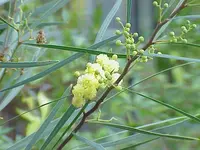
Water wattle (Acacia retinodes) is an evergreen small tree or large shrub, known for its fine, narrow leaves and soft, creamy-yellow puffball flowers. It often flowers several times a year, giving good ornamental value over long periods. Native to south-eastern Australia, it adapts well to mild coastal and urban climates in many English-speaking regions. Its relatively fast growth and naturally rounded habit make it suitable for screens, windbreaks, or feature planting. This species is generally undemanding if given full sun, free-draining soil, and moderate moisture. Once established, it tolerates some drought, which simplifies how to care for water wattle in low-maintenance gardens.

Care Difficulty
Easy Care

Light Preference
Full Sun

Water Requirements
Low Water

Temperature Preference
Warm Climate

Hardiness Zone
8–10

Soil Texture
Sandy, Loamy, Clay

Soil pH
Slightly acidic (6.5–7.0), Neutral (7.0)

Soil Drainage
Well-drained

Fertilization
Minimal (feed rarely)
Scan your plant to receive care tips personalized for your specific plant
Available on iOS and Android
Acacia retinodes performs best with bright, direct sun for strong growth and flowering.
This species prefers well-drained soil and benefits from deep, infrequent watering once established.
This shrub is adapted to mild climates and tolerates a range of outdoor conditions when established.
This species tolerates a wide humidity range and rarely needs special humidity management indoors or outdoors.
This shrub prefers lean, well-drained, slightly acidic to neutral soil and resents waterlogged conditions.
This species can be grown in containers, especially during early years or in mild climates where outdoor space is limited.
Acacia retinodes is low-nutrient adapted but benefits from light, well-timed feeding in poor or container soils.
Pruning Acacia retinodes is mainly for structure, safety, and maintaining flowering performance.
This species is usually grown in the ground; focus on careful transplanting and only long-interval repotting for container plants.
Acacia retinodes is most commonly propagated from seed, with some success from semi-hardwood cuttings.
This species is moderately frost tolerant but benefits from simple winter precautions in colder regions.

Plant Health Check
Not sure what's wrong with your plant? Check your plant's health inside the app.
In its native range in South Australia, this species can flower at almost any time of year, rather than in a single short season, producing multiple flushes of pale yellow, globular flower heads.
This wattle naturally occurs on coastal plains and tolerates saline winds and mildly salty soils, which makes it suitable for exposed coastal plantings in mild climates.
Like many fire-adapted Australian wattles, its hard-coated seeds germinate far better after exposure to boiling water or heat, a cue that in nature is often provided by bushfire or very high soil surface temperatures.

In parts of southern Australia this species has been widely planted as a shelterbelt and erosion-control tree, where its dense, fast-forming canopy and fibrous root system help stabilize sandy or degraded soils while providing nectar and pollen for local insects almost year-round.
This species often flowers several times a year, especially in mild climates, with a main flush from late winter to spring and smaller off‑season flushes. Light, non-heavy pruning after flowering helps maintain repeat blooming.
Keep your plants happy and healthy with plant identification, disease detection, and easy care guidance.