red-stemmed bramble Care (Rubus divaricatus)

red-stemmed bramble

About red-stemmed bramble

Red-stemmed bramble, Rubus divaricatus, is a deciduous, thorny shrub grown mainly for its arching canes and edible blackberry-like fruit. It forms dense thickets and can spread quickly in open ground.

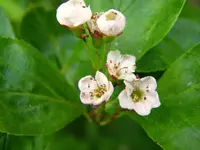
This species is native to parts of Europe but is also grown in other temperate regions, sometimes naturalizing in the wild. Its red to purplish stems, white flowers, and dark fruits make it useful in informal hedges and wildlife gardens.

Rubus divaricatus is generally vigorous and not difficult to grow if given sun, moisture-retentive but well-drained soil, and space to spread. Understanding how to care for red-stemmed bramble starts with planning for its strong growth and prickly stems.

Main Plant Requirements

Care Difficulty

Easy Care

Light Preference

Full Sun

Water Requirements

Moderate Water

Temperature Preference

Cold Hardy

Hardiness Zone

5–8

Soil Texture

Sandy, Loamy, Organic-rich

Soil pH

Acidic (5.5–6.5), Slightly acidic (6.5–7.0)

Soil Drainage

Moist but well-drained

Fertilization

Minimal (feed rarely)

Get Personalized Care Plan

Scan your plant to receive care tips personalized for your specific plant

Available on iOS and Android

How to Care for the red-stemmed bramble

This bramble prefers full sun for strong growth and fruiting but tolerates some shade.

  • Provide 6–8 hours of direct sun daily; 4–6 hours is acceptable but may reduce flowering and fruiting in red-stemmed bramble.
  • Favor morning sun with light afternoon shade in hotter regions to limit leaf scorch and dry, stressed canes.
  • In cooler climates, full sun all day is ideal; avoid deep shade, which leads to weak, lanky shoots and fewer berries.

This shrub likes consistently moist, well-drained soil without staying soggy.

  • Water when the top 3–5 cm of soil feels dry; soil should feel slightly damp below, not waterlogged or powder-dry.
  • Increase watering during flowering and fruiting, and reduce once growth slows in late fall and winter dormancy.
  • Signs of overwatering include limp, yellowing leaves and blackened roots, while underwatering causes wilting, crispy leaf edges, and poor berry set in Rubus divaricatus.

This hardy bramble tolerates a wide temperature range but grows best in moderate conditions.

  • Active growth is strongest around 65–80°F (18–27°C), with good vegetative and fruit development in this range.
  • Established plants tolerate winter lows near 0°F (−18°C), dying back aboveground if colder but often resprouting from the crown.
  • Short heat waves up to about 90–95°F (32–35°C) are tolerated if soil moisture is maintained, but prolonged extreme heat reduces flowering and fruit quality.

Humidity is rarely a limiting factor for Rubus divaricatus grown outdoors in typical US climates.

  • Performs well in ambient outdoor humidity around 30–60% without special intervention.
  • Tolerates short dry spells; persistent very dry air combined with heat may cause marginal leaf scorch or curling tips.
  • In unusually arid regions, reduce humidity stress by mulching the root zone 5–8 cm deep and avoiding hot, reflected-heat sites.

Rubus divaricatus prefers deep, loose, moderately moist mineral soil with reliable drainage.

  • Use a loamy structure with a mix such as 50–60% garden loam, 20–30% compost, and 10–20% coarse sand or fine grit for drainage.
  • Aim for slightly acidic to neutral pH, roughly 6.0–7.0, which supports nutrient uptake and healthy root growth.
  • Improve aeration on heavier ground by incorporating coarse compost, shredded bark, or sharp sand through the top 20–30 cm before planting.
  • Avoid compacted, waterlogged, or very shallow soils, and do not plant where runoff collects after rain.

This species can be grown in containers if the pot is large, stable, and drains very efficiently.

  • Choose a container at least 40–50 cm deep with a wide base so the vigorous canes do not tip it over in wind.
  • Use a heavy, free-draining mix such as 50% loam, 30% compost, and 20% coarse grit to balance moisture retention with drainage.
  • Position the pot where canes can be tied to a trellis or railing to distribute weight and prevent the container from shifting.

This bramble benefits from light, targeted feeding rather than heavy fertilization.

  • Use a balanced NPK granular fertilizer or well-rotted compost once in early spring as new growth starts.
  • Apply a light second feeding in midsummer only if growth or fruiting of red-stemmed bramble seems weak.
  • Dilute liquid feeds to 50% strength and water onto moist soil, keeping fertilizer off leaves and stems.
  • Stop feeding in late summer so new growth hardens before winter dormancy.

Thoughtful pruning keeps Rubus divaricatus productive, manageable, and healthy.

  • Prune in late winter to early spring before buds break, when cane structure is clearly visible.
  • Remove dead, diseased, or damaged canes at ground level using clean, sharp bypass pruners.
  • Thin crowded, weak, or crossing canes to improve light, airflow, and fruit quality.
  • Shorten overly long canes to maintain shape and make harvesting safer and more accessible.

This species is usually grown in the ground, so focus on careful transplanting rather than frequent repotting.

  • Transplant dormant plants in late fall or very early spring to reduce stress and improve establishment.
  • Move plants when growth slows, canes crowd the space, or roots circle a container and emerge from drainage holes.
  • Replant at the same depth in well-drained soil, spreading roots gently and backfilling firmly but not compacting hard.
  • Water deeply after planting, then keep soil evenly moist and shaded for 7–10 days to support root recovery.

This bramble is commonly propagated vegetatively to maintain desirable traits.

  • Use tip layering in late summer by pegging a flexible cane tip into moist soil until roots form, then sever and transplant.
  • Take semi-ripe stem cuttings in midsummer, placing 10–15 cm pieces in a free-draining, moist medium under bright shade.
  • Divide established clumps in early spring while dormant, keeping strong roots and a few healthy buds per division.
  • Seeds are less used; if attempted, stratify in moist medium at 35–40°F for several weeks before sowing.

This bramble is generally cold hardy and needs only modest winter care in most temperate climates.

  • Tolerates typical frosts in many regions, but very young plants benefit from extra protection.
  • Apply a 5–8 cm mulch layer around the root zone after the first hard frost, keeping mulch off the canes.
  • In very cold or exposed sites, loosely tie canes and wrap with breathable fabric to limit wind and ice damage.
  • Move container-grown plants to a sheltered, unheated but frost-sheltered spot to prevent root freezing.

Care Tips

Wire support training

Install a 2–3 wire trellis and tie in new canes while they are still flexible, spacing them 10–15 cm apart to keep the plant upright, well-aerated, and easy to harvest.

Cane renewal management

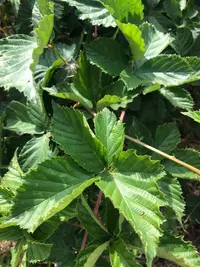
Each late winter, remove at ground level all 2-year-old canes that fruited the previous summer and keep only the strongest 6–8 new canes per plant to maintain high yield and reduce disease pressure.

Tip layering propagation

In late summer, bend a healthy first-year cane so the tip touches the soil, bury 5–8 cm of the tip, secure it with a U-shaped wire, and cut it free from the mother plant once it roots for easy clonal propagation.

Targeted bird protection

Drape bird netting over a simple frame before berries begin to blush, keeping the mesh at least 10 cm off the fruit so birds cannot peck through while still allowing pollinators access from the sides.

Mulch and alley management

Maintain a 5–8 cm organic mulch band under the row and keep a firm, mown grass or wood-chip path beside it to suppress unwanted suckers, improve footing for harvest, and simplify caring for red-stemmed bramble in small gardens.

Common Pests and Diseases

Raspberry beetle

This pest attacks flower buds and young fruits, causing dry, misshapen berries with brownish grubs inside. Symptoms include poor fruit set and crumbly, damaged drupelets.

Solution

Remove and destroy infested fruits to break the life cycle and reduce overwintering larvae. Encourage predators by maintaining plant diversity nearby, shake canes over a sheet to dislodge adults, and where pressure is high use a targeted fruit and cane-safe insecticide timed to early flowering, following local extension guidance for Rubus divaricatus care.

Raspberry cane borer

This pest tunnels inside young canes, causing wilting shoot tips and characteristic double rows of punctures around the stem. Affected canes often droop and may break at the girdled point.

Solution

Cut and remove wilted shoot tips 5–8 cm below the lowest ring of punctures as soon as symptoms appear, then destroy the prunings. Maintain good cane hygiene by removing old, weak, or damaged canes at the base during dormancy to reduce overwintering sites.

Cane blight

This disease causes sunken, dark lesions on canes, often beginning at pruning wounds, and can lead to sudden cane dieback. Symptoms include cracked bark and shriveled, non-productive laterals on affected stems.

Solution

Prune out and discard infected canes during dry weather, cutting several cm below visible lesions, and disinfect pruning tools between cuts. Reduce humidity and infection risk by thinning crowded canes, avoiding overhead irrigation, and timing pruning so large wounds do not remain wet for long periods.

Anthracnose

This disease produces small, round spots on young canes and leaves that enlarge into gray centers with purple margins, sometimes girdling canes. Symptoms include reduced vigor, fewer berries, and shriveled fruit on severely affected plants.

Solution

Remove and destroy infected canes and fallen leaves to reduce the source of spores, then maintain open spacing and good airflow along rows. Avoid wetting foliage when irrigating, and in areas with recurring problems apply a registered fungicide preventively at early shoot growth and pre-bloom, following label directions for Rubus species.

Verticillium wilt

This disease affects the vascular system, causing one-sided wilting, yellowing, and gradual dieback of canes, often starting on the lower leaves. Symptoms include stunted growth and poor fruiting despite adequate water and nutrients.

Solution

Promptly remove and destroy severely affected plants, including as much root material as possible, and avoid replanting Rubus or other susceptible hosts in the same spot for several years. Improve soil structure and drainage, keep plants unstressed with proper watering and mulching, and source nursery stock from certified disease-free suppliers to prevent introduction of the pathogen.

Interesting Facts

Distinct arching habit

This species forms long, arching canes that often bend over and root at the tips, creating loose, fountain-like thickets rather than tight, upright clumps like some other brambles.

Red young stems

The current season’s canes typically show a pronounced red to reddish-purple coloration, especially in full sun, which contrasts with the older, duller canes and helps distinguish it from closely related blackberry species.

Bird-dispersed black fruits

Its soft black aggregate fruits are an important seasonal food source for birds, which consume the berries and disperse the seeds across hedgerows, woodland edges, and disturbed ground.

FAQs about red-stemmed bramble

This species spreads readily by arching canes and self-seeding. In suitable climates it can form dense thickets and become difficult to remove. Regular pruning and physical barriers around roots help prevent unwanted spread into nearby beds or natural areas.

Grow Healthy Plants with Botan Care

Keep your plants happy and healthy with plant identification, disease detection, and easy care guidance.

Botan plant care app — identify plants on mobile

Explore More Plants