Layering Propagation
Use simple layering by bending a flexible stem to the ground, pegging it under 2–3 cm of soil, and leaving the tip exposed; after 1 growing season, sever and transplant the well-rooted new plant to expand a hedge or fill gaps.

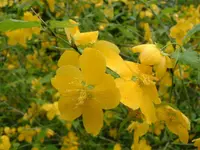
Japanese rose, Kerria japonica, is a deciduous flowering shrub valued for its bright yellow, pompon-like blooms. It typically forms a loose, arching clump with slender green stems that stand out even in winter.
This species is native to woodland edges and thickets in China and Japan, where it grows in partial shade and well-drained, humus-rich soil. It is generally easy to manage, tolerant of pruning, and forgiving of less-than-perfect conditions, which helps simplify how to care for Japanese rose.

Care Difficulty
Easy Care

Light Preference
Partial Shade

Water Requirements
Moderate Water

Temperature Preference
Cold Hardy

Hardiness Zone
4–9

Soil Texture
Sandy, Loamy, Clay

Soil pH
Acidic (5.5–6.5), Slightly acidic (6.5–7.0)

Soil Drainage
Moist but well-drained

Fertilization
Minimal (feed rarely)
Scan your plant to receive care tips personalized for your specific plant
Available on iOS and Android
This woodland shrub prefers bright, gentle light rather than intense, all-day sun.
This shrub needs evenly moist but not saturated soil, especially during its establishment period.
This hardy shrub tolerates a wide temperature range but grows best in moderate conditions.
Kerria japonica handles a wide humidity range and rarely needs special humidity management outdoors.
Kerria japonica grows best in loose, moist, well-drained soil that does not stay waterlogged.
This species is suitable for container growing when the pot is chosen to support its arching shrub form.
Kerria japonica grows well in reasonably fertile soil and benefits from light feeding during active growth.
Pruning helps Kerria japonica maintain a tidy shape and encourages strong flowering wood.
This shrub is usually grown in the ground, so focus on thoughtful transplanting rather than frequent repotting.
Kerria japonica responds well to several simple propagation methods for creating new plants.
This shrub is generally cold hardy in much of the US and usually needs minimal winter attention.

Plant Health Check
Not sure what's wrong with your plant? Check your plant's health inside the app.
This species occurs naturally only in China, mainly in forest edges and thickets, even though it has become widely naturalized and cultivated in Japan, Europe, and North America.
Its bright green stems remain photosynthetic, meaning they continue to produce energy even after leaf fall, which helps the shrub survive and regrow after winter or pruning.
In gardens it often spreads by tip layering, where arching stems that touch the ground can root and form new plants without human intervention.

Historical records show that this shrub was introduced from East Asia to European horticulture in the early 19th century, and it quickly became a favored spring-flowering shrub in Victorian gardens due to its reliable early bloom and tolerance of urban pollution.
Poor flowering often comes from pruning at the wrong time, excessive shade, or heavy nitrogen fertiliser. Pruning after midsummer removes next year’s flower buds. Aim for moderate light, balanced fertiliser, and prune right after flowering finishes.
Keep your plants happy and healthy with plant identification, disease detection, and easy care guidance.