


Cooler Summer Placement
Move containers or potted plants to a spot with cooler afternoon conditions during hot spells, such as the east side of a building or under light tree shade, to keep roots from overheating and prevent flower drop.

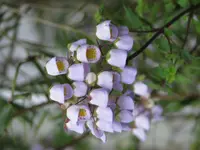
The violet teacup flower, Jovellana violacea, is a shrubby perennial grown mainly for its delicate, cup-shaped blooms and light, airy foliage. It often forms a loose, branching mound that suits mixed borders or large containers.
Flowers are usually pale violet to lavender with speckled throats, giving a fine, detailed look at close range. In mild climates, it can flower over a long season and maintain an attractive, soft texture in the garden.
This species is native to Chile, where it grows in cool, moist, but well-drained habitats. It prefers bright, gentle light, consistent moisture, and humus-rich soil, and these traits influence how to care for violet teacup flower in home gardens.

Care Difficulty
Moderate Care

Light Preference
Partial Shade

Water Requirements
Keep Soil Moist

Temperature Preference
Cool Climate

Hardiness Zone
8–10

Soil Texture
Loamy, Silty, Organic-rich

Soil pH
Acidic (5.5–6.5), Slightly acidic (6.5–7.0)

Soil Drainage
Moist but well-drained

Fertilization
Light (every 4–6 weeks)
Scan your plant to receive care tips personalized for your specific plant
Available on iOS and Android
This shrub prefers bright, gentle light with protection from harsh midday sun for best flowering.
This plant likes evenly moist, well‑drained soil and reacts quickly to both drought and waterlogging.
This species prefers mild, frost‑free conditions and dislikes both hard freezes and intense heat.
This shrub prefers moderate humidity and reacts if air stays very dry for long periods.
Soil for Jovellana violacea must stay evenly moist yet drain freely to protect sensitive roots.
This species adapts well to container growing when moisture and root space are carefully managed.
Jovellana violacea responds well to light, consistent feeding during its active growing season.
Jovellana violacea benefits from light, structured pruning to maintain a bushy form and reliable flowering.
This shrub is usually grown in the ground, but young or container-grown plants of Jovellana violacea may need occasional transplanting.
Jovellana violacea is most commonly propagated by softwood or semi-ripe cuttings rather than seed.
In mild climates Jovellana violacea is moderately hardy but benefits from some winter protection in colder areas.

Plant Health Check
Not sure what's wrong with your plant? Check your plant's health inside the app.
This species is native to a small area of central Chile, where it grows in cool, moist, often fog-influenced slopes and woodland edges, which explains its preference for mild summers and consistent moisture in cultivation.
The flowers are cup-shaped with a pale background and distinct purple speckling inside the corolla, an arrangement thought to act as a visual guide for pollinating insects entering the flower.
The leaves are thin, slightly sticky, and softly textured, and when gently rubbed they release a mild, resinous scent that likely helps deter some herbivores in its native habitat.

In its native Chilean range, this species is considered locally uncommon and grows in relatively restricted microhabitats, so many of the plants seen in gardens worldwide originate from a narrow genetic base collected by only a few botanical expeditions.
This species performs best outdoors in mild, frost-free or light-frost climates, where it can form a small shrub and flower freely. Indoors it tends to grow weaker and flower less, unless provided with very bright, cool conditions.
Keep your plants happy and healthy with plant identification, disease detection, and easy care guidance.

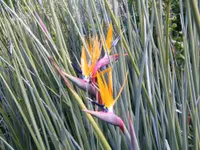
Narrow-leafed Bird of Paradise
Strelitzia juncea
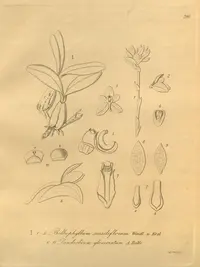
Bulbophyllum molossus
Bulbophyllum molossus
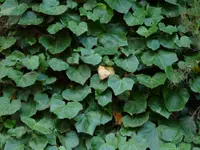
Algerian ivy
Hedera canariensis

Thai Caladium
Caladium 'Thai Beauty'
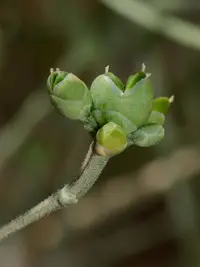
Shrubby horsetail
Ephedra ciliata
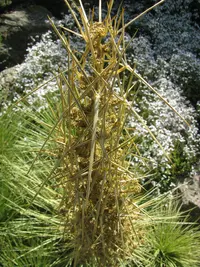
Aciphylla subflabellata
Aciphylla subflabellata
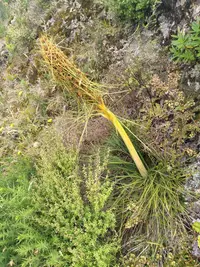
Aciphylla squarrosa
Aciphylla squarrosa
Lance-leaf Caladium
Caladium 'Desert Sunset'