Alocasia Frydek Care (Alocasia micholitziana)

Also known as: Alocasia 'Frydek'
Alocasia Frydek

About Alocasia Frydek

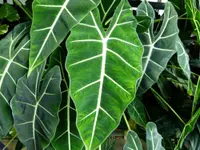
Alocasia Frydek, botanically known as Alocasia micholitziana, is a tropical aroid grown mainly as an ornamental foliage plant. It is valued for its dark, velvety green leaves with striking white veins and an upright, clumping growth habit.

In nature, it occurs in warm, humid forest habitats in the Philippines, where it grows in bright shade under taller vegetation. This background explains its sensitivity to cold, dry air, and strong direct sun.

Because of its need for stable warmth, high humidity, and consistently moist but airy soil, it is less forgiving than many common houseplants. Learning how to care for Alocasia Frydek usually rewards growers with lush, dramatic foliage indoors.

Main Plant Requirements

Care Difficulty

Hard Care

Light Preference

Bright Indirect Light

Water Requirements

Keep Soil Moist

Temperature Preference

Tropical / Frost Sensitive

Hardiness Zone

10–11

Soil Texture

Loamy, Peaty, Organic-rich

Soil pH

Acidic (5.5–6.5), Slightly acidic (6.5–7.0)

Soil Drainage

Moist but well-drained

Fertilization

Moderate (every 2–4 weeks)

Get Personalized Care Plan

Scan your plant to receive care tips personalized for your specific plant

Available on iOS and Android

How to Care for the Alocasia Frydek

Alocasia micholitziana prefers bright, filtered light that mimics a forest understory.

  • Provide 6–8 hours of bright, indirect light each day, such as near an east window or under sheer curtains with no direct midday sun.
  • Allow brief early morning or late afternoon sun only; strong midday sun can scorch leaves and fade the velvety surface, similar to caring for Alocasia Frydek.
  • In low light, leaves may elongate and lose color; move the plant closer to a bright source in winter when days are shorter.

This species needs consistently lightly moist but not waterlogged soil.

  • Water when the top 2–4 cm of soil feels dry, using enough water to moisten the root zone, then let excess drain away fully.
  • Reduce watering in winter when growth slows, allowing the top layer to dry a bit deeper while avoiding complete dryness through the whole root ball.
  • Watch for yellowing, limp leaves as a sign of overwatering and potential root rot, and for drooping, dry-edged leaves as a sign the plant needs water.

Stable warmth is essential for strong growth and leaf quality.

  • Aim for 70–80°F (21–27°C) during active growth, which supports steady leaf production and healthy root activity.
  • Keep temperatures above 60°F (16°C); below this, Alocasia micholitziana may stall, and brief exposure below 50°F (10°C) can cause damage.
  • Protect from drafts, air conditioners, and heat vents; avoid hot spots above 85°F (29°C), where leaves may lose turgor and edges can crisp.

This species needs consistently high humidity to maintain healthy foliage and steady growth.

  • Aim for 60–80% humidity, as typical indoor air at 30–40% is usually too dry long term.
  • Crisping leaf edges, brown tips, and stalled new leaves indicate humidity stress rather than underwatering.
  • Increase humidity with a nearby humidifier, grouped plants, and a pebble tray, similar to caring for Alocasia Frydek.

Use a loose, airy, organic-rich mix that drains quickly but holds steady, light moisture.

  • Combine roughly 40% peat or coco coir, 30% fine bark, 20% perlite, and 10% compost for Alocasia micholitziana.
  • Aim for slightly acidic to neutral pH, around 6.0–7.0, which supports nutrient uptake and root health.
  • Ensure the mix feels springy, not compacted; large air spaces around roots prevent suffocation and rot.
  • Avoid dense clay, unamended garden soil, or mixes that stay soggy for more than 2–3 days after watering.

This species is well suited to container growing when the pot supports its moisture-sensitive roots.

  • Choose a pot that is only 2–5 cm wider than the root ball so moisture dries evenly instead of lingering in unused mix.
  • Use a stable, heavier container for larger plants so tall leaves do not tip the pot when the soil is moist.
  • Select slightly porous materials like terracotta if overwatering is a risk, or glazed pots if the environment is very dry.

Alocasia micholitziana benefits from consistent but moderate feeding during its active growing season.

  • Use a balanced liquid fertilizer, such as 10-10-10 or 20-20-20, diluted to 1/2–1/4 strength every 2–4 weeks in spring and summer.
  • Apply to moist soil only, never to dry roots, to reduce burn risk and keep the rhizomes healthy.
  • Pause or reduce feeding to once every 6–8 weeks at very weak strength in fall and winter, as growth slows.
  • For Alocasia Frydek and similar species, slow-release granules or a thin layer of fine compost in spring can support steady growth.

Alocasia micholitziana needs light, targeted pruning to maintain health and a clean outline.

  • Best timing is during active growth in spring or early summer so the plant can replace foliage quickly.
  • Remove yellowing, dead, or mechanically damaged leaves by cutting at the base of the petiole with clean, sharp shears.
  • Thin out crowded inner leaves only when necessary to improve air flow and light penetration around the crown.
  • Disinfect blades with alcohol before and after use to reduce the spread of fungal spores and bacteria.

This species performs best when slightly root-bound but benefits from occasional repotting to refresh soil and support stable growth.

  • Check for roots circling the pot, pushing through drainage holes, or for slowing growth despite good care as signs it needs a larger container.
  • Plan repotting for late spring, about every 1–2 years, when active growth supports faster root recovery.
  • Choose a pot only 2–5 cm wider, with drainage holes, and use a loose aroid mix with chunky bark, perlite, and peat or coco coir.
  • Gently loosen circling roots, trim rotten portions with sterile scissors, water lightly after repotting, and keep in bright, indirect light for 1–2 weeks.

Alocasia micholitziana is most reliably propagated through division of its clumping rhizomes rather than from seed.

  • Carry out division in late spring or early summer when repotting and the plant is actively growing.
  • Unpot the plant, gently separate rhizomes with at least one healthy growth point and several roots per division.
  • Plant divisions in a small container with airy, moist but not waterlogged mix and firm lightly to stabilize.
  • Maintain high humidity around 60–70%, warm temperatures around 70–80°F, and bright, indirect light to encourage strong new growth.

This tropical plant is frost-sensitive and needs structured winter care in cool climates.

  • Move container plants indoors before temperatures drop below 55°F, placing them in bright, indirect light away from drafts.
  • Maintain indoor temperatures around 65–75°F and reduce watering so the top 2–3 cm of soil dry between waterings.
  • In mild climates, add a 5–8 cm mulch layer over the root zone outdoors to insulate rhizomes from brief cool spells.
  • Expect slower growth or partial leaf loss in winter and resume stronger watering and feeding only as new growth appears in spring.

Care Tips

Leaf size management

If leaves grow very large and start to droop, stake the petioles loosely with soft ties to a slim support so the blades stay upright and avoid mechanical damage at the base.

Rest period adjustment

In late fall and winter, reduce disturbance around the root zone and avoid repotting, as this plant often enters a semi-dormant phase and responds better to any major work in mid to late spring when new growth resumes.

Root crowding strategy

Allow the plant to become slightly root-bound before moving up only 2–3 cm in pot diameter, which encourages stronger top growth and reduces the risk of the mix staying wet for too long.

Preventive pest checks

Inspect the undersides of leaves and the junctions between petioles and stems every 1–2 weeks with a hand lens if available, and at the first sign of spider mites or thrips, isolate the plant and begin a gentle insecticidal soap routine rather than waiting for visible damage.

Controlled relocation

When shifting the pot to a brighter or drier room, change its position in 2–3 small moves over 1–2 weeks so the plant can acclimate gradually, which helps reduce sudden leaf drop that often worries owners caring for Alocasia Frydek and related types.

Common Pests and Diseases

Spider mites

This pest thrives in the dry, warm conditions often used for Alocasia micholitziana and feeds on leaf sap, causing stippling, dulling, and fine webbing on the velvety foliage. Symptoms include speckled leaves that may yellow and dry at the edges.

Solution

Rinse both sides of the leaves with a strong, lukewarm water stream, then wipe gently to protect the leaf surface. Increase humidity, isolate the plant, and treat all leaf surfaces and petioles with insecticidal soap or a neem oil solution every 5–7 days until no new activity appears.

Thrips

These insects scrape and suck plant tissue, often targeting the tender, velvety leaves and leaf undersides, leaving silvery streaks, distorted new growth, and black specks of frass. Damage is often first seen on emerging leaves, which may unfurl misshapen or with patchy discoloration.

Solution

Remove heavily damaged leaves and rinse the plant thoroughly, focusing on leaf undersides and petiole junctions. Isolate the plant, use sticky traps to monitor adults, and apply repeated treatments of insecticidal soap or a systemic insecticide labeled for indoor ornamentals according to the product directions.

Rhizoctonia leaf spot

This disease causes round to irregular brown lesions with yellow halos on the broad leaves, which spread quickly in warm, humid, low-airflow conditions typical of Alocasia micholitziana care. Symptoms include coalescing spots that can lead to large dead patches on the lamina.

Solution

Remove and discard all affected leaves, disinfect cutting tools, and avoid wetting foliage when watering. Improve air circulation, reduce crowding, and if spotting continues, apply a copper- or chlorothalonil-based fungicide labeled for ornamental foliage plants, following label rates and intervals.

Pythium root and crown rot

This disease develops in consistently wet, poorly aerated mix and causes soft, brown roots and a mushy crown, leading to wilting, yellowing, and collapse of petioles even when soil seems moist. Symptoms include a sour odor from the potting mix and rapid decline after overwatering or cold stress.

Solution

Unpot the plant, trim off all brown, mushy roots and affected crown tissue, and repot into a fresh, fast-draining aroid mix in a pot with good drainage. Allow the top layer of mix to dry slightly between waterings, avoid cold, soggy conditions, and in severe cases drench with a fungicide labeled for Pythium on ornamentals.

Fungus gnat larvae

This pest is attracted to the consistently moist, organic-rich substrates often used for Alocasia micholitziana, and the larvae can feed on fine roots, stressing the plant and slowing growth. Symptoms include persistent flying adults around the pot and a wilting or overall decline not explained by light or nutrition issues.

Solution

Allow the top 2–3 cm of the mix to dry between waterings, remove any decaying organic debris from the soil surface, and use yellow sticky traps to catch adults. For larvae, treat the soil with a Bacillus thuringiensis israelensis (Bti) product or beneficial nematodes according to label directions until populations drop.

Interesting Facts

Naturally understory-adapted

This species originates from shaded forest understories in the Philippines, where its velvety, dark leaves with stark white venation help maximize light capture in low-light habitats.

Velvety leaf surface

The matte, velvety texture comes from tiny surface structures on the leaf epidermis that diffuse light and slightly reduce water loss, rather than from true hairs.

Distinct petiole attachment

Its leaves are sagittate to hastate, with the petiole attaching slightly inside the leaf margin on the underside, creating the characteristic shield-like blade shape that differs from many other commonly grown aroids.

Botan icon

Did you know?

Alocasia micholitziana is considered rare in the wild and is known primarily from cultivation and limited native populations in the Philippines, so most plants in collections today descend from a relatively narrow genetic base maintained through vegetative propagation.

FAQs about Alocasia Frydek

Brown leaf edges usually result from low humidity, salt buildup from fertilizer, or inconsistent moisture around the roots. Increase humidity, flush the potting mix occasionally, and keep the substrate evenly moist but never waterlogged to reduce damage.

Grow Healthy Plants with Botan Care

Keep your plants happy and healthy with plant identification, disease detection, and easy care guidance.

Botan plant care app — identify plants on mobile

Explore More Plants