Seasonal light shift
Move plants to a brighter, higher-light position at the start of new pseudobulb growth, then gradually reduce light intensity by 20–30% once leaves yellow and fall as the plant enters dormancy.

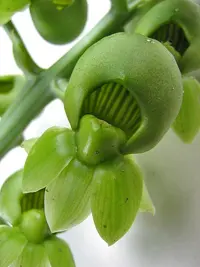
Large-fruited Catasetum (Catasetum macrocarpum) is a deciduous, epiphytic orchid that grows on trees in warm, humid lowland forests of South America. It sheds its leaves during a dry rest period and regrows them with the new season.
The plant forms thick pseudobulbs that store water and nutrients, supporting rapid growth when conditions are favorable. Its showy, often fragrant flowers appear on arching spikes and can differ in form between male and female blooms.
Understanding its strong seasonal rhythm is essential to care for Large-fruited Catasetum successfully. It generally prefers bright, filtered light, high humidity, and a very free-draining, airy growing medium.

Care Difficulty
Hard Care

Light Preference
Partial Sun

Water Requirements
Moderate Water

Temperature Preference
Tropical / Frost Sensitive

Hardiness Zone
Unknown

Soil Texture
Sandy, Rocky, Organic-rich

Soil pH
Acidic (5.5–6.5)

Soil Drainage
Well-drained

Fertilization
Heavy (weekly, diluted)
Scan your plant to receive care tips personalized for your specific plant
Available on iOS and Android
This orchid needs bright, strong light to flower well without burning the leaves.
Watering must change with the growth cycle of this deciduous orchid.
Temperature swings signal growth and dormancy for this species and strongly affect flowering.
This orchid prefers moderately high humidity during active growth but adapts to typical indoor levels if watered correctly.
Catasetum macrocarpum performs best in a coarse, very airy medium that drains quickly yet holds brief, even moisture around the roots.
This species is well suited to container culture when the pot supports rapid drainage and seasonal growth changes.
This orchid responds very well to consistent, moderate feeding during its active growth phase.
Pruning needs for Catasetum macrocarpum are minimal and focus mainly on hygiene and spent growth removal.
Repotting is important for maintaining a healthy root system and preventing soggy, exhausted media.
Division is the standard method for increasing Catasetum macrocarpum while keeping cultivar traits consistent.
This species is not frost tolerant and needs a dry, protected rest period in cool to warm conditions.

Plant Health Check
Not sure what's wrong with your plant? Check your plant's health inside the app.
This species produces separate male and female flowers on the same inflorescence, with the form expressed influenced by light intensity and plant vigor rather than fixed genetics alone.
The male flowers have a sensitive trigger that catapults a sticky pollen package onto visiting male euglossine bees, an adaptation that ensures precise and efficient pollination.
The flowers release specific fragrance compounds that attract perfume-collecting male orchid bees, which visit to harvest the scent rather than nectar and incidentally transfer pollen.

In its native lowland habitats of northern South America, this orchid typically grows as an epiphyte on seasonally deciduous trees, synchronizing its growth and leaf drop with the pronounced dry season so that the pseudobulbs act as short-term water and nutrient storage organs that help it endure drought.
This species usually produces one or sometimes two flushes of flowers from late spring to early autumn, depending on climate and care. Flowering is linked to strong growth during the active season and a properly timed dry rest.
Keep your plants happy and healthy with plant identification, disease detection, and easy care guidance.