black velvet Care (Alocasia reginula)

black velvet

About black velvet

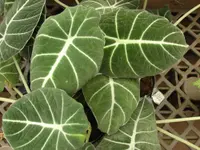
Black velvet, Alocasia reginula, is a compact tropical aroid valued for its dark, velvety leaves and striking pale veins. It stays relatively small, making it suitable for indoor displays and small spaces.

In nature, this plant occurs in the humid understory of Bornean forests, where it grows in filtered light and consistently moist, airy soil. Its thick, textured leaves and short stems indicate a preference for stable warmth, moderate light, and steady but careful watering.

The species can be moderately demanding, as it is sensitive to cold drafts, overwatering, and low humidity. Understanding how to care for black velvet focuses on balancing moisture, airflow, and gentle light to keep it stable over time.

Main Plant Requirements

Care Difficulty

Hard Care

Light Preference

Bright Indirect Light

Water Requirements

Keep Soil Moist

Temperature Preference

Tropical / Frost Sensitive

Hardiness Zone

11–12

Soil Texture

Loamy, Peaty, Organic-rich

Soil pH

Acidic (5.5–6.5), Slightly acidic (6.5–7.0)

Soil Drainage

Moist but well-drained

Fertilization

Light (every 4–6 weeks)

Get Personalized Care Plan

Scan your plant to receive care tips personalized for your specific plant

Available on iOS and Android

How to Care for the black velvet

Alocasia reginula prefers bright, indirect light that mimics dappled tropical shade.

  • Provide 6–8 hours of bright, filtered light daily, such as near an east window or under light shade cloth outdoors.
  • Tolerates partial shade, but in very low light leaves may lose contrast and new growth becomes sparse and small for black velvet.
  • Protect from strong midday and afternoon sun; direct sun through glass or outdoors can scorch leaves, causing pale patches and crispy edges, especially in summer.

Alocasia reginula needs consistently lightly moist but not saturated soil.

  • Water when the top 2–3 cm of soil feel dry; in active growth this may be every few days, but always check the soil instead of following a fixed schedule.
  • Use a well-draining mix and an outlet for excess water; yellowing, mushy stems or a sour smell indicate overwatering and possible root rot.
  • In cooler months, allow the top 3–5 cm to dry and expect slower uptake; drooping, thin leaves and dry, curling edges usually signal underwatering.

This species prefers warm, stable temperatures with no exposure to frost.

  • Aim for 70–80°F (21–27°C) for strongest growth; short periods down to 65°F (18°C) are usually tolerated without damage.
  • Avoid temperatures below 55°F (13°C); prolonged cold or brief light frost can cause leaf collapse and severe root damage.
  • In hot spells above 86°F (30°C), increase shade and airflow; combine warmth with slightly higher humidity to reduce leaf stress and edge browning.

This species needs fairly high humidity to keep foliage healthy.

  • Aim for 60–80% humidity, as black velvet is prone to crispy leaf edges in drier rooms.
  • In air below 40%, expect brown tips, curled margins, and slowed new growth as humidity stress signs.
  • Increase humidity with a nearby humidifier, grouped plants, or a pebble tray, but avoid misting that keeps leaves wet for long.

Alocasia reginula prefers a loose, airy, organic-rich mix that drains quickly yet holds some moisture.

  • Use a mix of roughly 40% peat or coco coir, 30% perlite, and 30% fine orchid bark for balanced moisture and aeration.
  • Aim for slightly acidic to neutral pH around 5.8–7.0, which supports nutrient availability and root health.
  • Ensure water drains through within seconds, leaving the mix damp but never waterlogged, to prevent root rot and suffocation.
  • Avoid dense garden soil or heavy, unamended potting compost that compacts, stays soggy, and reduces oxygen around roots.

This species adapts very well to container growing.

  • Choose a pot that is just 2–4 cm wider than the root ball so the mix dries evenly between waterings.
  • Select a slightly heavier material such as ceramic to keep the plant stable as leaves enlarge and become top-heavy.
  • Use a container with large drainage holes and elevate it on pot feet so excess water can exit quickly and not pool under the base.

Alocasia reginula benefits from light, consistent feeding during active growth for steady foliage development.

  • Use a balanced liquid fertilizer (such as 10-10-10 or 20-20-20) diluted to 1/4–1/2 strength for black velvet indoor care.
  • Feed every 4–6 weeks in spring and summer when new leaves are emerging.
  • Skip compost-heavy mixes in small pots; they can stay soggy and harm roots.
  • Stop or greatly reduce feeding in fall and winter when growth slows or dormancy begins.

Alocasia reginula needs only light pruning to keep foliage healthy and tidy.

  • Best time to prune is during active growth in spring or early summer.
  • Remove yellow, dead, or torn leaves at the base with clean, sharp scissors or pruners.
  • Cut back soft, rotting, or pest-damaged stems to healthy tissue to limit spread.
  • Occasional thinning of crowded stems slightly improves airflow and light around remaining leaves.

This species prefers snug pots and only needs repotting when clearly rootbound or declining.

  • Check for roots circling the pot, growing through drainage holes, or water running straight through as key repotting signs.
  • Plan to repot every 2–3 years in late spring, when Alocasia reginula is starting strong growth.
  • Select a pot just 2–3 cm wider with well-draining aroid mix to limit waterlogging stress.
  • Gently loosen roots, keep the root ball mostly intact, water lightly afterward, and keep in shade for a few days to reduce shock.

Alocasia reginula is most reliably propagated by division of its clumping rhizomes rather than by leaf cuttings.

  • Time division for late spring or early summer when growth and root activity increase.
  • Unpot the mother plant, gently remove soil, and separate sections with at least one healthy stem and its own roots.
  • Use a sterile knife if needed, dust cuts with fungicidal powder or cinnamon, and plant divisions in small, well-draining pots.
  • Maintain high humidity, warm temperatures around 70–80°F, and evenly moist soil until new growth confirms establishment.

This tropical plant is not frost tolerant and needs indoor winter care in most climates.

  • Move containers indoors before temperatures drop below 55°F; avoid cold drafts and sudden temperature swings.
  • Provide bright, indirect light and keep room temperatures around 65–75°F through winter.
  • Reduce watering and allow the top layer of soil to dry more than in summer to prevent root rot.
  • If leaves die back, keep the pot slightly moist, as the underground rhizome can resprout in spring.

Care Tips

Pot sizing strategy

Use a pot only 2–3 cm wider than the root ball and up-pot gradually, as oversized containers keep the mix too wet and increase the risk of corm rot.

Corm health checks

During repotting, gently uncover and inspect the corms, removing any soft, mushy, or foul-smelling tissue with a sterile blade to prevent rot from spreading.

Dormancy management

If leaves decline in winter, reduce watering, keep the pot slightly warm (65–75°F), and wait for new growth from the corm in spring rather than discarding the plant.

Targeted pest monitoring

Inspect the undersides of leaves and petiole junctions weekly with a hand lens, and treat early signs of spider mites or thrips with a systematic plan using insecticidal soap or horticultural oil.

Humidity zoning

Group this plant with other tropicals on a wide tray of pebbles and water to create a localized humid zone around the foliage, which supports stable conditions when growing black velvet indoors.

Common Pests and Diseases

Spider mites

This pest thrives on Alocasia reginula in dry, warm indoor air and causes fine stippling, dull leaves, and webbing on the undersides. Symptoms include slowed growth and leaves that lose their velvety appearance.

Solution

Shower the plant with lukewarm water, focusing on the undersides of leaves, then wipe with a soft cloth. Follow with repeated applications of insecticidal soap or neem oil every 5–7 days, while raising humidity to 50–60% and keeping the plant away from hot, dry air drafts to discourage reinfestation.

Rhizoctonia leaf spot

This disease causes small water-soaked spots that enlarge into tan or brown lesions, often with irregular edges, and may lead to curling or distortion of the thick leaves. Symptoms include rapid spread in warm, humid, stagnant air, especially on crowded Alocasia collections.

Solution

Remove and discard affected leaves promptly and avoid overhead watering so foliage stays dry. Improve air movement, space plants so leaves do not touch, and if needed use a copper-based or other labeled fungicide, ensuring the potting mix drains well and stays slightly moist rather than wet.

Pythium root rot

This disease attacks the thick, fleshy roots and corms, causing blackened, mushy tissue, leaf yellowing, and sudden collapse of the plant. Symptoms include a sour smell from the pot and leaves that droop even though the soil feels wet.

Solution

Unpot the plant, trim off all dark, soft roots and affected corm tissue, and replant in a fresh, fast-draining aroid mix in a pot with large drainage holes. Water lightly after repotting, allow the top 2–3 cm of the mix to dry between waterings, and avoid letting the pot sit in a saucer of water to prevent recurrence as part of careful Alocasia reginula plant care.

Fungus gnat larvae

These insects occur in constantly moist potting mix and their larvae feed on fine roots and corm tissue, which can stress this species and mimic early root disease. Symptoms include tiny black flies hovering near the soil surface and slow, weak growth despite adequate light.

Solution

Let the top layer of the potting mix dry more between waterings, and use yellow sticky traps to catch adults. For larvae, apply a biological control such as Bacillus thuringiensis israelensis (BTI) drench according to label directions, and consider switching to a chunkier, faster-draining mix to keep the surface from staying wet for long periods.

Mealybugs

These insects hide in leaf axils and along the midrib, leaving cottony white clusters and sticky honeydew on the thick, dark foliage. Symptoms include distorted new leaves and a general decline if colonies become large.

Solution

Isolate the plant, then dab visible insects with cotton swabs dipped in isopropyl alcohol and wipe leaf surfaces thoroughly. Repeat treatments with insecticidal soap or neem oil every 7–10 days, checking especially around petiole bases and the undersides of leaves, and maintain good light and moderate watering so the plant can recover.

Interesting Facts

Velvety leaf surface

The leaves have a dense layer of tiny hairs and surface texture that scatter light, giving the characteristic deep black-green velvet appearance while still allowing efficient photosynthesis.

Contrasting white venation

Its bright white to silver veins are due to specialized tissue and air spaces that alter how light moves through the leaf, creating a high contrast pattern that is far more pronounced than in most related Alocasia species.

Naturally compact growth

This species stays relatively small and forms a tight clumping rosette, an adaptation that helps it grow on shaded forest floors without investing energy into tall stems.

Botan icon

Did you know?

Alocasia reginula is considered endemic to Borneo, meaning it occurs naturally only on that island, where it evolved in very specific lowland tropical forest habitats that are now under pressure from land-use change.

FAQs about black velvet

Brown leaf edges usually come from low humidity, salt build-up from fertilizer, or inconsistent moisture around the roots. Increase humidity to around 60–70%, flush the pot occasionally, and keep the root zone evenly moist but not saturated.

Grow Healthy Plants with Botan Care

Keep your plants happy and healthy with plant identification, disease detection, and easy care guidance.

Botan plant care app — identify plants on mobile

Explore More Plants