Gasteria Care (Gasteria 'Little Warty')

About Gasteria

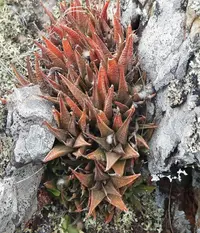
Gasteria 'Little Warty' is a compact succulent from South Africa, valued for its thick, tongue-shaped leaves marked with raised, bumpy patterns. It forms small clumps over time, staying low and neat, which makes it suitable for desks, windowsills, and small indoor spaces.

The plant naturally grows in shaded, rocky habitats, so it tolerates lower light better than many succulents and prefers protection from harsh, direct sun. Its fleshy leaves store water, giving it good drought tolerance and making it forgiving of occasional missed watering.

Because of its slow growth, modest size, and resilience to dry indoor air, Gasteria 'Little Warty' is considered easy for beginners. Understanding how to care for Gasteria mainly involves avoiding overwatering, heavy soils, and intense midday sun.


Main Plant Requirements

Care Difficulty

Easy Care

Light Preference

Bright Indirect Light

Water Requirements

Low Water

Temperature Preference

Tropical / Frost Sensitive

Hardiness Zone

10–11

Soil Texture

Sandy, Loamy, Rocky

Soil pH

Acidic (5.5–6.5), Slightly acidic (6.5–7.0)

Soil Drainage

Well-drained

Fertilization

Minimal (feed rarely)

Get Personalized Care Plan

Scan your plant to receive care tips personalized for your specific plant

Available on iOS and Android

How to Care for the Gasteria

This compact succulent prefers bright, indirect light and protection from harsh sun.

  • Provide 4–6 hours of bright, filtered light daily, such as near an east- or north-facing window or under light shade outdoors.
  • Tolerates partial shade, especially in hot climates, but very low light leads to stretched, pale leaves and slower growth in Gasteria.
  • Avoid strong midday or afternoon sun; watch for bleached, brown patches as a sign of sunburn, especially in summer.

Watering needs are low, but timing and drainage are critical for healthy roots.

  • Let the top 3–5 cm of soil dry before watering; check by feeling the soil rather than following a fixed schedule for Gasteria 'Little Warty'.
  • Water more frequently in active growth (spring–early fall) and reduce in winter, sometimes only lightly moistening the soil once it is fully dry.
  • Use fast-draining soil and empty saucers after 10–15 minutes; soft, yellowing leaves suggest overwatering, while wrinkled, deflated leaves suggest underwatering.

This species prefers mild, stable temperatures and does poorly in frost or extreme heat.

  • Aim for 65–80°F (18–27°C) during active growth, which supports steady photosynthesis and root activity for Gasteria 'Little Warty'.
  • Protect from cold below 40°F (4°C); prolonged exposure near or below 32°F (0°C) can cause tissue damage and rot.
  • In hot spells above 90°F (32°C), provide shade and extra airflow, avoiding enclosed, stagnant spots that overheat, especially near south- or west-facing windows.

This succulent handles typical indoor humidity well and rarely needs special adjustment.

  • Aim for 30–50% relative humidity, similar to most heated or air-conditioned homes.
  • Dry air is usually tolerated, but very hot, stagnant rooms can cause leaf tips to shrivel slightly.
  • If tips shrivel, increase airflow and place the pot away from direct heating vents rather than adding heavy humidity.

Soil for Gasteria 'Little Warty' must be fast-draining and airy to prevent root rot.

  • Use a gritty, sandy mix such as 50–70% commercial cactus/succulent mix combined with 30–50% mineral amendments like pumice, coarse perlite, and 2–4 mm gravel.
  • Aim for slightly acidic to neutral pH around 6.0–7.0, which supports nutrient availability without stressing roots.
  • Ensure the mix feels loose and crumbly; break up any fine peat clumps that might hold excess moisture around roots.
  • Avoid heavy garden soil, straight compost, or mixes dominated by fine peat that stay wet longer than 2–3 days after watering.

This compact species is very suitable for container growing.

  • Choose a pot only 2–4 cm wider than the root mass so the soil dries evenly rather than staying wet in unused spaces.
  • Use a stable, heavier pot material like ceramic if the plant becomes offset-heavy, to prevent tipping when the mix is very dry.
  • Raise the pot slightly on feet or a stand so drainage holes stay clear and excess runoff leaves the container quickly.

Feeding should be light for Gasteria 'Little Warty', as this succulent stores nutrients efficiently.

  • Use a balanced liquid fertilizer (around 10-10-10) diluted to 25–50% strength for Gasteria indoor care.
  • Apply once every 4–6 weeks during spring and summer only, on already moist soil.
  • Skip feeding in fall and winter when growth slows and the plant rests.
  • Avoid compost-rich or slow-release fertilizers that stay wet or salty, which can damage roots.

Pruning needs are minimal for Gasteria 'Little Warty', focusing on cleanliness rather than shaping.

  • Best time is during active growth in spring or early summer, when wounds seal faster.
  • Remove dead, dried, or mushy leaves at the base with clean, sharp scissors or pruning snips.
  • Gently twist or cut away damaged or crowded leaves to maintain an open rosette shape.
  • Discard any diseased tissue and sterilize tools with alcohol to limit spread of rot or fungus.

Repotting Gasteria 'Little Warty' is infrequent, mainly to refresh soil or manage offsets.

  • Plan to repot every 2–3 years or when roots circle the pot or emerge from drainage holes.
  • Choose late spring as the best season, using a shallow pot with gritty, fast-draining succulent mix.
  • Gently loosen the root ball, remove old soil, and separate offsets with minimal tearing.
  • Let roots dry 1–2 days before first light watering to reduce transplant shock and rot risk.

Propagation of Gasteria 'Little Warty' is commonly done from offsets rather than seed.

  • Separate offsets in spring or early summer when they have several leaves and visible roots.
  • Unpot the plant, brush away soil, and cut pups from the main rosette with a clean knife.
  • Allow cut surfaces to callus in dry shade for 1–3 days before potting in gritty mix.
  • Keep newly potted divisions warm, in bright indirect light, and water lightly once roots establish.

Winter care for Gasteria 'Little Warty' focuses on avoiding frost and excess moisture.

  • This succulent is not frost hardy and should be kept above 40°F, ideally 50–65°F indoors.
  • Move container plants indoors before the first freeze, placing them in bright, indirect light.
  • Water sparingly in winter, letting soil dry almost completely between light waterings to prevent rot.

Care Tips

Offset management

Remove and pot up offsets once they have at least 3–4 leaves and visible roots, using a clean, sharp knife and allowing the cut surface to dry for 1–2 days before planting to reduce rot risk and maintain the mother plant’s compact form.

Controlled clump shaping

Rotate the pot 90° every 2–3 weeks and place the visually strongest side slightly farther from the light source to encourage even rosette development and prevent the clump from leaning toward one direction.

Root health checks

Every 12–18 months, gently slide the plant from its pot to inspect roots, trimming any hollow, black, or mushy sections with sterilized scissors and repotting into fresh mix if roots circle densely around the pot wall.

Dry-season scheduling

During extended cloudy or cool spells, mark a minimum interval of 14 days between light waterings and only water when lower leaves just begin to feel softer, which helps avoid chronic overwatering while growing Gasteria in low-light seasons.

Preventive pest inspection

Inspect leaf bases and the junction where leaves meet the stem every 1–2 weeks for early signs of mealybugs or scale, wiping crevices with a cotton swab dipped in 70% isopropyl alcohol at the first sign of pests to prevent colony buildup in the tight rosettes.

Common Pests and Diseases

Mealybugs

This pest often hides in leaf bases and between the thick, tongue-shaped leaves, sucking sap and causing yellowing, distortion, and sticky residue. Symptoms include white, cottony clusters in crevices and slowed growth.

Solution

Remove visible clusters with a cotton swab dipped in 70% isopropyl alcohol, then rinse the plant gently with lukewarm water. Isolate the plant, repeat alcohol swabs weekly until no new insects appear, and improve air movement while avoiding excess fertilizer that encourages soft, mealybug-prone growth.

Aloe mite

This pest, also called aloe gall mite or eriophyid mite, causes distorted, warty, or tumor-like growths along leaf edges and tips, which can be confused with normal Gasteria texture. Symptoms include rough, swollen, blistered areas that look abnormal compared with the plant’s usual patterned bumps.

Solution

Cut away all visibly deformed and swollen tissue with a sterile blade, discarding it in sealed trash rather than compost. Keep the plant isolated, maintain lower humidity and good airflow, and if distortion continues, consider discarding the plant to prevent spread to other succulents, since systemic miticides are usually needed and are not practical for most home growers.

Soft scale

These insects appear as small, rounded or oval bumps on leaves and stems, often along the lower leaf surfaces or near the base, feeding on sap. Symptoms include sticky honeydew, sooty mold growth on that residue, and gradual weakening of the plant.

Solution

Gently scrape off or crush individual scales with a fingernail or cotton swab, then wash the plant with a mild soapy water solution and rinse thoroughly. Repeat washing every 7–10 days for several cycles, keep the plant in bright, indirect light, and inspect nearby succulents to remove any early-scale colonies before they establish.

Fungal leaf spots

This disease appears as small water-soaked or brown spots that may develop pale halos, often starting on older or shaded leaves where water lingers. Symptoms include slow-spreading lesions that can coalesce, causing patches of dead tissue while the rest of the leaf stays green and firm.

Solution

Remove and discard affected leaves or cut out badly spotted areas with sterile scissors, then let the plant dry thoroughly and avoid overhead watering. Improve airflow, keep leaves dry, and water only when the soil is fully dry; if spotting continues to spread, apply a copper- or sulfur-based fungicide labeled for succulents, following label directions carefully.

Bacterial soft rot

This disease starts as soft, water-soaked patches at the leaf base or where damage has occurred, quickly turning mushy and foul-smelling. Symptoms include collapse of affected leaves that detach easily and may spread into the central rosette if not controlled.

Solution

Cut away all soft, discolored tissue back to firm, healthy material using a sterile knife, then allow the plant to dry in a warm, airy place for several days before lightly watering again. Discard any plants that are mostly affected, sanitize tools and pots with a 10% bleach solution, and avoid splashing water into the rosette or leaving wet debris trapped between leaves when caring for Gasteria.

Interesting Facts

Natural hybrid origins

This cultivar is believed to have originated from complex hybridization among several Gasteria species, which gives it its unusually compact rosette, mottled patterning, and strongly textured leaf surface compared with wild species.

Juvenile leaf appearance

The leaves keep a juvenile, rough-textured look for many years instead of transitioning to the smoother, strap-like adult leaves seen in many Gasteria species, which is one reason this plant stays visually interesting even at a small size.

Strong clumping growth

It offsets freely from the base, forming dense clusters of rosettes that remain relatively low and tight, making it one of the most space-efficient choices for Gasteria indoor care in small containers.

FAQs about Gasteria

Brown leaf tips or patches usually come from underwatering, intense direct sun, or salt buildup from fertilizer. Check roots for rot, flush the soil occasionally, and remove only fully dead tissue with clean scissors.

Grow Healthy Plants with Botan Care

Keep your plants happy and healthy with plant identification, disease detection, and easy care guidance.

Botan plant care app — identify plants on mobile

Explore More Plants