Rotate For Symmetry
Turn the pot 90° every 2–3 weeks so all leaf rosettes receive similar light exposure, which keeps the plant compact and prevents lopsided or stretched growth.

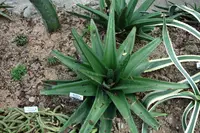
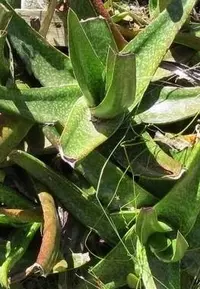
Blade oxtongue (Gasteria excelsa) is a compact succulent from South Africa, valued for its thick, tongue-shaped leaves and slow, clumping growth. Leaves are usually dark green to gray-green, often with faint spots or banding, and can develop a slightly rough texture. In maturity it sends up tall flower spikes with tubular, pink and green blooms that attract pollinators. This species naturally grows in rocky, well-drained habitats with bright, indirect light and limited rainfall. Its drought tolerance, modest growth rate, and preference for simple, gritty soil mixes make it a forgiving choice for people learning how to care for Blade Oxtongue.

Care Difficulty
Easy Care

Light Preference
Bright Indirect Light

Water Requirements
Low Water

Temperature Preference
Tropical / Frost Sensitive

Hardiness Zone
10–11

Soil Texture
Sandy, Loamy, Rocky

Soil pH
Slightly acidic (6.5–7.0), Neutral (7.0)

Soil Drainage
Well-drained

Fertilization
Minimal (feed rarely)
Scan your plant to receive care tips personalized for your specific plant
Available on iOS and Android
This succulent prefers bright, indirect light with limited direct sun exposure.
Watering should be infrequent and based on how dry the soil is, not on a fixed calendar.
Stable, mild temperatures support steady growth and reduce stress on this succulent.
Humidity is rarely critical for Gasteria excelsa, which thrives in typical indoor air.
Gasteria excelsa prefers a very fast-draining, gritty mineral substrate that mimics arid rocky soils.
This species is very suitable for container growing due to its slow, compact root system.
Gasteria excelsa grows well with modest feeding, so use light, controlled fertilization during active growth for best results when caring for Blade Oxtongue.
Gasteria excelsa needs minimal pruning, mainly to maintain a clean, healthy rosette.
This slow-growing succulent prefers slightly tight pots and infrequent repotting.
Gasteria excelsa is commonly propagated from offsets and sometimes from leaf cuttings or seed.
This succulent is frost-sensitive and needs protection from freezing temperatures in most climates.

Plant Health Check
Not sure what's wrong with your plant? Check your plant's health inside the app.
This species occurs naturally only in the Eastern Cape region of South Africa, where it grows on rocky slopes and cliffs in dry thicket vegetation and partial shade.
It forms large, upright rosettes with very thick, strap-like leaves that can exceed 40 cm in length and are often mottled, an adaptation that helps store water and reduce surface overheating in its arid habitat.
It typically flowers in late summer to autumn in the Southern Hemisphere, producing tall inflorescences with tubular, pinkish to orange flowers that are visited by nectar-feeding birds and insects for pollination.

Among gasterias, this species is notable for forming some of the largest rosettes in the genus, with mature plants in habitat developing imposing clumps that dominate the surrounding low vegetation on rocky outcrops.
This species grows slowly, usually adding only a few leaves each year. Growth is most active in spring and autumn. Limited root space, low light, cool temperatures, or very sparse feeding can slow it even more.
Keep your plants happy and healthy with plant identification, disease detection, and easy care guidance.