Aechmea bromeliifolia Care

Aechmea bromeliifolia

About Aechmea bromeliifolia

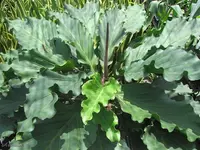
Aechmea bromeliifolia is a tank-forming bromeliad that grows as a rosette of stiff, arching leaves that collect water at the center. It often shows banded or lightly spined foliage and rises on a short stem, giving it a compact, architectural look.

This species is native to tropical areas of Central and South America, where it grows as both an epiphyte on trees and a terrestrial plant in well-drained sites. Its tolerance of bright light, some dryness, and typical indoor temperatures makes it relatively straightforward to care for Aechmea bromeliifolia in homes and greenhouses.

Main Plant Requirements

Care Difficulty

Moderate Care

Light Preference

Partial Shade

Water Requirements

Moderate Water

Temperature Preference

Tropical / Frost Sensitive

Hardiness Zone

10–12

Soil Texture

Sandy, Loamy, Organic-rich

Soil pH

Acidic (5.5–6.5)

Soil Drainage

Well-drained

Fertilization

Light (every 4–6 weeks)

Get Personalized Care Plan

Scan your plant to receive care tips personalized for your specific plant

Available on iOS and Android

How to Care for the Aechmea bromeliifolia

This bromeliad prefers bright conditions that mimic dappled forest light.

  • Provide 3–5 hours of gentle morning sun with bright, filtered light the rest of the day; protect from harsh midday and afternoon rays.
  • Outdoors, place where it receives partial shade under trees or shade cloth; leaves bleaching, crisp edges, or brown patches indicate excessive direct sun.
  • Insufficient light leads to stretched growth and dull color; in darker winters, move Aechmea bromeliifolia to a brighter position, avoiding sudden exposure changes.

This species needs moist but not saturated conditions with special attention to its central cup.

  • Allow the top 2–4 cm of soil to dry before watering; then water thoroughly so excess drains freely, avoiding standing water around roots.
  • Keep the central cup 1/2–2/3 full of fresh water, flushing it every 1–2 weeks to prevent stagnation, rot, and mosquito larvae.
  • In cooler seasons or low light, reduce watering frequency; soft, collapsing leaves suggest overwatering, while curling or wrinkling foliage indicates underwatering.

Stable warm temperatures support healthy growth and flowering for this bromeliad.

  • Aim for 65–80°F (18–27°C) for active growth; short peaks up to 90°F (32°C) are tolerated if humidity is moderate and airflow is good.
  • Protect from cold: growth slows below 60°F (16°C), and damage occurs near 40°F (4°C); prolonged exposure around this level can kill the plant.
  • Keep it frost-free at all times; shield from cold drafts, sudden temperature drops, and heat sources that create hot, dry air around the foliage.

This bromeliad prefers moderately humid air but usually adapts to typical indoor levels.

  • Aim for 40–60% humidity; it tolerates slightly drier air if watering is consistent.
  • Crisping leaf tips and dull, rolling foliage indicate humidity stress rather than underwatering.
  • Increase humidity with a pebble tray, grouping plants, or a small room humidifier instead of misting the central cup.

Use a very free-draining, airy mix that behaves more like orchid or epiphytic soil than standard potting soil.

  • Choose a loose, chunky texture using roughly equal parts orchid bark, coarse perlite or pumice, and a light potting mix.
  • Ensure rapid drainage; water should run through in seconds and never leave the mix waterlogged.
  • A slightly acidic to neutral pH around 5.5–7 supports nutrient uptake and root health for Aechmea bromeliifolia.
  • Avoid heavy garden soil, peat-heavy mixes without extra perlite, or any blend that compacts and excludes air.

This species is well suited to container culture due to its compact root system and rosette habit.

  • Select a pot only 2–4 cm wider than the root ball to prevent excess wet mix around the shallow roots.
  • Choose a heavy or wide-based container to counterbalance the tall flowering stalk and reduce tipping risk.
  • Use a potting angle that keeps the rosette upright and central so collected water drains evenly from the leaf bases.

This bromeliad benefits from light, careful feeding to support foliage color and flowering without damaging roots.

  • Use a balanced, water-soluble fertilizer (around 10-10-10 or 20-20-20) diluted to 1/4–1/2 strength for caring for Aechmea bromeliifolia.
  • Feed every 4–6 weeks during spring and summer, applying to the soil or lightly to the leaf tank, then flush with plain water occasionally.
  • Avoid heavy organic compost in pots; a small amount of slow-release fertilizer in the mix at planting is sufficient.
  • Stop or greatly reduce feeding in fall and winter, as growth slows and excess salts can accumulate in the potting medium.

Pruning is minimal and focuses on keeping the rosette clean and directing energy to healthy growth in Aechmea bromeliifolia.

  • Best time is after flowering or in late spring, when assessing pups and spent flower stalks is easier.
  • Remove dead, damaged, or yellowing leaves at the base with clean, sharp scissors or pruners to improve air flow.
  • Cut the faded flower spike close to the base to shift resources to offsets rather than old blooms.
  • Thin out weak, crowded pups, leaving the strongest offsets to maintain an attractive, balanced clump.

This bromeliad prefers snug pots and only occasional repotting, mainly to refresh mix or separate offsets.

  • Repot every 2–3 years or when roots circle the pot, growth slows, or the plant becomes top-heavy with pups.
  • Choose late spring or early summer so the plant can re-establish quickly in warm, bright conditions.
  • Use a very free-draining mix such as orchid bark with coarse perlite and some peat or coco coir to limit root stress.
  • Handle roots gently, keep the central cup upright and filled after potting, and avoid deep planting of the rosette base.

New plants are most reliably produced from offsets, called pups, that form around the base of the mother rosette.

  • Best season is late spring to summer, once pups reach about 1/3–1/2 the size of the parent plant.
  • Detach pups with a clean knife, keeping a small portion of roots or basal tissue attached if possible.
  • Plant pups in a very airy bromeliad or orchid-type mix, then keep slightly moist, warm (70–80°F), and in bright, indirect light.
  • Seed propagation is possible but slow; sow on the surface of sterile mix, keep humid, and expect variable seedlings.

This species prefers warm conditions and needs protection from freezing temperatures in most climates.

  • Avoid frost; sustained exposure below about 40°F can damage foliage and the central rosette.
  • In regions with cold winters, grow in containers and move plants indoors before night temperatures drop below 45°F.
  • Indoors, place in bright, indirect light, reduce watering slightly, but keep the central cup filled with fresh water.
  • For plants grown outdoors in mild areas, use a light mulch around the pot or base to moderate root temperature.

Care Tips

Support top-heavy rosettes

As the plant matures and offsets elongate, place a small, heavy nursery pot or decorative stones at the base of the container to counterbalance the weight and prevent the plant from tipping.

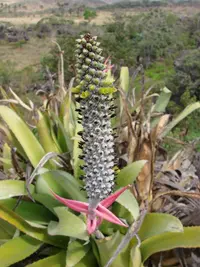
Manage water-holding cup

Every 1–2 weeks, flush the central cup with fresh water and immediately invert the plant over a sink to drain old water, which helps prevent fungal issues and mosquito larvae.

Stabilize offsets early

When pups reach about one-third the size of the mother, gently pack fresh mix around their bases or use short bamboo skewers to brace them so roots can anchor securely without wobbling.

Use breathable cachepot

Place the plastic grow pot inside a slightly larger, unglazed clay cachepot with a few drainage holes drilled or present, which improves side aeration while still allowing easy removal for flushing and grooming.

Rotate for symmetrical form

Turn the pot 90° every 2–3 weeks so each side receives similar light exposure, which encourages an even rosette shape and more balanced foliage when growing Aechmea bromeliifolia.

Common Pests and Diseases

Scale insects

This pest appears as small, rounded bumps on leaves, sheaths, or flower stalks and may cause yellowing or stunted growth. Symptoms include sticky honeydew and sooty mold developing on affected areas.

Solution

Remove heavily infested leaves or offsets and gently scrape or wipe insects off with a cotton pad dipped in isopropyl alcohol. For persistent problems, use a horticultural oil or insecticidal soap, applied carefully to leaf bases and the central tank, and repeat every 7–10 days until no new scale is seen.

Mealybugs

These insects form white, cottony clusters in leaf axils, around the tank, and on roots, often causing leaf yellowing and distorted new growth. This pest also excretes honeydew, which encourages sooty mold.

Solution

Flush the plant and tank with lukewarm water, then dab visible mealybugs with isopropyl alcohol on a cotton swab. Follow with 2–3 treatments of insecticidal soap or a systemic insecticide labeled for bromeliads, ensuring good coverage into leaf bases while allowing the tank to dry slightly between treatments.

Tank rot

This disease affects water held in the central cup, where stagnant, dirty water promotes soft, foul-smelling decay at the leaf bases. Symptoms include browning at the crown, collapsing inner leaves, and a sour odor from the tank.

Solution

Immediately empty the tank, trim out all soft or brown tissue, and improve air circulation and light levels. Refill the cup only partially with fresh water, flush it every 3–7 days, and avoid letting fertilizer solution sit in the tank, which is a key part of Aechmea bromeliifolia care instructions in indoor and patio conditions.

Leaf spot

This disease causes small, water-soaked lesions that expand into tan or dark spots with possible yellow halos on the stiff leaves. Symptoms include cosmetic damage and, in severe cases, leaf thinning or premature leaf death.

Solution

Remove and discard affected leaves, then reduce overhead watering and avoid leaving water droplets sitting on foliage in low light. Improve air movement, keep the rosette clean, and if spots continue to spread, apply a copper-based or other bromeliad-safe fungicide according to label directions.

Guzmania-bromeliad aphids

These insects are small, soft-bodied, and often cluster on flower stalks, young leaves, and inside the rosette, causing distortion, sticky residue, and occasional leaf curling. This pest tends to appear when plants flower or are kept in warm, sheltered conditions with little airflow.

Solution

Rinse aphids off with a firm stream of lukewarm water, paying attention to flower stems and inner leaf whorls, and repeat as needed. If populations persist, use insecticidal soap or a neem-based product, applying in the early morning or evening and ensuring excess solution drains freely from the tank and leaf bases.

Interesting Facts

Water-tank habitat

This bromeliad forms a tight rosette that holds rainwater in its central tank, providing a microhabitat for insects, frogs, and other small organisms in its native Neotropical forests.

Spiny defensive leaves

Its stiff green leaves have pronounced spines along the margins, an adaptation that helps reduce herbivory pressure in the wild.

Bird-dispersed berries

After flowering, it produces small yellow to reddish berries whose fleshy pulp attracts birds, which then disperse the seeds across the landscape.

Botan icon

Did you know?

In parts of its native range, this species commonly grows both as an epiphyte on trees and terrestrially on rocky or sandy soils, showing an unusual level of flexibility in how it anchors and obtains water compared to many more specialized bromeliads.

FAQs about Aechmea bromeliifolia

Lack of bloom is usually caused by insufficient light, a pot that is too large, or a plant that is still immature. Consistent warmth, stable conditions, and avoiding heavy nitrogen fertilizer help trigger flowering once the rosette is mature.

Grow Healthy Plants with Botan Care

Keep your plants happy and healthy with plant identification, disease detection, and easy care guidance.

Botan plant care app — identify plants on mobile

Explore More Plants