Tillandsia mallemontii Care

Tillandsia mallemontii

About Tillandsia mallemontii

Tillandsia mallemontii is a small epiphytic air plant from southern Brazil, usually found growing on tree branches in bright, airy habitats. It forms soft, tangled clumps of thin, silvery leaves that can create a cloud-like mound over time.

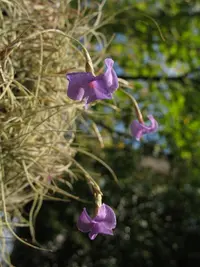
The leaves are covered with tiny scales that help the plant absorb water and nutrients from the air, so it does not need soil. It produces small, tubular flowers, often pale lilac or blue, that appear along its slender stems.

This species is considered relatively easy to grow for those familiar with air plants, as long as it receives good air movement, regular moisture, and bright, filtered light. Understanding how to care for Tillandsia mallemontii mainly involves balancing moisture with fast drying between waterings.

Main Plant Requirements

Care Difficulty

Moderate Care

Light Preference

Bright Indirect Light

Water Requirements

Moderate Water

Temperature Preference

Tropical / Frost Sensitive

Hardiness Zone

10–12

Soil Texture

Rocky, Sandy, Organic-rich

Soil pH

Acidic (5.5–6.5), Slightly acidic (6.5–7.0)

Soil Drainage

Well-drained

Fertilization

Light (every 4–6 weeks)

Get Personalized Care Plan

Scan your plant to receive care tips personalized for your specific plant

Available on iOS and Android

How to Care for the Tillandsia mallemontii

This epiphytic air plant needs bright, indirect light to stay compact and bloom well.

  • Provide 4–6 hours of bright, filtered light daily, such as dappled shade under a tree or 0.5–2 hours of gentle morning sun, avoiding harsh midday rays.
  • Outdoors, give Tillandsia mallemontii bright shade or bright indirect light; indoors, place near an east or bright north window, set back 0.5–1 m from intense glass.
  • Watch leaves for feedback: bleaching, crisp tips, or brown patches signal too much sun, while stretched, dull, or floppy growth indicates insufficient light.

This air plant absorbs water through its leaves and depends on thorough wetting followed by fast drying.

  • In mild conditions, soak or heavily mist 2–3 times per week, ensuring all leaf surfaces get wet, then shake off excess so foliage dries fully within 2–4 hours.
  • Increase watering in hot, dry, or windy weather and reduce during cool, humid periods, always letting the plant dry completely between waterings to prevent rot.
  • Signs of underwatering include curling, wrinkled leaves and very light weight; soft, limp bases or a musty smell indicate overwatering and poor air movement.

Stable, mild temperatures support steady growth and flowering for this species.

  • Aim for 65–80°F (18–27°C) as the main growing range, which suits both sheltered outdoor spots and typical indoor conditions with good air movement.
  • Protect from cold below 45°F (7°C) and bring under cover before temperatures approach 40°F (4°C), since Tillandsia mallemontii is not frost hardy.
  • During heat above 90°F (32°C), increase air circulation, shade from direct sun, and step up watering frequency so the plant does not stay hot and dry for long periods.

This species prefers moderate to high humidity and reacts quickly to very dry air.

  • Aim for 50–70% humidity, with regular air movement to prevent stagnation and fungal issues.
  • In dry indoor air, leaf tips may brown and curl, and the plant may feel crisp despite watering.
  • Increase humidity by misting lightly in the morning, using a nearby tray of water and pebbles, or placing plants together without enclosing them.

Tillandsia mallemontii is an epiphytic air plant and should not be grown in conventional potting soil.

  • Mount the plant on cork, hardwood, or inert rock, using a small amount of waterproof glue or soft wire so air can circulate around all sides.
  • If a loose medium is desired, use a very airy mix such as large orchid bark with a little charcoal and coarse perlite, never burying the base.
  • Maintain extremely fast drainage; any support material must dry fully within 2–4 hours after soaking or misting to prevent rot at the base.
  • Avoid dense, peat-heavy, or compacted mixes, and keep the plant above any constantly wet substrate or moss pads.

This species can be grown in containers only as a mounted or loosely placed air plant, not potted in soil.

  • Use open-sided containers like mesh baskets or slatted holders so air reaches all leaf surfaces and the base dries quickly.
  • Choose a stable, heavier container or add weight if the plant clump becomes large and top-heavy to prevent tipping after watering.
  • Keep any decorative stones or glass pieces shallow and dry so they support the plant without trapping water around the base.

This epiphytic air plant benefits from light, diluted feeding during its active growing season.

  • Use a balanced, low-copper orchid or air-plant fertilizer at 1⁄4–1⁄2 strength, mixed in water.
  • Feed Tillandsia mallemontii every 3–4 weeks in spring and summer during misting or soaking.
  • Reduce feeding to once in late autumn and skip midwinter applications under low light.
  • Always allow good air circulation after feeding so foliage dries within a few hours.

Pruning is minimal and mainly keeps this air plant healthy and tidy.

  • In late winter or after flowering, remove completely dead or brown leaves with small, clean scissors.
  • Cut spent flower spikes at the base to direct energy into new offsets and denser clumps.
  • Thin out crowded, shaded interior shoots to improve air movement and light penetration.
  • Handle Tillandsia mallemontii gently during pruning to avoid tearing the delicate, wiry leaves.

This species is usually mounted, so care focuses on remounting or dividing clumps rather than traditional repotting.

  • Remount when clumps detach, become too dense, or airflow is restricted, often every 3–5 years.
  • Best timing is spring to early summer, when growth and root attachment are fastest.
  • Gently separate sections of the clump, keeping groups of several plants together to reduce stress.
  • Secure to new cork, wood, or wire using soft ties, allowing natural roots to grip over time.

Propagation is commonly done by division of offsets rather than from seed.

  • Wait until pups around the mother plant reach about 1⁄3–1⁄2 her size before separating.
  • In spring or early summer, gently twist or cut pups away, keeping their base tissue intact.
  • Reattach divisions to mounts in bright, indirect light with strong air movement and 50–70% humidity.
  • Mist lightly several times per week until new growth shows that the offsets have established.

This subtropical air plant is sensitive to hard frost and needs sheltered winter conditions in most climates.

  • Keep temperatures ideally above 45°F; brief dips to near freezing can cause leaf damage.
  • In cold regions, move mounted plants indoors or into a bright, frost-free greenhouse.
  • Provide bright, indirect light and good air movement while slightly reducing watering frequency.
  • Avoid prolonged wet foliage in cool conditions to limit rot during winter.

Care Tips

Mounting strategy

Attach plants to open, airy mounts such as cork bark or hardwood using soft wire or biodegradable twine, leaving the base exposed so air can flow freely around the roots and prevent rot.

Cluster for airflow

Grow several plants together on one mount but stagger them so each clump has clear space around it, which increases air movement and helps the fine leaves dry quickly after misting.

Support trailing habit

Position the plant where its natural trailing growth can hang freely from a mount or wire frame, avoiding tight shelves or enclosed terrariums that trap moisture around the foliage.

Nighttime ventilation

Use a small fan on a low, indirect setting for 1–2 hours after evening watering to support the plant’s nighttime gas exchange and reduce the risk of fungal spotting on the leaves.

Offset management

Once clumps reach 8–10+ rosettes, remove a few outer offsets with a gentle twist and remount them, which keeps the original clump from becoming overly dense and improves light and airflow for all plants when caring for Tillandsia mallemontii.

Common Pests and Diseases

Mealybugs

This pest appears as small white cottony clusters tucked into leaf bases and along the wiry stems. These insects feed on plant sap and can cause stunted growth and yellowing or shriveling leaves.

Solution

Remove visible insects with a cotton swab dipped in 70% isopropyl alcohol, then rinse the plant thoroughly with lukewarm water and allow it to dry quickly in bright, airy conditions. Repeat inspections weekly and, if needed, use a light application of insecticidal soap, ensuring good Tillandsia mallemontii indoor care with strong air movement afterward to prevent prolonged wetness in leaf bases.

Scale insects

This pest appears as small, hard, brown or gray bumps tightly attached to leaves and stems, often near the base of the plant. These insects suck sap and weaken the plant over time, leading to dull, discolored foliage.

Solution

Manually scrape or rub off visible scale with a soft brush or cloth, then rinse the plant under running water and dry it in a well-ventilated spot. For persistent infestations, apply a diluted insecticidal soap or horticultural oil spray, making sure the plant dries within a few hours to avoid excess moisture retention in leaf sheaths.

Fungal leaf spot

This disease causes small, dark, often water-soaked spots on leaves that may enlarge and coalesce under humid, stagnant conditions. Symptoms include mottled, thinning foliage and, in severe cases, leaf dieback from the tips inward.

Solution

Improve airflow, reduce crowding, and avoid leaving the plant wet for long periods, especially at night. Trim and discard heavily spotted leaves, then adjust the watering routine so that soaking or misting is followed by rapid drying; in severe cases, a light application of a broad-spectrum fungicide labeled for ornamentals can be used according to the product directions.

Bacterial soft rot

This disease leads to soft, slimy, foul-smelling tissue at the base of the leaves or in dense clumps, often following prolonged wetness and poor ventilation. Symptoms include rapid collapse of affected sections and dark, water-soaked areas that spread through the plant.

Solution

Remove and discard all mushy, discolored parts, cutting back into healthy, firm tissue, and isolate the affected plant to prevent spread. Allow remaining sections to dry thoroughly in a bright, breezy spot, reduce soaking frequency, and avoid water sitting in the leaf bases; severely affected plants are best discarded to protect nearby air plants.

Spider mites

This pest is more common in very dry, warm indoor air and may cause fine stippling, dulling of the leaves, and delicate webbing between leaf bases. These insects pierce leaf surfaces and suck out cell contents, leading to gradual weakening of the plant.

Solution

Rinse the plant under a firm but gentle stream of water, focusing on leaf bases and inner whorls, then let it dry quickly in strong air circulation. If mites persist, apply insecticidal soap or a miticide labeled for ornamental plants, and slightly increase ambient humidity while still maintaining excellent airflow to discourage reinfestation.

Interesting Facts

Fragrant night blooms

This species produces small, pale bluish to lilac flowers with a noticeable sweet fragrance, especially during the evening and night, which is unusual among many air plants that have little to no scent.

Threadlike growth habit

It forms long, thin, flexuous stems densely covered in fine, silvery leaves, creating a wispy, threadlike mat that often drapes and tangles rather than growing in a compact rosette.

Cool, humid native range

It is naturally found in cooler, humid regions of southern Brazil, where it grows as an epiphyte on trees in coastal and montane forests rather than in hot, arid habitats often associated with other air plants.

Botan icon

Did you know?

This species often grows in dense, tangled colonies that can form large, airy cushions on tree branches, creating microhabitats that shelter small invertebrates and contribute to local epiphytic communities in its native Brazilian forests.

FAQs about Tillandsia mallemontii

Limited light, insufficient air movement, or lack of a mild seasonal temperature drop often delay flowering. Maintain good hydration without staying wet, provide bright but indirect light, and avoid heavy fertilization, which can promote leaves instead of blooms.

Grow Healthy Plants with Botan Care

Keep your plants happy and healthy with plant identification, disease detection, and easy care guidance.

Botan plant care app — identify plants on mobile

Explore More Plants