Aechmea mertensii Care

Aechmea mertensii

About Aechmea mertensii

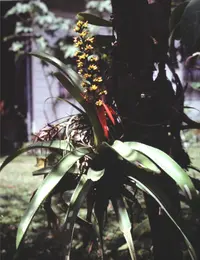
Aechmea mertensii is a tropical bromeliad that grows as an epiphyte, usually attached to trees rather than rooted in soil. It forms a rosette of stiff, arching leaves that collect water in the center. Flower spikes rise from this rosette, often with colorful bracts that last longer than the actual blooms. In nature it occurs in humid forests of northern South America. This species is considered moderately easy to grow indoors if its need for bright, filtered light and consistent moisture is met. Understanding how to care for Aechmea mertensii starts with replicating its warm, airy, tree-dwelling habitat.

Main Plant Requirements

Care Difficulty

Moderate Care

Light Preference

Partial Shade

Water Requirements

Moderate Water

Temperature Preference

Tropical / Frost Sensitive

Hardiness Zone

11–12

Soil Texture

Sandy, Loamy, Organic-rich

Soil pH

Acidic (5.5–6.5)

Soil Drainage

Moist but well-drained

Fertilization

Light (every 4–6 weeks)

Get Personalized Care Plan

Scan your plant to receive care tips personalized for your specific plant

Available on iOS and Android

How to Care for the Aechmea mertensii

This epiphytic bromeliad prefers bright, filtered light that mimics dappled forest conditions.

  • Provide 4–6 hours of bright, indirect light daily, such as under a shade tree canopy or beneath 30–50% shade cloth.
  • Tolerates partial shade, but in very low light the rosette may stretch and leaf color fades; move gradually to a brighter position if this occurs for Aechmea mertensii.
  • Avoid harsh midday and late-afternoon sun, which can cause leaf scorch; morning sun until about 10–11 a.m. is usually safe in mild climates.

Watering should keep the central tank hydrated while allowing the roots and medium to drain freely.

  • Keep the central cup filled with fresh water and flush it every 1–2 weeks to prevent stagnation; allow excess to drain from leaf axils.
  • Let the top 2–3 cm of the medium dry before watering the roots again; use a fast-draining mix to limit standing water around the base.
  • In warm active growth, tank water may be used up faster; in cooler seasons, reduce refills and watch for signs of overwatering such as leaf base softness or sour smell.

Stable warm conditions support healthy foliage and flowering in this bromeliad.

  • Aim for 65–80°F (18–27°C) for best growth, with gentle air movement to reduce fungal problems in the leaf rosette.
  • Protect from temperatures below 50°F (10°C); brief drops to 45°F (7°C) may be tolerated but repeated chills slow growth and invite rot.
  • Avoid prolonged exposure above 90°F (32°C); in hot weather, increase shade and humidity and avoid hot, reflective surfaces that overheat the plant.

This epiphytic bromeliad prefers moderately humid air to keep foliage and central cup healthy.

  • Aim for 50–70% humidity; it tolerates brief dips lower but prolonged very dry air causes leaf browning at the tips.
  • Watch for curling or crisp leaf edges and a sluggish central rosette as signs humidity is too low.
  • Increase humidity with a nearby humidifier or pebble tray; avoid misting directly into the central cup to reduce rot risk.

Use a very airy, fast-draining mix that mimics the loose organic material this bromeliad encounters in nature.

  • Choose a coarse, organic-rich mix such as 40% fine orchid bark, 30% peat or coco coir, and 30% perlite or pumice.
  • Ensure water drains through in seconds and the mix feels springy, not compacted or sticky after watering.
  • Aim for slightly acidic to neutral pH (5.5–7.0), which supports nutrient uptake for Aechmea mertensii without chemical stress.
  • Avoid heavy garden soil, clay-based mixes, or fine sand that hold water and suffocate roots; add extra bark or perlite to improve aeration.

This species adapts very well to container growing when its rosette shape and shallow root system are considered.

  • Select a wide, shallow pot to accommodate the spreading rosette while avoiding a large unused soil volume that stays wet.
  • Use a heavier or ceramic pot if the rosette becomes top-heavy so the container does not tip when the plant is watered.
  • Keep the central rosette above the rim of the pot so water can flow freely out of the leaf funnel without pooling against the container edge.

This bromeliad benefits from light, targeted feeding rather than heavy fertilization.

  • Use a balanced, dilute liquid fertilizer (around 10-10-10) at 1/4–1/2 strength during spring–summer for Aechmea mertensii.
  • Apply every 4–6 weeks, either as a light drench to the potting mix or as a gentle foliar spray, avoiding fertilizer sitting in the central cup.
  • Pause or reduce feeding to 1 light application in late autumn, then stop during the coolest winter months when growth slows.
  • Avoid compost or strong slow-release pellets that can burn roots; use bromeliad-safe or general houseplant formulations instead.

Pruning focuses on hygiene and managing offsets rather than reshaping the plant.

  • In late winter or early spring, remove dead or damaged leaves at the base using clean, sharp scissors or pruners.
  • After the flower spike fades and dries, cut it off close to the rosette to direct energy into pup (offset) production in Aechmea mertensii.
  • Thin crowded pups by cutting away weaker ones at the base, which improves airflow and maintains an open, balanced clump.
  • Disinfect tools before and after use with alcohol to reduce disease spread through pruning cuts.

This species prefers infrequent repotting, mainly when the clump outgrows its container or offsets need space.

  • Look for roots circling the pot, mix breaking down, or many crowded pups as signs it is time to repot, usually every 3–4 years.
  • Plan repotting for spring, when active growth helps the plant recover more quickly from root disturbance.
  • Gently remove the plant, shake off loose mix, and keep roots intact; separate pups only if they have several leaves and their own roots.
  • Replant in a shallow, snug pot with airy bromeliad or orchid-style mix, water lightly, and keep in bright, sheltered light to limit stress.

Propagation is commonly done by separating offsets rather than from seed.

  • Allow pups to reach about 1/3–1/2 the size of the mother rosette before removing them, usually in spring or early summer.
  • Cut pups away with a clean knife or pruners, keeping as many roots attached as possible for faster establishment in Aechmea mertensii.
  • Plant each offset in a small pot filled with very well-drained mix, and stake gently if top-heavy.
  • Maintain warm temperatures (70–80°F), bright indirect light, and slightly moist mix until new growth confirms successful rooting.

This tropical bromeliad is not frost hardy and needs mild, sheltered conditions in winter.

  • Move container plants indoors before temperatures drop below 50°F, providing bright, indirect light and good air circulation.
  • Keep indoor temperatures around 60–75°F and avoid cold drafts from windows or exterior doors for stable Aechmea mertensii care.
  • Water sparingly in winter, letting the mix dry slightly between waterings, and keep the central cup only lightly filled and refreshed to prevent rot.

Care Tips

Tank water management

Rinse and refill the central tank every 1–2 weeks with room-temperature, low-mineral water to prevent salt buildup, algae growth, and mosquito larvae in this bromeliad’s water reservoir.

Mounting on substrate

For a more natural epiphytic display, fix the plant to a cork slab or hardwood branch using soft ties and a thin layer of sphagnum moss around the roots, then mist the root zone regularly until it re-establishes.

Support for inflorescences

If the inflorescence leans or becomes top-heavy, discreetly stake it with a slim bamboo stick and soft plant ties to prevent mechanical damage to the flower spike and central rosette.

Vegetative pup division

Once offsets reach about one-third to one-half the size of the mother plant and show their own root growth, cut them off with a sterile knife at the base, dust the cut with powdered sulfur or cinnamon, and pot them individually to grow a new generation.

Salt and chemical control

Use collected rainwater, distilled, or reverse-osmosis water where tap water is hard or heavily chlorinated, since reduced mineral and salt levels significantly lower the risk of leaf tip burn and tank residue when caring for Aechmea mertensii.

Common Pests and Diseases

Scale insects

This pest feeds on bromeliad leaves and leaf sheaths, often hiding along the central tank and leaf bases, causing yellowing and general decline.

Solution

Remove heavily infested leaves if practical, then wipe remaining leaves and leaf bases with a cotton pad dipped in diluted alcohol or insecticidal soap, taking care not to let large amounts run into the tank. Rinse the plant with clean water after treatment and repeat every 7–10 days until no new scale is seen.

Mealybugs

These insects gather in leaf axils and protected folds near the rosette, forming white, cottony clusters that weaken the plant and can attract sooty mold.

Solution

Flush the rosette and leaf bases thoroughly with a strong but gentle stream of water, then treat remaining clusters with a cotton swab dipped in alcohol or a labeled insecticidal soap. Improve air movement and isolate the plant until no new mealybugs appear, repeating treatment as needed.

Tank bromeliad mosquitos

This pest uses the water held in the central tank and leaf axils for breeding, leading to mosquito larvae developing in the collected water without directly damaging the plant but creating a nuisance around the plant.

Solution

Empty and refill the central tank and leaf cups with fresh water at least weekly, and consider using clean rainwater or filtered water. In outdoor or greenhouse situations, lightly flush the rosette more often and avoid letting debris and decaying organic matter accumulate in the tank to reduce breeding sites.

Fungal leaf spot

This disease produces small water-soaked lesions on leaves that can enlarge into brown or tan spots, often starting where water sits on the foliage for long periods.

Solution

Remove affected leaves or trim out heavily spotted areas and discard them, then improve airflow and avoid wetting the foliage late in the day. If spots continue to spread, apply a bromeliad-safe fungicide according to label directions and keep the plant in bright, filtered light to support recovery.

Bacterial tank rot

Symptoms include a foul smell from the central tank, softening of inner leaves, and collapse of the rosette, often linked to stagnant, warm water and organic debris in the tank.

Solution

Immediately flush the tank several times with clean, lukewarm water, then gently remove any soft, rotting tissue and old flower stalks. Keep only a shallow layer of fresh water in the tank, increase air circulation, avoid overhead fertilizing into the rosette, and consider treating with a bromeliad-safe bactericide if valuable offsets need protection.

Interesting Facts

Tree-dwelling tank bromeliad

This species naturally grows high on tree branches in lowland rainforests of northern South America, where its leaf rosette forms a water-holding tank that supports small aquatic invertebrates and sometimes mosquito larvae.

Shade-tolerant canopy resident

In the wild, it often occupies shaded to semi-shaded spots within the forest canopy, indicating an adaptation to filtered light and high, stable humidity rather than full, open sun.

Tubular coral-red flowers

The inflorescence develops as a narrow, upright spike with closely packed, bright coral-red tubular flowers that contrast with the stiff green leaves and are visited by pollinators such as hummingbirds in its native range.

FAQs about Aechmea mertensii

This species usually blooms only once per rosette, often after several years of stable growth. After flowering, the rosette slowly declines while pups form at the base. Good overall vigor, not fertilizer, is the main requirement for flowering.

Grow Healthy Plants with Botan Care

Keep your plants happy and healthy with plant identification, disease detection, and easy care guidance.

Botan plant care app — identify plants on mobile

Explore More Plants