Bulb planting depth
Set bulbs so the neck is just at or slightly above soil level to reduce rot risk and still allow strong anchoring of the heavy leaves and flower stalks.

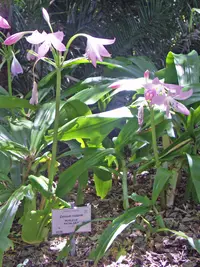
Natal swamplily, Crinum moorei, is a bulb-forming perennial known for its large, arching leaves and tall stems topped with clusters of showy, funnel-shaped flowers. The blooms are usually white to soft pink and lightly fragrant, giving the plant a bold, architectural presence in the garden.
This species is native to moist, shaded habitats in South Africa, where it grows in rich, well-drained but consistently damp soils. It is moderately easy to grow when its need for steady moisture, protection from harsh frost, and bright but not scorching light is respected, and understanding how to care for Natal Swamplily helps prevent stress-related leaf problems.

Care Difficulty
Moderate Care

Light Preference
Partial Sun

Water Requirements
Regular Water

Temperature Preference
Warm Climate

Hardiness Zone
8–11

Soil Texture
Sandy, Loamy, Organic-rich

Soil pH
Acidic (5.5–6.5), Slightly acidic (6.5–7.0)

Soil Drainage
Moist but well-drained

Fertilization
Light (every 4–6 weeks)
Scan your plant to receive care tips personalized for your specific plant
Available on iOS and Android
Crinum moorei grows best with bright, gentle light that avoids harsh midday sun.
Crinum moorei prefers evenly moist soil but dislikes being waterlogged.
This bulb thrives in mild, frost-free climates with warm summers and cool, not cold, winters.
This species grows well in moderate household humidity but benefits from slightly moist air in heated homes.
Crinum moorei prefers deep, loose, moisture-retentive but free-draining soil that resists waterlogging.
This species is suitable for large, heavy containers where its substantial bulb and foliage can be stabilized.
Crinum moorei benefits from moderate feeding to support flowering and bulb strength when grown in garden beds or containers.
Pruning Crinum moorei focuses on hygiene and appearance rather than shaping the plant.
This bulbous plant dislikes frequent disturbance, so repotting or transplanting should be infrequent but deliberate.
Crinum moorei is most reliably propagated by division of bulbs rather than from seed.
This species is only moderately frost tolerant, so winter care depends on local climate and planting position.

Plant Health Check
Not sure what's wrong with your plant? Check your plant's health inside the app.
This species is naturally restricted to cool, moist, mist-belt forests and stream margins in KwaZulu-Natal and the Eastern Cape of South Africa, where it often grows on steep, humus-rich slopes under broken canopy light.
It forms a substantial, partly exposed bulb that can reach several kilograms in weight, acting as a storage organ that allows the plant to endure short dry spells and quickly restart growth when moisture returns.
Its white to pale pink, trumpet-shaped flowers release a stronger fragrance in the evening, an adaptation associated with attracting night-active moth pollinators in its native habitat.

In suitable conditions this species can live and flower in the same garden site for several decades, forming long-lived clumps that are sometimes passed between gardeners as heirloom bulbs.
Bloom failure usually comes from an immature bulb, lack of a cool rest period, inadequate nutrients, or insufficient light intensity. Allow a short dry rest, then feed a balanced fertilizer and ensure strong, bright light without severe stress.
Keep your plants happy and healthy with plant identification, disease detection, and easy care guidance.