Trans-Pecos spiderwort Care (Tradescantia brevifolia)

Trans-Pecos spiderwort

About Trans-Pecos spiderwort

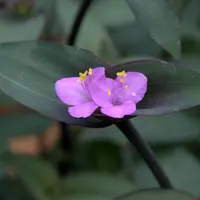
Trans-Pecos spiderwort (Tradescantia brevifolia) is a small, clumping perennial native to arid regions of western Texas and northern Mexico. It typically grows close to the ground, forming compact tufts of narrow leaves. Short-lasting, three-petaled flowers appear in shades of blue to violet, usually opening during cooler parts of the day. The plant is adapted to rocky, fast-draining soils and dry conditions, which influences how to care for Trans-Pecos spiderwort in cultivation. Its drought tolerance and modest size make it relatively easy to grow if given bright light, low to moderate moisture, and a well-drained substrate.

Main Plant Requirements

Care Difficulty

Moderate Care

Light Preference

Partial Sun

Water Requirements

Moderate Water

Temperature Preference

Warm Climate

Hardiness Zone

8–10

Soil Texture

Sandy, Loamy, Rocky

Soil pH

Acidic (5.5–6.5), Slightly acidic (6.5–7.0)

Soil Drainage

Well-drained

Fertilization

Minimal (feed rarely)

Get Personalized Care Plan

Scan your plant to receive care tips personalized for your specific plant

Available on iOS and Android

How to Care for the Trans-Pecos spiderwort

This compact perennial thrives in bright, open conditions that mimic sunny, rocky habitats.

  • Provide 4–6 hours of direct morning sun with light, filtered shade in the hot afternoon to prevent leaf scorch, especially in hotter regions.
  • Plant Trans-Pecos spiderwort where it receives full sun in cooler climates or very bright partial shade in warm zones, such as eastern or northern exposures.
  • Watch foliage color and internode length: pale, stretched growth indicates not enough light, while crisped or bleached patches suggest excess intense sun.

This species prefers slightly dry, fast-draining conditions rather than consistently moist soil.

  • Water only when the top 2–4 cm of soil is dry, using a deep soak that reaches the root zone, then allow excess to drain away fully.
  • Choose gritty, sharply draining soil on a slope or raised area; standing water or heavy clay strongly increases the risk of root rot and stem collapse.
  • In hot, dry weather, expect faster drying and check soil more often; in cool seasons, reduce watering and watch for yellowing, mushy stems as a sign of overwatering and crisp, drooping leaves as a sign of underwatering.

This plant is adapted to warm, dry regions and tolerates moderate heat but dislikes hard frost.

  • Aim for active growth in 65–85°F (18–29°C); growth slows outside this range but established plants remain fairly resilient if soil is well drained.
  • Protect from temperatures below 25°F (-4°C); foliage often dies back with light frost, though roots may survive brief dips if soil is dry and not waterlogged.
  • In hot spells above 95°F (35°C), provide some afternoon shade and ensure airflow; avoid reflected heat from walls or paving that can overheat shallow roots.

This species prefers moderate household humidity but adapts to drier rooms if not extreme.

  • Aim for 40–60% humidity to keep foliage dense and minimize tip browning on Trans-Pecos spiderwort.
  • In very dry air, watch for crisp leaf edges and slowed growth as signs of humidity stress.
  • Increase humidity locally with a nearby pebble tray or grouping plants rather than misting leaves directly.

Soil for this species should be loose, fast-draining, and slightly gritty.

  • Use a mix of 50–60% all-purpose potting mix with 20–30% coarse sand and 20% perlite for Tradescantia brevifolia.
  • Aim for a slightly acidic to neutral pH around 6.0–7.0, which supports nutrient uptake without causing leaf burn.
  • Ensure soil particles are coarse enough that water drains within seconds, preventing prolonged saturation around the roots.
  • Avoid heavy clay, high-peat, or compacted mixes, which hold water and reduce aeration, predisposing roots to rot.

This species is well suited to container growing due to its compact, spreading habit.

  • Choose a shallow, wide pot to accommodate its surface-rooting habit and encourage an even mat of growth.
  • Use a container material that dries moderately fast, such as unglazed terracotta, to prevent chronically wet roots.
  • Ensure excess water can exit freely and empty saucers promptly to avoid water collecting around the lower stems.

This compact native usually needs only light feeding, especially when grown in the ground.

  • Use a diluted balanced liquid fertilizer (around 10-10-10) at 1/4–1/2 strength for container-grown Trans-Pecos spiderwort.
  • Feed every 4–6 weeks during the active growing season if growth appears weak or foliage pale.
  • Skip fertilizer in winter or dormancy to avoid soft, weak tissue and root burn.
  • Organic compost or a mild slow-release product can be mixed into potting soil at planting for long-term nutrition.

Pruning helps Tradescantia brevifolia stay compact and encourages fresh foliage and flowering.

  • Best time for shaping is in spring or early summer, once new growth is active.
  • Snip back leggy or overly long stems just above a node to encourage branching and denser clumps.
  • Remove dead, damaged, or crowded shoots with clean, sharp scissors or pruning snips to maintain airflow.
  • Pinch spent flower stems to keep the plant tidy and to direct energy into new vegetative growth.

This small spiderwort adapts well to both containers and rock garden plantings, needing only occasional repotting or transplanting.

  • Plan repotting or transplanting in early spring, just before or as new growth starts.
  • Look for roots circling the pot, slow growth, or quick dry-out as signs a container plant needs a larger pot.
  • Move up only 2–5 cm in pot diameter, using a free-draining mix, and keep the crown at the same depth.
  • Water thoroughly after moving, then keep soil slightly moist and shaded for 3–5 days to limit root stress.

Tradescantia brevifolia is commonly propagated to expand groundcover patches or refresh container plantings.

  • Take soft stem cuttings in late spring or summer, 5–8 cm long, and remove lower leaves.
  • Root cuttings in moist, well-drained mix or water, keeping them warm with bright, indirect light.
  • Use division in early spring, separating clumps into smaller sections, each with roots and shoots.
  • Seeds can be sown in spring on the surface of a well-drained mix, kept lightly moist until germination.

This species is relatively cold tolerant in suitable climates but benefits from simple winter preparation.

  • In-ground plants in mild to moderately cold regions usually overwinter without elaborate protection.
  • Apply a 2–5 cm layer of mulch around the root zone after frost to moderate soil temperature fluctuations.
  • Container plants in colder areas are best moved into a sheltered, frost-free space with bright light.

Care Tips

Encourage Dense Mats

Pinch back actively growing tips every 3–4 weeks to promote low, dense clumps rather than long, sparse runners, and use the pinched stems as cuttings to fill bare patches in the pot or planting area.

Strategic Division Timing

Divide large clumps at the start of a strong growth phase (late spring) and replant small rooted sections 5–8 cm apart so they re-establish quickly and create an even, ground-hugging carpet.

Edge Containment

Sink a shallow physical barrier 5–7 cm into the soil around beds or troughs to limit lateral spreading and make it easier to keep planting designs tidy over several seasons.

Compact Container Setup

Choose wide, shallow containers rather than deep pots to match the relatively shallow root system and to create a tight, even surface cover that shows off the short foliage and flowers.

Prevent Stem Rot

Lift or gently top-dress plants so the crown sits slightly above the surrounding soil line and keep dense mulch away from stem bases, which reduces trapped moisture and lowers the risk of basal rot when growing Trans-Pecos spiderwort outdoors.

Common Pests and Diseases

Spider mites

This pest often appears on stressed plants grown in warm, dry indoor conditions and causes fine stippling, dull foliage, and webbing on stems and leaf undersides.

Solution

Rinse foliage thoroughly under a gentle stream of lukewarm water, then increase humidity and airflow; for persistent infestations, treat leaf undersides with insecticidal soap or a horticultural oil every 7–10 days, keeping the plant out of direct sun until foliage dries.

Mealybugs

These insects hide in leaf joints and along stems, leaving white cottony clusters and sticky honeydew that can lead to sooty mold on Tradescantia brevifolia.

Solution

Isolate the plant, dab visible insects with cotton swabs dipped in 70% isopropyl alcohol, then follow with repeated applications of insecticidal soap or neem oil, making sure to cover all stem nodes and crevices where mealybugs shelter.

Leaf spot

This disease appears as small water-soaked or tan to brown lesions on the soft foliage, which can merge into larger dead patches, especially in crowded or poorly ventilated plantings.

Solution

Remove and discard affected leaves, avoid wetting the foliage during watering, improve air circulation, and if spread continues, apply a copper- or sulfur-based fungicide labeled for ornamental foliage plants according to the package directions.

Botrytis blight

This disease thrives in cool, humid conditions and causes soft gray-brown patches on leaves and stems that may develop fuzzy gray mold, particularly on dense hanging baskets.

Solution

Prune out all affected tissue, reduce overhead watering, space plants so air can move freely, and, if needed, use a registered ornamental fungicide while keeping the plant in brighter, drier conditions without direct midday sun.

Aphids

These insects cluster on tender shoot tips and flower stalks, sucking sap and causing distorted new growth and sticky honeydew that can attract ants.

Solution

Spray stems and undersides of leaves with a firm stream of water to dislodge aphids, then use insecticidal soap or a light horticultural oil every few days until populations decline, checking regularly for reinfestation on new growth when trying to grow Tradescantia brevifolia indoors or outdoors.

Interesting Facts

Chihuahuan Desert specialist

This species is naturally restricted to dry, rocky habitats of the Trans-Pecos region in west Texas and adjacent areas of northern Mexico, where it grows in thin soils on limestone or igneous outcrops exposed to strong sun and large temperature swings.

Compact rosette habit

Unlike many sprawling spiderworts, it forms tight, low rosettes with very short internodes, an adaptation that keeps tissues close to the ground where humidity is slightly higher and wind stress is lower in its desert environment.

Short-lived but persistent flowers

Individual blue to violet flowers typically last only a single morning, but the plant produces many buds over time, so flowering at a given clump can continue over an extended period during favorable moisture conditions.

Botan icon

Did you know?

In its native range, this species often occupies narrow cracks and ledges on open rock faces, where its root system anchors into tiny pockets of gravel and organic debris, allowing it to survive in microsites that remain too harsh and dry for most neighboring herbaceous plants.

FAQs about Trans-Pecos spiderwort

Sparse or absent flowering usually comes from insufficient light, nutrient-poor or overly rich soil, or heat stress. Ensure strong light, avoid heavy nitrogen fertilization, and allow a slight dry period between waterings to encourage bud formation and repeat bloom.

Grow Healthy Plants with Botan Care

Keep your plants happy and healthy with plant identification, disease detection, and easy care guidance.

Botan plant care app — identify plants on mobile

Explore More Plants