Use support stakes
Provide a slim, moss-covered stake or slab for the roots to cling to, gently tying petioles with soft ties so the plant can climb and develop stronger, more upright growth.

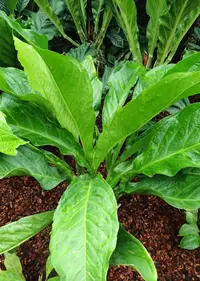
Anthurium salvinii is a tropical aroid grown mainly for its large, velvety foliage rather than its flowers. It usually forms a compact clump with broad, softly textured leaves. Native to Central America, it grows in warm, humid forests, often in shaded or filtered light conditions. This background helps explain its preference for stable warmth and moderate, indirect light indoors. The plant can be moderately demanding, as it dislikes cold drafts, soggy soil, and very dry air. It responds well to loose, airy substrates that drain quickly yet hold some moisture. For those willing to adjust humidity and watering habits, it is manageable to care for Anthurium salvinii at home.

Care Difficulty
Hard Care

Light Preference
Bright Indirect Light

Water Requirements
Keep Soil Moist

Temperature Preference
Tropical / Frost Sensitive

Hardiness Zone
11–13

Soil Texture
Loamy, Peaty, Organic-rich

Soil pH
Acidic (5.5–6.5)

Soil Drainage
Moist but well-drained

Fertilization
Light (every 4–6 weeks)
Scan your plant to receive care tips personalized for your specific plant
Available on iOS and Android
This species prefers soft, filtered light that mimics a bright forest understory.
Watering should keep the root zone evenly moist but never saturated.
Stable, warm temperatures support steady growth and reduce stress for this species.
This species benefits from consistently high humidity to maintain healthy foliage and roots.
Anthurium salvinii prefers a loose, airy, organic-rich medium that drains quickly yet holds some moisture.
This species is well suited to container culture when the pot supports its moisture and root needs.
This species benefits from light, consistent feeding rather than heavy fertilization.
Thoughtful pruning keeps this aroid tidy and supports healthy foliage production.
Repotting helps maintain an airy, moisture-retentive root environment for this species.
This plant is most reliably propagated by division of established clumps.
This tropical aroid dislikes cold and needs protection in most temperate climates.

Plant Health Check
Not sure what's wrong with your plant? Check your plant's health inside the app.
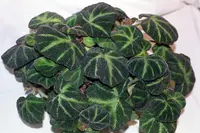
The large, velvety leaves have a dense layer of microscopic hairs that gives them a soft texture while still allowing water to bead and run off efficiently in their native humid forests of southern Mexico and Central America.
In nature this species often grows as a rheophyte, anchoring to rocks or streamside surfaces in areas with moving water, which helps it tolerate periodic flooding and high humidity along forested waterways.
Mature leaves show strongly cordate to deeply lobed bases with pronounced veins, a trait that improves drainage and gas exchange on the leaf surface in shaded, moisture-rich understories and is valued by collectors growing Anthurium salvinii.
Yellowing leaves usually result from excess moisture around the roots, poor drainage, or natural aging of older foliage. Check for soggy substrate, compacted mix, or a pot without adequate drainage holes, and adjust conditions gradually rather than abruptly.
Keep your plants happy and healthy with plant identification, disease detection, and easy care guidance.