Aphelandra sinclairiana Care

Aphelandra sinclairiana

About Aphelandra sinclairiana

Aphelandra sinclairiana is a tropical shrub from Central America, valued for its colorful bracts and upright, bushy habit. It can reach a substantial size in warm, humid climates.

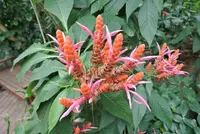
The plant typically shows glossy green leaves and produces pink to orange bracts that hold above the foliage, giving a long-lasting display. In its native range, it grows in bright, filtered light along forest edges.

Its need for consistent warmth, humidity, and shelter from strong sun makes it more suitable for experienced growers or greenhouse conditions. Understanding how to care for Aphelandra sinclairiana helps maintain healthy foliage and reliable flowering.

It prefers bright, indirect light, evenly moist but not waterlogged soil, and good air movement without cold drafts.

Main Plant Requirements

Care Difficulty

Moderate Care

Light Preference

Partial Shade

Water Requirements

Regular Water

Temperature Preference

Tropical / Frost Sensitive

Hardiness Zone

10–11

Soil Texture

Loamy, Organic-rich

Soil pH

Acidic (5.5–6.5)

Soil Drainage

Moist but well-drained

Fertilization

Light (every 4–6 weeks)

Get Personalized Care Plan

Scan your plant to receive care tips personalized for your specific plant

Available on iOS and Android

How to Care for the Aphelandra sinclairiana

This shrub prefers bright, indirect light similar to bright forest edges.

  • Provide 4–6 hours of bright, filtered light daily, such as morning sun with light afternoon shade under high, thin canopy or shade cloth.
  • Tolerates partial shade, but flowering and leaf color of Aphelandra sinclairiana decline in dense shade; growth becomes leggy and sparse.
  • Avoid harsh midday sun, which can cause leaf scorch, yellow patches, and crisp edges, especially in hot summers; increase shade protection in late spring and summer.

This species needs consistently moist but not waterlogged soil.

  • Water when the top 2–4 cm of soil feels dry, using enough water to moisten the root zone while allowing excess to drain away freely.
  • In warm growing seasons, expect to water more often; in cooler months, let the soil surface stay dry slightly longer to reduce root-rot risk.
  • Watch for drooping, dull leaves and dry leaf edges as signs of underwatering, and yellowing, soft leaves or sour-smelling soil as signs of overwatering Aphelandra sinclairiana.

This plant thrives in warm, stable conditions without temperature extremes.

  • Optimal growth occurs at 65–80°F (18–27°C), with steady temperatures supporting better flowering and foliage quality.
  • Avoid temperatures below 55°F (13°C); brief drops to 45–50°F (7–10°C) can cause leaf drop, and any frost will severely damage or kill stems.
  • Tolerates short heat spells up to about 90°F (32°C) if humidity and soil moisture are adequate; in hot periods, provide shade and avoid hot, reflected heat from walls or paving.

This species prefers consistently humid air and reacts quickly to dry indoor conditions.

  • Aim for 60–80% humidity; it tolerates brief dips but declines in prolonged air below 50%.
  • Crisping leaf edges, folded new growth, and stalled buds indicate humidity stress in Aphelandra sinclairiana.
  • Use a nearby humidifier, grouped plants, and a pebble tray, and avoid direct heater or AC airflow to maintain moisture around foliage.

This shrub requires an airy, moisture-retentive yet fast-draining mix to protect roots from rot.

  • Use a peat- or coco-based loamy mix with 30–40% perlite and fine bark to improve drainage and structure.
  • Target slightly acidic to neutral pH around 6.0–7.0, which supports nutrient uptake and root health.
  • Incorporate well-rotted compost for organic matter, but keep the mix loose so roots receive enough oxygen.
  • Avoid compacted, clay-heavy, or waterlogged soils, which encourage root rot and reduced vigor in Aphelandra sinclairiana.

This species adapts well to container growing when the pot supports its upright, shrubby structure.

  • Choose a pot just 2–4 in wider than the root ball to maintain moisture without leaving the mix wet for long periods.
  • Opt for a sturdy, heavier container to prevent tipping as stems elongate and foliage builds at the top.
  • Select breathable materials like unglazed clay only if extra moisture loss is acceptable in the plant’s humidity-managed location.

This tropical shrub benefits from moderate feeding when actively growing in warm conditions.

  • Use a balanced water-soluble fertilizer (around 10-10-10 or 20-20-20) diluted to 1/2 strength for Aphelandra sinclairiana in containers.
  • Apply every 4–6 weeks during spring and summer; skip feeding if growth is weak from low light or poor health.
  • Reduce or stop fertilizing in fall and winter when growth slows, especially indoors or in cooler climates.
  • In garden soil, rely mainly on compost or slow-release granules lightly mixed into the top layer each spring.

Thoughtful pruning keeps this shrub compact, encourages branching, and maintains flower production.

  • Carry out main pruning in late winter or early spring before strong new growth begins.
  • Remove dead, diseased, crossing, or inward-growing shoots with clean, sharp hand pruners.
  • Shorten lanky stems to an outward-facing bud to promote a fuller shape and more flowering tips.
  • Lightly trim after flowering if needed, avoiding very hard cuts into old, leafless wood.

Container-grown plants and young garden shrubs benefit from periodic transplanting to support healthy root development.

  • Check for roots circling the pot, pushing through drainage holes, or for slowed growth as signs it needs a larger container.
  • Plan repotting or transplanting in spring, allowing a full warm season for root recovery and new growth.
  • Move up only 1 pot size, using a free-draining, humus-rich mix; handle the root ball gently and avoid breaking many roots.
  • Water thoroughly after planting, then keep evenly moist and shaded from harsh sun for 1–2 weeks to reduce stress.

This species is most often propagated vegetatively to keep desirable traits consistent.

  • Use semi-ripe stem cuttings taken in late spring or early summer when growth is firm but not woody.
  • Remove lower leaves, dip the cut base in rooting hormone, and place in a loose, moist mix under high humidity and bright shade.
  • Bottom heat around 70–75°F and stable moisture greatly improve rooting success.
  • Sow fresh seed in warm conditions if available, keeping the surface just moist and lightly covered.

This is a tender tropical shrub that needs protection from low temperatures in most regions.

  • It is frost-sensitive and typically damaged below about 32°F, with severe injury in prolonged cold snaps.
  • Mulch the root zone 5–8 cm deep in mild climates to buffer temperature swings and conserve soil moisture.
  • Grow in containers in cooler areas and move plants indoors or into a heated greenhouse before the first frost.
  • Indoors, provide bright light, slightly drier soil, and avoid cold drafts or temperatures below 55°F.

Care Tips

Sturdy stem support

Install a discreet stake or slim bamboo cane early and loosely tie the main stems with soft ties so the tall, top-heavy inflorescences stay upright and do not snap in wind or when moved.

Timed flower deadheading

As individual flower spikes fade, cut them back to just above a healthy leaf pair to redirect energy into new shoots and extend the overall blooming period.

Branching by tip pinching

Pinch out the soft growing tips of young plants once or twice in spring to encourage side branches and create a fuller, more stable shrub form.

Root-zone mulching

Apply a 2–3 cm layer of fine bark or composted pine mulch around the root zone, keeping it 2–3 cm away from the stems, to buffer soil moisture and protect shallow roots from temperature swings.

Preventive pest scouting

Inspect the undersides of leaves and tender shoot tips weekly with a hand lens so that early signs of mealybugs or spider mites are caught and treated before they spread, which is especially important when growing Aphelandra sinclairiana in a warm indoor space.

Common Pests and Diseases

Spider mites

This pest often appears on stressed plants grown in dry, warm indoor air, causing fine stippling and dull, dusty-looking leaves. Symptoms include very fine webbing on leaf undersides and gradual yellowing or bronzing of foliage.

Solution

Rinse foliage thoroughly with lukewarm water, focusing on leaf undersides, then repeat every few days to break the life cycle. Increase humidity around the plant, isolate it from others, and if needed apply a horticultural soap or ready-to-use neem oil spray labeled for spider mites, following the product directions carefully.

Mealybugs

These insects hide in leaf axils and along stems, forming white, cotton-like clusters and excreting sticky honeydew that can attract sooty mold. Symptoms include distorted new growth and general decline if populations build up.

Solution

Remove visible insects with a cotton swab dipped in 70% isopropyl alcohol, then gently wash the plant with water and mild insecticidal soap. Isolate the plant, inspect weekly, and repeat treatments until no new mealybugs appear, as this is a key part of effective Aphelandra sinclairiana plant care.

Leaf spot (fungal)

This disease causes tan to brown spots on leaves, often with darker margins and sometimes yellow halos, which can merge into larger blotches. Symptoms include premature leaf drop on heavily affected plants, especially in warm, humid, low-airflow conditions.

Solution

Promptly remove and discard affected leaves, keep foliage dry during watering, and improve air circulation around the plant. If spotting continues to spread, apply a broad-spectrum fungicide labeled for ornamental leaf spot and avoid overhead watering to limit reinfection.

Bacterial leaf blight

This disease produces water-soaked, translucent lesions that turn dark brown or black, often starting at leaf edges or tips. Symptoms include a rapid spread of irregular lesions along the veins and a soft, sometimes foul-smelling decay in severe cases.

Solution

Immediately prune out and discard all visibly affected tissue, sterilizing pruning tools between cuts with alcohol. Reduce leaf wetness by watering at the soil level, increase airflow, avoid misting, and if the plant is badly affected consider discarding it to protect nearby plants.

Scale insects

These insects appear as small, domed, brown or tan bumps attached to stems and leaf midribs, feeding on sap and weakening the plant. Symptoms include sticky honeydew, possible sooty mold, and slow, stunted growth.

Solution

Gently scrape or wipe off scales with a soft cloth or cotton swab dipped in 70% isopropyl alcohol, then wash the plant with insecticidal soap. Monitor regularly and repeat spot treatments over several weeks, as crawlers (young scales) are easier to control than mature, armored individuals.

Interesting Facts

Pink and orange bracts

This species produces tall spike-like inflorescences with salmon-pink to orange bracts that can last much longer than the short-lived true flowers, making it very ornamental in bloom.

Hummingbird-pollinated shrub

In its native range from southern Mexico to Panama, the tubular flowers are adapted for hummingbird pollination, with bright coloration and nectar rewards that suit these birds’ long bills.

Large tropical shrub

Unlike the more compact zebra plant relatives often grown indoors, this species naturally forms a large, branching shrub that can reach several meters tall in warm, frost-free climates.

Botan icon

Did you know?

The species was formally described in the 19th century from Central American material and is still considered an uncommon ornamental outside tropical collections, so most published guidance on Aphelandra sinclairiana care is derived from botanical garden and greenhouse experience rather than widespread home cultivation.

FAQs about Aphelandra sinclairiana

This species performs best outdoors in warm, humid, frost-free climates where it can develop into a medium shrub. Indoors it is possible but demanding, needing high humidity, stable warmth, and bright filtered light for long-term success with Aphelandra sinclairiana indoor care.

Grow Healthy Plants with Botan Care

Keep your plants happy and healthy with plant identification, disease detection, and easy care guidance.

Botan plant care app — identify plants on mobile

Explore More Plants