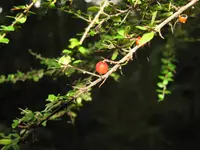
Train Salt Tolerance
If planting inland, gradually acclimate young plants to slightly saline irrigation by mixing a small proportion of salty or bore water into fresh water over several weeks so the roots adjust without severe leaf burn.

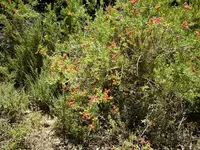
Nitre bush (Nitraria billardierei) is a hardy, salt-tolerant shrub native to arid and coastal regions of Australia. It typically forms low, dense mounds with small, fleshy leaves that help it cope with dry, harsh conditions.
The plant produces small white flowers followed by edible, salty-sweet berries that are eaten by wildlife and sometimes people. Its deep root system stabilizes sandy soils and makes it well adapted to dunes and inland salt flats.
In cultivation it suits low-maintenance, drought-tolerant gardens where soils are sandy or well drained. Understanding how to care for nitre bush starts with providing strong light, minimal watering, and avoiding heavy, waterlogged substrates.

Care Difficulty
Moderate Care

Light Preference
Full Sun

Water Requirements
Low Water

Temperature Preference
Warm Climate

Hardiness Zone
9–11

Soil Texture
Sandy, Loamy, Rocky

Soil pH
Neutral (7.0), Alkaline (7.5–8.5)

Soil Drainage
Well-drained

Fertilization
Minimal (feed rarely)
Scan your plant to receive care tips personalized for your specific plant
Available on iOS and Android
This coastal shrub prefers bright, open conditions similar to its native dune and scrub habitats.
This salt-tolerant shrub is adapted to dry, free-draining sites and prefers infrequent, deep watering.
This hardy shrub tolerates a wide temperature range but responds best to warm, dry conditions.
This species is highly drought-adapted, so ambient indoor humidity is usually adequate.
This shrub prefers very well-drained, sandy to gravelly substrates that mimic coastal or arid habitats.
This species can be grown in containers, especially in regions with wet winters or where space is limited.
This tough coastal shrub needs minimal feeding, but light nutrition can support growth in poor soils.
Nitraria billardierei responds well to light structural pruning to keep plants dense and healthy.
This shrub is usually grown in the ground, so focus on careful transplanting rather than frequent repotting.
Nitraria billardierei is most often propagated from seed, with cuttings as a secondary option.
This coastal shrub is moderately cold hardy and usually needs little special winter care in mild climates.

Plant Health Check
Not sure what's wrong with your plant? Check your plant's health inside the app.
This Australian shrub thrives on highly saline soils, often growing in coastal dunes, inland salt lakes, and salt pans where many other species cannot survive.
Its small fleshy fruits, commonly called nitre berries, are edible and have a distinctive salty-sweet taste that has been traditionally used as bushfood by Aboriginal communities.
The plant has a dense, spreading root system that helps stabilize loose sandy soils and dunes, reducing erosion in harsh, wind-exposed environments.

The shrub often forms low, compact thickets that act as natural nurse plants, creating slightly less saline and more sheltered microsites where less salt-tolerant seedlings of other species can establish.
This species is best suited to outdoor conditions with strong light, wind exposure, and freely draining soil. Indoors it usually declines due to low light and stagnant air, so nitre bush indoor care is rarely successful long term.
Keep your plants happy and healthy with plant identification, disease detection, and easy care guidance.