Encourage Bushy Form
Pinch or lightly shear new soft growth in late spring to promote dense, cushion-like plants and prevent them from opening up or splitting at the center as they age.

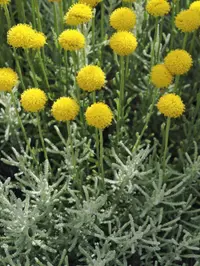
Lavender cotton (Santolina chamaecyparissus) is a compact, evergreen shrub known for its silvery gray, finely divided foliage and small yellow button-like flowers. It forms dense, rounded mounds that add texture and contrast in borders, rock gardens, and coastal plantings.
This species comes from dry, rocky areas of the Mediterranean region, so it is naturally adapted to sun, wind, and low moisture. Its drought tolerance and resistance to poor, sandy soils make it relatively easy for beginners who want to learn how to care for Lavender Cotton.
The plant prefers full sun, well-drained soil, and light to moderate watering, especially in regions with wet or humid summers.

Care Difficulty
Easy Care

Light Preference
Full Sun

Water Requirements
Low Water

Temperature Preference
Cold Hardy

Hardiness Zone
6–9

Soil Texture
Sandy, Loamy, Rocky

Soil pH
Slightly alkaline (7.0–7.5), Alkaline (7.5–8.5)

Soil Drainage
Well-drained

Fertilization
Minimal (feed rarely)
Scan your plant to receive care tips personalized for your specific plant
Available on iOS and Android
This drought-tolerant shrub needs strong sun to stay dense, silvery, and compact.
This Mediterranean shrub prefers dry, fast-draining conditions and is very sensitive to excess moisture.
This shrub thrives in warm, dry climates and tolerates moderate cold once established.
This species prefers dry to moderately dry air and rarely needs humidity adjustment indoors.
Santolina chamaecyparissus performs best in very well-drained, lean soil that mimics dry Mediterranean slopes.
This species is well suited to container growing outdoors if the pot drains rapidly and stays relatively dry.
This Mediterranean shrub needs minimal feeding, as excess nutrients reduce its compact habit and scent.
Thoughtful pruning keeps Santolina chamaecyparissus dense, rounded, and floriferous.
This shrub is usually grown in the ground, with transplanting needed only when space or site conditions change.
Gardeners commonly increase plants by cuttings, which keep the desirable compact form.
Established plants are fairly cold hardy but benefit from simple winter precautions in colder regions.

Plant Health Check
Not sure what's wrong with your plant? Check your plant's health inside the app.
This shrub is naturally adapted to dry, coastal Mediterranean habitats, where its finely divided leaves can condense moisture from fog and dew, helping it cope with very low rainfall.
The strongly resinous, camphor-like scent comes from a complex mix of terpenoids in its leaves and flower heads, which help reduce herbivory by insects and grazing animals.
Its dense covering of fine, silvery hairs reflects intense sunlight and reduces leaf temperature and water loss, an adaptation that allows it to thrive in full sun and poor, stony soils.

Historically, dried foliage was sometimes placed among stored textiles and in herb cushions in Europe because its aromatic compounds helped deter clothes moths and other fabric pests, giving it a practical domestic role beyond ornamental use.
Flowering often declines if the plant is pruned too late in spring, shaded by taller plants, or growing in overly rich or wet soil. Light, early pruning and lean, very well-drained conditions usually restore bloom performance.
Keep your plants happy and healthy with plant identification, disease detection, and easy care guidance.