Encourage Dense Screens
Pinch or lightly tip-prune new shoots when they are 5–10 cm long to stimulate side branching and create a denser hedge or screen over time.

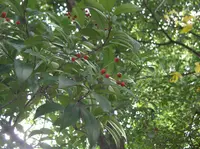
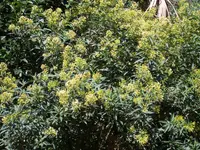
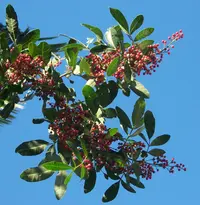
Japanese photinia (Photinia glabra) is an evergreen shrub or small tree grown mainly for its glossy foliage and dense, upright habit. New leaves often emerge bronze to red, then mature to a deep green, giving the plant strong year-round structure in hedges and screens.
This species is native to Japan and nearby East Asian regions, where it grows in woodland edges and open slopes. In gardens it is valued as a relatively tough, adaptable landscape shrub.
Photinia glabra generally prefers full sun to light shade, moderately moist but well-drained soil, and benefits from regular pruning to maintain shape. These traits make it fairly straightforward to care for Japanese photinia in many mild to warm climates.

Care Difficulty
Moderate Care

Light Preference
Full Sun

Water Requirements
Moderate Water

Temperature Preference
Warm Climate

Hardiness Zone
7–10

Soil Texture
Sandy, Loamy, Clay

Soil pH
Acidic (5.5–6.5), Slightly acidic (6.5–7.0)

Soil Drainage
Moist but well-drained

Fertilization
Minimal (feed rarely)
Scan your plant to receive care tips personalized for your specific plant
Available on iOS and Android
This evergreen shrub needs consistent light to keep dense foliage and strong color.
This shrub prefers evenly moist, well-drained soil rather than frequent shallow watering.
This species handles a wide temperature range but grows best in mild conditions.
This shrub is flexible about humidity but benefits from moderately moist air.
Photinia glabra grows best in structured, well-aerated mineral soil that drains quickly but does not dry out instantly.
This species can be grown in containers if the pot is chosen and managed for its woody root system.
Photinia glabra benefits from moderate feeding during active growth to support dense foliage and healthy new shoots.
Photinia glabra responds well to thoughtful pruning that maintains shape, light penetration, and healthy growth.
This shrub is usually grown in the ground, so focus on careful transplanting rather than frequent repotting.
Photinia glabra is most commonly propagated by semi-ripe cuttings taken during the warmer months.
This evergreen shrub is moderately cold hardy and usually needs only light winter care in most mild to cool climates.

Plant Health Check
Not sure what's wrong with your plant? Check your plant's health inside the app.
This species produces bright red new leaves that gradually mature to deep green, creating a strong color contrast on the same shrub for several weeks each growing season.
Photinia glabra is naturally distributed in Japan and nearby East Asian regions, where it grows in warm-temperate forests and shrublands on well-drained, often slightly acidic soils.
This species is one of the main parents of the widely planted hybrid Photinia × fraseri, contributing the red-tinted new growth and dense, hedge-forming habit valued in ornamental landscaping.

In parts of Japan, this species and its close relatives have long been used in traditional hedges and windbreaks around houses and fields, taking advantage of their dense branching, evergreen foliage, and tolerance of regular pruning to form living boundaries that function like low-maintenance, permanent fences.
Brown leaves usually result from leaf spot diseases, drought stress, or wind scorch. Check for spotting or dark margins, improve air circulation, water deeply but not constantly, and remove heavily damaged foliage to limit disease spread and encourage new growth.
Keep your plants happy and healthy with plant identification, disease detection, and easy care guidance.