Buchanan's pagodaflower Care (Clerodendrum buchananii)

Buchanan's pagodaflower

About Buchanan's pagodaflower

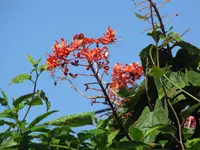
Buchanan's pagodaflower, Clerodendrum buchananii, is a tropical flowering shrub valued for its dense clusters of bright, tubular red to orange blooms. It typically forms a bushy, upright plant with glossy green leaves that create a strong contrast with the flowers.

In nature it occurs in parts of tropical Africa and is often grown in warm climates or protected spaces like sunrooms and greenhouses. The plant tends to flower over a long season when kept warm and supplied with steady moisture.

It prefers bright light, evenly moist but well-drained soil, and protection from cold. With these conditions, it is relatively straightforward to care for Buchanan's pagodaflower.

Main Plant Requirements

Care Difficulty

Moderate Care

Light Preference

Partial Sun

Water Requirements

Regular Water

Temperature Preference

Tropical / Frost Sensitive

Hardiness Zone

10–11

Soil Texture

Loamy, Sandy, Organic-rich

Soil pH

Acidic (5.5–6.5), Slightly acidic (6.5–7.0)

Soil Drainage

Moist but well-drained

Fertilization

Moderate (every 2–4 weeks)

Get Personalized Care Plan

Scan your plant to receive care tips personalized for your specific plant

Available on iOS and Android

How to Care for the Buchanan's pagodaflower

This tropical shrub grows best with bright, indirect light and some gentle direct sun.

  • Provide 4–6 hours of morning sun or late-afternoon sun, with light shade at midday to protect leaves from scorching.
  • Buchanan's pagodaflower tolerates partial shade but flowering drops if it receives under 3–4 hours of bright light daily.
  • In summer, shield from harsh west-facing exposure; in winter, prune surrounding shade plants or reposition containers to maximize available light.

This species prefers evenly moist, well-drained soil that never stays waterlogged.

  • Water when the top 3–5 cm of soil feels dry, soaking the root zone thoroughly and allowing excess to drain away.
  • In active growth and flowering, check soil moisture 2–3 times per week; reduce frequency in cooler months when evaporation slows.
  • Yellowing, soft leaves and a sour smell indicate overwatering, while limp, crisping edges and dull foliage suggest Clerodendrum buchananii is staying too dry.

This plant performs best in warm, frost-free conditions typical of tropical to subtropical climates.

  • Aim for 65–80°F (18–27°C) during the growing season for steady growth and flowering.
  • Protect the plant whenever temperatures approach 40°F (4°C); light frost can damage foliage and repeated cold can kill stems.
  • Tolerates brief spikes to 90–95°F (32–35°C) if soil moisture is maintained, but prolonged heat plus dry soil causes leaf scorch and bud drop.

This species prefers moderately humid air and reacts quickly to very dry conditions.

  • Aim for 50–70% humidity; prolonged levels below 40% often cause leaf-edge browning and curled tips.
  • Expect increased leaf drop and stalled flower buds in heated, dry rooms or near strong drafts.
  • Raise humidity with a nearby tray of damp pebbles or a room humidifier rather than frequent misting, which adds only short-lived moisture.

Clerodendrum buchananii grows best in loose, moisture-retentive but fast-draining soil.

  • Use a mix of roughly 2 parts peat-free potting mix, 1 part compost, and 1 part perlite or fine bark to create a airy, organic-rich substrate.
  • Aim for slightly acidic to neutral pH around 6.0–7.0, which supports balanced nutrient uptake and stable growth.
  • Ensure water drains freely through the profile; water should not pool on the surface or linger in the saucer.
  • Avoid compacted clay, heavy garden soil, or pure sand, as these either suffocate roots or dry out too quickly and stress the plant.

This species is well suited to container growing when the pot is chosen to support its vigorous, upright growth.

  • Select a wide, heavy container that resists tipping, since mature stems and flower clusters can make the plant top-heavy in wind.
  • Choose slightly porous materials like unglazed clay if overwatering is a risk, as they allow some moisture to evaporate through the pot walls.
  • Provide a deeper pot rather than a very shallow one, so the root system can anchor the plant and maintain more stable moisture between waterings.

This tropical shrub responds well to moderate feeding during its active growing season.

  • Apply a balanced liquid fertilizer (such as 10-10-10 or 20-20-20) diluted to 1/2 strength every 3–4 weeks in spring and summer for Buchanan's pagodaflower.
  • Use a slow-release granular product in spring for container or garden plants, following label rates for shrubs.
  • Reduce or stop feeding in fall and winter when growth slows, especially indoors or in cool climates.
  • Water before and after fertilizing to limit root burn and support even nutrient uptake.

Clerodendrum buchananii responds well to thoughtful pruning that controls size and encourages flowering.

  • Carry out main pruning in late winter or early spring before strong new growth starts.
  • Remove dead, damaged, crossing, or very weak stems with clean, sharp hand pruners.
  • Shorten long, leggy shoots to an outward-facing bud to keep a compact, bushy form.
  • After flowering flushes, lightly trim spent flower clusters to promote denser branching.

Container-grown plants benefit from timely repotting or transplanting to maintain healthy root growth.

  • Check for roots circling the pot, emerging from drainage holes, or slowed top growth as signs repotting is needed.
  • Plan to move the plant into a container 1–2 in wider every 2–3 years in late winter or early spring.
  • Use a well-drained, rich potting mix and gently loosen circling roots without tearing thick, woody sections.
  • Water thoroughly after repotting, shade for a few days, and avoid fertilizing for 2–3 weeks to limit stress.

New plants are most often raised from semi-ripe stem cuttings taken during the warm growing season.

  • Take 8–12 cm semi-ripe cuttings in late spring or summer from non-flowering shoots.
  • Remove lower leaves, optionally dip the base in rooting hormone, and insert into a moist, free-draining medium such as perlite and peat.
  • Maintain bright, indirect light, high humidity, and a stable temperature around 70–80°F for rooting.
  • Seed propagation is possible but slower; sow fresh seed shallowly in warm, evenly moist conditions.

This frost-tender shrub needs protection in regions with cold winters or repeated freezes.

  • In USDA zones colder than 10, grow in containers so plants can be moved indoors before temperatures drop below 40°F.
  • Provide a bright, cool, frost-free room indoors and reduce watering so the soil stays lightly moist, not wet.
  • In mild climates, mulch the root zone with 5–8 cm of organic material to buffer soil temperature and conserve moisture.

Care Tips

Support upright growth

Install a sturdy stake or small trellis early and loosely tie new shoots with soft ties to keep the plant upright and prevent brittle stems from snapping under the weight of flower clusters.

Timed hard prune

In frost-free areas, carry out one hard structural prune at the end of winter, removing older woody stems at the base to stimulate strong new flowering growth rather than frequent light trimming all season.

Root confinement strategy

In the ground, use a large bottomless container or root barrier when planting to limit lateral spread of suckers and make future division or relocation easier.

Pre-emptive pest checks

During active growth, inspect the undersides of leaves and soft shoot tips weekly for early signs of whiteflies and spider mites, and wash affected parts with a strong but gentle water spray before populations build up.

Flowering cycle reset

If flowering declines on an older container specimen, lift it out in late winter, remove 20–30% of the outer root mass, refresh the potting mix, and re-pot to reset vigor when growing Buchanan's pagodaflower.

Common Pests and Diseases

Spider mites

This pest often appears in warm, dry indoor conditions and feeds on the undersides of leaves, causing stippling, dull foliage, and fine webbing on Buchanan's pagodaflower. Heavy infestations can lead to leaf drop and reduced flowering.

Solution

Rinse foliage thoroughly with a strong, lukewarm water spray, focusing on leaf undersides, then repeat every few days. For persistent mites, apply insecticidal soap or a horticultural oil labeled for spider mites, and slightly increase humidity while improving air movement around the plant.

Whiteflies

These insects cluster on new growth and leaf undersides, sucking sap and excreting sticky honeydew that can lead to sooty mold on leaves. Infestations weaken the plant and can reduce flower production.

Solution

Shake or tap stems to test for small white insects flying up, then use yellow sticky traps to reduce adults and regularly hose down foliage to remove nymphs. Follow with repeated applications of insecticidal soap or neem oil, making sure to coat the leaf undersides where nymphs feed.

Mealybugs

This pest appears as white, cottony masses in leaf axils, on stems, and sometimes on roots, where it feeds on plant sap and slows growth. Symptoms include distorted new growth, sticky honeydew, and general decline.

Solution

Isolate the plant, then dab visible insects with cotton swabs dipped in 70% isopropyl alcohol and wipe affected areas. After manual removal, treat the plant with insecticidal soap or neem oil at 7–10 day intervals until no new mealybugs appear, and reduce excess nitrogen fertilization that promotes soft, vulnerable growth.

Powdery mildew

This disease causes a white to gray powdery coating on leaves and sometimes flower buds, especially when air is humid but stagnant. Affected leaves may yellow, curl, and drop prematurely, and flowering can be reduced.

Solution

Improve airflow, avoid wetting foliage late in the day, and thin crowded stems to reduce humidity around leaves. Remove heavily infected leaves and, if needed, apply a labeled fungicide or a potassium bicarbonate spray, ensuring consistent coverage of both upper and lower leaf surfaces.

Sooty mold

This disease develops as a black, soot-like coating on leaves and stems growing on the sugary honeydew excreted by sap-sucking insects such as whiteflies and mealybugs. Symptoms include dull, blackened foliage and reduced photosynthesis, which can weaken the plant over time.

Solution

First control the underlying insect infestation, then gently wash leaves with lukewarm water and a mild, diluted soap solution to remove the fungal coating. Improve light and airflow so foliage dries quickly after washing, and monitor regularly to prevent honeydew buildup when caring for Buchanan's pagodaflower.

Interesting Facts

Tiered inflorescence architecture

This species produces its orange-red flowers in layered, pagoda-like clusters formed by many short side branches along an upright stem, which gives the plant its common name, Buchanan's pagodaflower.

Bird and butterfly pollination

The tubular, strongly colored corollas are adapted for pollination by nectar-feeding birds and large butterflies, which are attracted by both the color contrast between the red bracts and flowers and the accessible nectar.

Evergreen in warm climates

In frost-free tropical and subtropical regions, this shrub remains evergreen and can flower over extended periods, but in cooler areas it may partially defoliate or grow as a greenhouse specimen to maintain foliage and blooms.

Botan icon

Did you know?

The species is believed to originate from tropical East Africa, yet in many parts of the world it is mainly known from cultivation, where it has been selected for its showy floral display rather than for any traditional practical use.

FAQs about Buchanan's pagodaflower

Lack of blooms usually comes from insufficient light, heavy pruning at the wrong time, or low nutrients. Ensure bright conditions, avoid cutting woody stems in late winter, and apply a balanced fertilizer during active growth for reliable flowering.

Grow Healthy Plants with Botan Care

Keep your plants happy and healthy with plant identification, disease detection, and easy care guidance.

Botan plant care app — identify plants on mobile

Explore More Plants