Rhizome containment
Plant in a deep container or install a 20–30 cm root barrier in the ground to stop spreading rhizomes from invading nearby beds or natural wetlands.

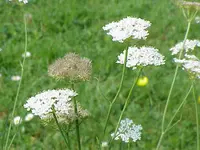
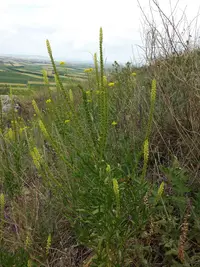
Corky-fruited water-dropwort, Oenanthe pimpinelloides, is a perennial herb in the carrot family, typically found in damp grasslands, meadows, and marshy edges. It forms slender, branching stems with finely divided, feathery leaves and small white flower clusters held in loose umbels. The distinctive corky, ridged fruits give the plant its common name and help with identification in the field. It usually grows in regions with mild, moist climates, especially across parts of Europe and naturalized areas elsewhere. This species prefers consistently moist soils and open to lightly shaded sites, which influences how to care for corky-fruited water-dropwort in garden or restoration settings.

Care Difficulty
Moderate Care

Light Preference
Full Sun

Water Requirements
Aquatic

Temperature Preference
Cool Climate

Hardiness Zone
5–9

Soil Texture
Loamy, Silty, Organic-rich

Soil pH
Slightly acidic (6.5–7.0), Neutral (7.0)

Soil Drainage
Waterlogged tolerant

Fertilization
Minimal (feed rarely)
Scan your plant to receive care tips personalized for your specific plant
Available on iOS and Android
This moisture-loving perennial prefers consistent light without prolonged harsh exposure.
This species is adapted to damp habitats and dislikes drying out completely.
This hardy perennial tolerates cool conditions but grows best in mild, stable temperatures.
This moisture-loving species prefers consistently humid air that matches its wet soil conditions.
This species prefers moist, deep, organic-rich soil that stays wet but still holds some structure.
This moisture-dependent species can be grown in containers if they are managed like small marsh beds.
This species is modest in its nutrient needs, so feeding is only helpful in poor soils or long-term containers when caring for corky-fruited water-dropwort.
Oenanthe pimpinelloides needs only light pruning to keep growth tidy and encourage healthy foliage.
This plant is most often grown in the ground, so focus on careful transplanting rather than frequent repotting.
This species is usually propagated by division or seed, both of which are straightforward under suitable conditions.
This plant is generally hardy in temperate climates and needs minimal winter care once established in the ground.

Plant Health Check
Not sure what's wrong with your plant? Check your plant's health inside the app.
This species has a mainly Atlantic–Mediterranean range, occurring from western and southern Europe to parts of North Africa, and is especially associated with moist grasslands and pastures in coastal-influenced climates.
It forms clusters of small, corky tubers on its roots, which help it survive seasonal drying of soils and have inspired the common name corky-fruited water-dropwort.
Populations often occur in traditionally managed, seasonally wet meadows and pastures, so its presence can indicate relatively undisturbed, moderately nutrient-rich but not heavily fertilized grassland.
Despite belonging to the Apiaceae, a family that includes both edible crops and deadly poisonous species, Oenanthe pimpinelloides itself has a history of cautious treatment in floras and field guides because some closely related Oenanthe species (such as Oenanthe crocata) are highly toxic and difficult for non-specialists to distinguish.
This species is considered potentially toxic, like many members of the carrot family Oenanthe. Ingestion can cause severe poisoning. Do not eat any part and keep pets, children, and livestock away from plants growing in accessible areas.
Keep your plants happy and healthy with plant identification, disease detection, and easy care guidance.