Mulch For Roots
Apply a 3–5 cm layer of fine pine bark or leaf mold mulch over the root zone to keep the shallow rhizomes cool, stable, and evenly moist while also suppressing weed competition.

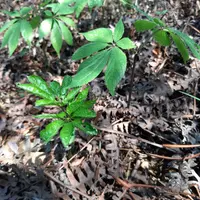
Panax pseudoginseng is a herbaceous perennial from the Araliaceae family, related to other ginseng species. It forms low clumps with divided leaves and small, rounded clusters of flowers that mature into bright red berries. Native to parts of the Himalayas and East Asia, it usually grows in cool, shaded forest understories with rich, moist, but well-drained soil. This species tends to be slow-growing and somewhat sensitive to heat, drought, and poor drainage, which can make it moderately challenging for beginners. Those who learn how to care for ginseng as a woodland understory plant generally find it easier to maintain over time.

Care Difficulty
Hard Care

Light Preference
Partial Shade

Water Requirements
Keep Soil Moist

Temperature Preference
Cool Climate

Hardiness Zone
6–9

Soil Texture
Loamy, Silty, Organic-rich

Soil pH
Strongly acidic (4.5–5.5), Acidic (5.5–6.5)

Soil Drainage
Moist but well-drained

Fertilization
Minimal (feed rarely)
Scan your plant to receive care tips personalized for your specific plant
Available on iOS and Android
Panax pseudoginseng prefers cool forest-like light similar to its native woodland habitat.
This woodland perennial needs steady moisture without staying waterlogged.
This species favors cool, temperate conditions with a marked winter chill.
This species prefers consistently moist air and reacts poorly to very dry conditions.
Panax pseudoginseng benefits from a loose, humus-rich, well-drained substrate that never becomes stagnant.
This woodland species can be grown in containers if moisture, depth, and stability are carefully managed.
Panax pseudoginseng benefits from modest, carefully timed feeding rather than heavy fertilization.
Panax pseudoginseng needs only light pruning to maintain plant health and structure.
Panax pseudoginseng is usually grown in-ground, but container plants or young stock may need careful transplanting.
Panax pseudoginseng is usually propagated by seed or careful division, both requiring patience and stable conditions.
Panax pseudoginseng is fairly cold hardy in suitable climates and usually needs only basic winter care outdoors.

Plant Health Check
Not sure what's wrong with your plant? Check your plant's health inside the app.
This species is naturally found in the cool, shaded forest understory of the eastern Himalayas and nearby regions, growing in humus-rich, moist but well-drained mountain soils at mid to high elevations.
Unlike some other ginseng relatives, it often forms irregular, knobbly underground tubers rather than a single, straight taproot, which helps it store energy through long, cold winters.
Historically, this plant has been confused with other Asian Panax species and has undergone several name changes, which means older botanical and horticultural literature may refer to it under different synonyms.

In its native range, this species often grows in association with mixed broadleaf-conifer forests, where the combination of dappled light, leaf litter, and cool, stable temperatures creates a very narrow microhabitat, which partly explains why it is not commonly seen in general cultivation compared with other ginseng species.
Growth is slow. From seed, this plant often needs 5–7 years to produce harvestable roots, sometimes longer in cool climates. Early growth focuses on root development, so above-ground parts may look small for several seasons.
Keep your plants happy and healthy with plant identification, disease detection, and easy care guidance.