Scarletina Bolete Care (Neoboletus luridiformis)

Scarletina Bolete

About Scarletina Bolete

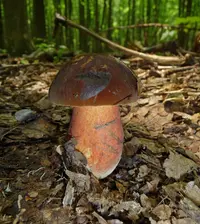
Scarletina bolete, Neoboletus luridiformis, is a fleshy, wild mushroom-forming fungus, not a leafy houseplant. It develops a thick, club-shaped stem with bright red dots and a brown cap that stains blue when bruised. In nature it fruits on the ground in mixed and coniferous woodlands, usually near spruce or pine, where it forms a mycorrhizal partnership with tree roots.

This species cannot be grown like common potted plants because it depends on living host trees and complex soil life. For those learning how to care for Scarletina Bolete, the most practical approach is to protect existing woodland habitat, maintain undisturbed leaf litter, and avoid soil compaction around its host trees.

Main Plant Requirements

Care Difficulty

Moderate Care

Light Preference

Partial Shade

Water Requirements

Keep Soil Moist

Temperature Preference

Cool Climate

Hardiness Zone

4–9

Soil Texture

Loamy, Silty, Organic-rich

Soil pH

Strongly acidic (4.5–5.5), Acidic (5.5–6.5)

Soil Drainage

Moist but well-drained

Fertilization

Minimal (feed rarely)

Get Personalized Care Plan

Scan your plant to receive care tips personalized for your specific plant

Available on iOS and Android

How to Care for the Scarletina Bolete

This mycorrhizal mushroom prefers dappled woodland light that mimics mixed forest conditions.

  • Provide bright, filtered light under deciduous trees, with 2–4 hours of gentle morning sun and shade or broken light the rest of the day.
  • Scarletina Bolete tolerates partial shade well; dense, deep shade slows fruiting, while long periods of direct midday sun can dry the soil surface and harm the mycelium.
  • In summer, protect from strong afternoon sun with canopy cover or leaf litter; in spring and fall, slightly more open light is acceptable if soil moisture stays stable.

This species depends on consistently moist, not saturated, forest soil to support its underground mycelium.

  • Aim for soil that feels evenly moist 5–8 cm deep; allow only the top 1–2 cm to dry slightly between natural rains or supplemental watering.
  • Increase watering during warm, dry spells if soil under the leaf litter dries out, but reduce or stop extra water in cool, rainy seasons to avoid waterlogging.
  • Watch for pale, shriveling caps and cracked soil as signs of dryness; persistent standing water, sour smell, or slimy bases suggest overwatering and poor drainage.

This fungus thrives in mild temperate conditions similar to mixed or coniferous forests.

  • Optimal fruiting typically occurs around 59–72°F (15–22°C), with the underground mycelium remaining active over a broader range as long as moisture is stable.
  • Neoboletus luridiformis tolerates cool weather down to about 41°F (5°C) in soil, but hard frosts and freezes can damage fruiting bodies at the surface.
  • Sustained heat above 82–86°F (28–30°C) combined with dry soil suppresses growth, so maintain shade, leaf litter, and soil moisture during hot, dry periods.

Humidity is not a major factor for Neoboletus luridiformis, which grows outdoors in natural forest conditions.

This fungus relies on outdoor forest soil conditions rather than a constructed potting mix.

  • Thrives in loose, well-drained, humus-rich loam where leaf litter and decaying wood supply continuous organic matter.
  • Prefers slightly acidic soil, typically pH 5.0–6.5, commonly found under conifers and mixed woodland.
  • Avoid compacted, waterlogged, or heavily disturbed mineral soils, which reduce oxygen levels around the mycelium network.
  • Do not amend forest soil with heavy manure or high-salt fertilizers, as these can disrupt Neoboletus luridiformis symbiosis with tree roots.

This species is not suitable for container growing, as it depends on complex mycorrhizal relationships in undisturbed forest soil.

Neoboletus luridiformis relies on its mycorrhizal partnership with trees, so direct fertilization of the fungus itself is usually unnecessary.

Neoboletus luridiformis does not require pruning, as each mushroom is a short-lived fruiting body rather than a long-lived plant structure.

This mycorrhizal fungus is not suited to standard repotting, since it lives in symbiosis with tree roots in soil rather than as a typical potted plant.

  • Transplant only when moving colonized soil beneath compatible host trees, keeping root systems and surrounding soil intact.
  • Work in early spring or fall, when temperatures are mild and host trees experience less stress.
  • Lift soil blocks gently with a spade, minimizing disturbance to fine roots and fungal threads.
  • Replant at the same depth, water lightly, and avoid compacting the soil to support recovery.

Propagation of Neoboletus luridiformis is specialized and usually left to natural spore dispersal and root associations in the wild.

This fungus is cold hardy in its natural range and usually requires no specific winter care beyond maintaining a healthy host tree and soil.

Care Tips

Spore-Friendly Harvest

Cut mature caps cleanly at the base with a knife and leave a few of the healthiest, bug-free specimens untouched so they can drop spores and maintain future Neoboletus luridiformis populations.

Soil Disturbance Control

Mark productive patches and avoid raking, digging, or compacting the soil in those areas, since the underground mycelium is sensitive to disturbance and heavy foot traffic.

Mycorrhizal Tree Support

Keep host trees (commonly beech, oak, or conifers) healthy with proper mulching and minimal root disturbance, because the fungus depends on a stable mycorrhizal partnership with these trees to fruit well.

Moisture-Retentive Mulch

Apply a thin, loose layer of leaf litter or fine wood chips around host trees to buffer moisture and temperature without smothering the soil surface, which encourages more reliable fruiting after rains.

Observation-Based Timing

Track local rainfall and soil moisture and search patches 2–4 days after steady rain in warm weather, adjusting collecting trips to these windows for more efficient and sustainable growing Scarletina Bolete efforts.

Everything About Scarletina Bolete

Common Pests and Diseases

Mycophagous beetle larvae

This pest targets developing fruiting bodies and tunnels through the flesh, leaving brown galleries and speeding decay. Symptoms include soft, collapsing caps and stems with visible burrows and frass inside.

Solution

Collect and remove infested mushrooms promptly and discard them away from the site to reduce breeding. Use fine mesh covers or cages over emerging fruiting bodies in small-scale cultivation, and maintain good site hygiene by clearing old, rotting mushrooms that could harbor larvae.

Fungal parasitism (mold overgrowth)

This disease appears as white, gray, or green mold patches on caps and stems, often starting at damaged tissue or cut surfaces. Symptoms include rapid softening, off-odors, and loss of the firm texture of the bolete.

Solution

Harvest only firm, undamaged mushrooms and handle them gently to avoid bruising and cuts that invite mold. In cultivation or storage, keep fruiting bodies dry and well ventilated, refrigerate promptly after harvest, and discard any mushrooms that show spreading mold to prevent contamination of healthy specimens.

Slug and snail damage

These pests rasp away at the surface of caps and stems, leaving irregular holes, slime trails, and partially eaten fruiting bodies. Symptoms include notched edges and missing sections of the mushroom, often appearing overnight in damp conditions.

Solution

Hand-pick slugs and snails during damp evenings, and remove nearby debris or dense groundcover that offers shelter. In managed patches, use barriers such as copper tape, rough gravel rings, or selectively placed iron phosphate bait to protect emerging fruiting bodies while avoiding contamination of the surrounding forest floor.

Fly maggot infestation

This pest originates from fly eggs laid on young caps, which hatch into larvae that bore through the mushroom, turning the interior spongy and discolored. Symptoms include small pinholes on the surface, soft spots, and a wormy texture when the mushroom is cut open.

Solution

Inspect fruiting bodies frequently and harvest them while still young and firm, before caps fully flatten. Discard heavily infested mushrooms away from the fruiting site to reduce future egg-laying, and in cultivated situations consider using fine insect netting to limit access of adult flies to developing mushrooms.

Interesting Facts

Instant blue bruising

When the flesh or pores are cut or pressed, they quickly stain dark blue due to oxidation of boletol and related pigment compounds, a reaction that is especially rapid and intense in this species compared with many other boletes.

Symbiosis with conifers

This bolete forms ectomycorrhizal partnerships with conifers such as spruce and pine, exchanging mineral nutrients from the soil for sugars produced by the tree through photosynthesis.

Look-alike toxicity risk

Although it is considered edible when thoroughly cooked in parts of Europe, it closely resembles some toxic red-pored boletes, so misidentification can lead to gastrointestinal poisoning from more dangerous species.

Botan icon

Did you know?

This species often fruits in large, scattered groups rather than singly, which makes it an important seasonal food source for forest invertebrates and small mammals that feed on the abundant caps and help spread its spores through their droppings.

FAQs about Scarletina Bolete

This species is considered edible when thoroughly cooked, but it can cause gastrointestinal upset in some people and is easily confused with toxic boletes. Only experienced foragers should consume it, after careful identification and proper preparation.

Grow Healthy Plants with Botan Care

Keep your plants happy and healthy with plant identification, disease detection, and easy care guidance.

Botan plant care app — identify plants on mobile

Explore More Plants