

Log selection
Choose fresh, disease-free hardwood logs (hemlock, spruce, or fir) cut within the last 2–4 weeks, as older, decayed wood is more likely to carry competing fungi that will outgrow the mycelium.

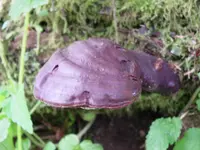
West Coast Reishi, Ganoderma oregonense, is a large wood-decay fungus rather than a traditional leafy plant. It forms thick, shelf-like brackets on dead or dying conifer trunks, often with a varnished reddish-brown surface and creamy white growing edge.
This species is native to the Pacific Northwest of North America, especially along the coastal forests of the US and Canada. It plays an important ecological role by decomposing wood and recycling nutrients in mature forest ecosystems.
In cultivation, it is typically grown on prepared hardwood or conifer logs or sterilized substrate. Understanding how to care for West Coast Reishi usually requires controlling moisture, airflow, and cleanliness more precisely than with common houseplants.

Care Difficulty
Hard Care

Light Preference
Shade

Water Requirements
Keep Soil Moist

Temperature Preference
Cool Climate

Hardiness Zone
6–9

Soil Texture
Organic-rich, Loamy, Peaty

Soil pH
Acidic (5.5–6.5)

Soil Drainage
Moist but well-drained

Fertilization
Minimal (feed rarely)
Scan your plant to receive care tips personalized for your specific plant
Available on iOS and Android
This wood-decaying fungus prefers cool, moist, forest light rather than direct, open sun.
This fungus needs consistently moist, not waterlogged, wood and surrounding substrate to fruit well.
This species favors cool to mild forest conditions and declines in prolonged heat or hard frost.
This wood-decaying fungus prefers consistently moist, cool air during active growth.
In cultivation, this species performs best on structured, woody substrates that mimic decaying conifer logs rather than standard garden soil.
This fungus can be grown in containers or bags when the substrate mimics solid, well-drained woody material.
This wood-decay fungus grows on nutrient-rich logs, so Ganoderma oregonense usually needs no additional fertilizer when cultivated on fresh hardwood substrates.
Pruning is generally unnecessary for Ganoderma oregonense, which is managed by harvesting rather than shaping.
When grown in logs or outdoor beds, this bracket fungus is managed by renewing substrate rather than classic repotting.
Propagation of Ganoderma oregonense is done mainly for cultivation or research rather than ornamental use.
Outdoor colonies of this native fungus are cold hardy in much of its range and usually need minimal winter care.

Plant Health Check
Not sure what's wrong with your plant? Check your plant's health inside the app.
This large bracket fungus is native to old-growth conifer forests of the Pacific Northwest, especially along the coastal ranges of northern California, Oregon, Washington, and British Columbia, where it is most often found on living or dead hemlock and other conifers.
Individual fruiting bodies can persist and add new growth bands over several years, forming thick, woody, shelf-like brackets that may reach notable size and show clear annual growth zones on the upper surface.
It is a white-rot fungus that breaks down lignin in conifer wood, leaving a lighter, fibrous residue and playing an important role in nutrient recycling and structural decay of large trees and logs in coastal forests.

Molecular studies have shown that this West Coast species, long treated as part of a broad Ganoderma lucidum complex, is genetically distinct and adapted to cool, wet coastal conifer ecosystems, which is why modern mycology now recognizes it as a separate taxon rather than a regional form of the cultivated reishi mushroom.
This wood-decay fungus expands slowly on living or dead conifer wood. The mycelium may take several years to fully colonize a log, with new bracket layers forming seasonally and gradually increasing in thickness and diameter over time.
Keep your plants happy and healthy with plant identification, disease detection, and easy care guidance.

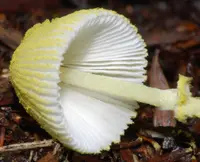
Fragile Dapperling
Leucocoprinus fragilissimus
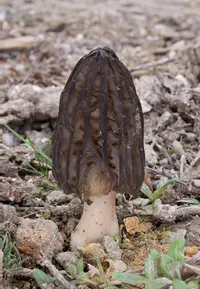
Black Morel
Morchella elata
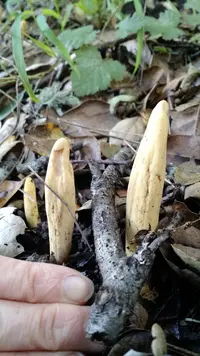
western club coral fungus
Clavariadelphus occidentalis
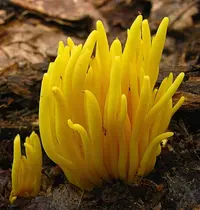
Golden Spindles
Clavulinopsis fusiformis
aromatic earthfan
Sistotrema confluens
Large White Leucopax
Leucopaxillus albissimus
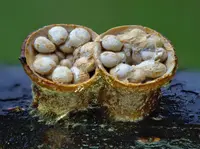
common bird's nest fungus
Crucibulum laeve
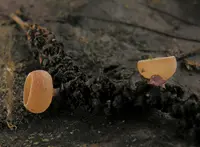
catkin cup
Ciboria amentacea