Spore-friendly spacing
When establishing beds, leave 20–30 cm between fruiting clusters so caps do not crowd, which improves air flow around the gills and helps spores disperse for more reliable natural reseeding.

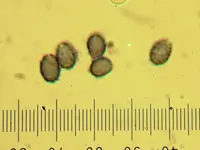
Large white leucopax (Leucopaxillus albissimus) is a large, white, gilled fungus, not a typical leafy houseplant. It produces broad, creamy to pure white caps with thick stems and dense white gills, often forming groups or loose arcs on the ground.
This species usually appears in woodland or forest edges, often on leaf litter or mossy soil in temperate regions. It is more of a foraged or observed wild mushroom than a cultivated species, so how to care for Large White Leucopax mainly concerns recognizing suitable cool, moist, shaded forest-like conditions rather than routine pot culture at home.

Care Difficulty
Moderate Care

Light Preference
Partial Shade

Water Requirements
Regular Water

Temperature Preference
Cool Climate

Hardiness Zone
Unknown

Soil Texture
Loamy, Organic-rich

Soil pH
Acidic (5.5–6.5)

Soil Drainage
Moist but well-drained

Fertilization
Minimal (feed rarely)
Scan your plant to receive care tips personalized for your specific plant
Available on iOS and Android
This woodland fungus prefers cool, dappled light that mimics a forest edge or light woodland clearing.
This fungus depends on consistently moist, well-drained soil rather than direct watering of the fruiting bodies.
This species develops best in cool to mild conditions typical of temperate woodland climates.
Humidity is not a major factor for Leucopaxillus albissimus, which grows outdoors in typical temperate conditions.
Leucopaxillus albissimus develops best in loose, organic-rich ground that stays moist yet drains freely.
This species is not well suited to container cultivation, as it usually forms extensive mycelial networks in the ground.
Leucopaxillus albissimus is a woodland fungus that relies on natural soil nutrients and normally should not be fertilized.
As a mushroom-forming fungus, Leucopaxillus albissimus is not pruned; its fruiting bodies simply age and decompose naturally.
This fungus is adapted to undisturbed soil and leaf litter, so transplanting attempts are rarely successful or recommended.
Practical home propagation of Leucopaxillus albissimus is difficult because it depends on complex soil and microbial relationships.
This woodland fungus is naturally cold hardy and needs no deliberate winter care in typical temperate climates.

Plant Health Check
Not sure what's wrong with your plant? Check your plant's health inside the app.
Mature fruiting bodies develop broad white caps that can exceed 15 cm across and often show a mealy or floury surface texture, which helps distinguish this species from smaller white mushrooms in the same habitats.
The flesh emits a distinct farinaceous smell, often described as like raw flour or meal, a useful field character when identifying this species among other pale, gilled fungi.
This species commonly fruits on the ground in coniferous or mixed woodlands, especially under pines, where it plays a role in decomposing forest litter and recycling organic matter in cool, moist seasons.
This mushroom is generally regarded as inedible due to its tough texture and poor culinary value. Some related species can also cause gastric upset. For safety, it is best not to consume it.
Keep your plants happy and healthy with plant identification, disease detection, and easy care guidance.