Ascodichaena rugosa Care

Ascodichaena rugosa

About Ascodichaena rugosa

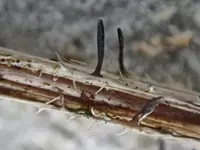
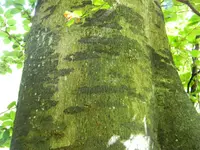
Ascodichaena rugosa is not a typical houseplant but a microscopic ascomycete fungus that lives on the bark and needles of conifers, especially spruce. It forms dark, rough patches on the host surface, often only noticed by close inspection.

This species occurs mainly in temperate forests of Europe and parts of North America, where it behaves as a specialized parasite or associate of conifer trees. Its biology makes it unsuitable for normal cultivation, so how to care for Ascodichaena rugosa is mainly a question of managing its forest host rather than growing it as an ornamental.

In managed landscapes it is usually considered a minor curiosity rather than a major problem, although heavy infestations can slightly affect the appearance of affected trees.

Main Plant Requirements

Care Difficulty

Moderate Care

Light Preference

Partial Shade

Water Requirements

Moderate Water

Temperature Preference

Cool Climate

Hardiness Zone

Unknown

Soil Texture

Loamy

Soil pH

Slightly acidic (6.5–7.0)

Soil Drainage

Well-drained

Fertilization

Minimal (feed rarely)

Get Personalized Care Plan

Scan your plant to receive care tips personalized for your specific plant

Available on iOS and Android

How to Care for the Ascodichaena rugosa

This fungus develops best under shaded forest conditions with only limited direct sunlight.

  • Aim for bright to moderate shade, such as beneath a tree canopy or on a north or east-facing forest edge, with no more than 1–2 hours of weak direct sun per day.
  • Protect Ascodichaena rugosa from strong midday and afternoon sun, which can overheat host bark and dry the substrate too quickly.
  • In summer, heavier overhead shade is beneficial, while in late autumn and winter, slightly more open light is acceptable as long as bark surfaces do not dry and crack.

This species depends on consistently moist bark rather than direct watering of the fungus itself.

  • Allow the bark or wood substrate to stay slightly damp, not saturated; if managing a cultivated log, let the top 2–3 mm of surface just begin to dry before lightly rewetting.
  • Ensure excellent drainage around host material so water does not pool, since persistent saturation promotes decay organisms that can outcompete the fungus.
  • In wetter seasons rely mainly on rainfall and reduce any supplemental misting if surfaces stay visibly damp for more than 24 hours, while in dry, windy periods increase brief misting to prevent complete drying.

This fungus is adapted to cool to mild temperate conditions with moderate seasonal variation.

  • Optimal activity is usually in the range of 50–68°F (10–20°C), where host bark remains slightly cool and does not dry rapidly.
  • Short exposures down to about 23°F (-5°C) are tolerated on dormant host tissues, but repeated hard freezes below this can damage bark and indirectly reduce colonization.
  • The fungus copes reasonably well with brief warm spells up to 77–82°F (25–28°C) if humidity stays high, but extended heat waves above this, especially with low moisture, slow growth and may desiccate surface tissues.

Humidity is not a key factor for Ascodichaena rugosa, which tolerates a broad range of ambient conditions.

This species develops best on consistently moist, well-drained, organic-rich substrates rather than compacted mineral soil.

  • Use a loose, humus-rich loam with fine bark or leaf mold to mimic decaying wood surfaces.
  • Ensure rapid drainage; avoid waterlogged or heavy clay sites that stay wet after rain.
  • Maintain slightly acidic to neutral conditions around pH 5.5–7.0 for stable growth.
  • Improve aeration by incorporating coarse sand or fine grit so surfaces dry between wet periods.

This fungus is not suitable for conventional container growing.

This fungus is typically hosted on trees and does not need direct fertilization in managed settings.

Pruning is not applied directly to Ascodichaena rugosa but to its tree hosts to maintain plant health and structure.

  • Carry out light structural pruning of the host tree in late winter or very early spring before active growth starts.
  • Remove dead, diseased, or crossing branches to improve airflow and light penetration around colonized areas.
  • Use sharp, disinfected bypass pruners or a pruning saw, cleaning blades between cuts to limit spread of other pathogens.

Transplanting focuses on the host tree rather than the fungus itself, which establishes naturally on bark and twigs.

  • Transplant young host trees only when dormant in late fall or early spring to limit stress.
  • Look for signs such as poor vigor or roots circling a container before shifting a potted host to a larger size.
  • Water thoroughly before and after moving, and keep the original soil level at the same depth in the new site or container.
  • Reduce root disturbance by handling the root ball intact and shading the plant temporarily if conditions are hot or windy.

Propagation of this bark-inhabiting fungus is not typically managed in home or landscape settings.

This species occurs on cold-hardy woody hosts and generally needs no dedicated winter care in outdoor conditions.

Care Tips

Host selection

Choose only healthy, vigorous Pinus or Picea hosts in low-stress sites, since weakened or drought-stressed conifers are far more susceptible to heavy colonization when growing Ascodichaena rugosa outdoors.

Sanitation pruning

Promptly remove and destroy heavily colonized twigs and small branches during dry weather, disinfecting tools with 70% alcohol between cuts to reduce inoculum spread along a planting or shelterbelt.

Moisture management

Avoid overhead irrigation and dense understory vegetation around host trees, since reducing leaf wetness duration and improving air movement makes conditions less favorable for extensive fungal development.

Monitoring schedule

Inspect host bark and young shoots at least 2–3 times per year, focusing on shaded, lower branches, so that any change in distribution or intensity of the fungus is detected early and management can stay proportional.

Quarantine new stock

Hold newly acquired conifers in a separate area for one growing season and monitor for unusual bark colonization before integrating them into established plantings to limit accidental introduction or spread during caring for Ascodichaena rugosa.

Common Pests and Diseases

Black canker lesions

This disease causes irregular black, slightly sunken patches on the bark of birch stems and branches where the fungus fruits. Symptoms include roughened, dark crusts that can coalesce and distort the bark surface.

Solution

Prune out and destroy heavily colonized twigs and small branches during dry weather, cutting back into healthy bark to reduce inoculum. Maintain birch trees in good vigor through proper watering and mulching to limit stress; in managed settings, avoid wounding the bark, and remove and dispose of prunings and fallen twig debris that carry the fungus.

Twig dieback

This disease develops when colonized bark around small twigs and branchlets is girdled, leading to progressive tip death. Symptoms include short dead twigs protruding from otherwise living branches and clusters of dry, blackened fruiting crusts on the dead portions.

Solution

Cut back affected twigs to living wood and dispose of them off site to reduce fungal spread, disinfecting tools between cuts with alcohol or a 10% bleach solution. Improve air circulation through careful thinning of overcrowded branches and avoid overhead irrigation on birch canopies in parks or collections to limit prolonged bark wetness that favors infection.

Bark roughening and distortion

This disease results in chronic thickening and roughening of birch bark where repeated infections occur. Symptoms include irregular, wart-like ridges and persistent black speckling that give a scabby, uneven appearance to older bark sections.

Solution

Monitor susceptible birch trunks and larger branches regularly and mark stable, non-expanding areas for observation while removing smaller, highly active patches on minor branches where feasible. In landscapes focused on how to take care of Ascodichaena rugosa, reduce long-term stress by avoiding soil compaction around roots, providing even soil moisture, and protecting trunks from mechanical injury to minimize new infection courts for the fungus.

Interesting Facts

Obligate spruce parasite

This fungus is an obligate parasite of Picea species, meaning it lives almost exclusively on spruce needles and twigs and does not have a known free-living saprotrophic stage.

Roughened twig galls

It characteristically forms rough, corky, often longitudinally ridged swellings on spruce twigs and small branches, which is why the species epithet rugosa refers to a wrinkled or rough surface.

Distinctive black fruiting crust

Its asci- and spore-producing structures develop as a dark, often almost black superficial crust on infected twigs, making infected sections sharply contrasted against healthy bark and needles.

FAQs about Ascodichaena rugosa

This fungus forms crust-like, warty patches on bark and can slowly expand across the surface, but it does not rapidly overrun large areas. Its spread depends on spore availability, suitable hosts, and local climate conditions.

Grow Healthy Plants with Botan Care

Keep your plants happy and healthy with plant identification, disease detection, and easy care guidance.

Botan plant care app — identify plants on mobile

Explore More Plants