ochre club Care (Clavariadelphus ligula)

Also known as: strap coral fungus
ochre club

About ochre club

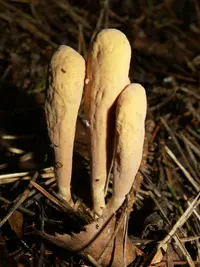
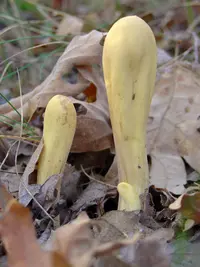
The ochre club, Clavariadelphus ligula, is a club-shaped fungus rather than a leafy plant. It produces narrow, upright, yellow to ochre fruiting bodies that rise from the forest floor like small tongues or clubs.

This species is typically found in temperate coniferous and mixed woodlands, especially in mossy or needle-rich soil. It grows on the ground, often in scattered groups.

Ochre club relies on specific forest soils and fungal partnerships, so it is not easy to grow in typical garden conditions. Those who try to care for ochre club need stable moisture, cool conditions, and undisturbed, humus-rich substrate.


Main Plant Requirements

Care Difficulty

Hard Care

Light Preference

Partial Shade

Water Requirements

Regular Water

Temperature Preference

Cool Climate

Hardiness Zone

Unknown

Soil Texture

Loamy, Silty, Organic-rich

Soil pH

Acidic (5.5–6.5)

Soil Drainage

Moist but well-drained

Fertilization

Minimal (feed rarely)

Get Personalized Care Plan

Scan your plant to receive care tips personalized for your specific plant

Available on iOS and Android

How to Care for the ochre club

This fungus prefers gentle woodland light rather than intense open sun.

  • Provide dappled or filtered light under deciduous trees, with about 2–4 hours of soft morning sun and shade the rest of the day.
  • Allow partial shade to deep shade; ochre club fruits poorly in full, exposed sun, where tissue dries and color fades.
  • In summer, protect from direct midday and afternoon sun; in early spring and fall, slightly brighter forest-edge light is acceptable.

Moist, not soggy, soil is essential for stable fruiting of this woodland fungus.

  • Aim for evenly moist, humus-rich ground; the surface should feel slightly damp but not waterlogged when pressed with fingers.
  • Allow only the top 1–2 cm of forest soil or mulch to start drying before re-moistening, especially during dry spells for Clavariadelphus ligula.
  • Watch for oversaturation signs such as standing water, foul smell, or slimy decay, and improve drainage with leaf litter rather than frequent heavy soaking.

This species is adapted to cool, temperate woodland conditions rather than temperature extremes.

  • Optimal fruiting occurs around 50–68°F (10–20°C), often from late summer to fall in many temperate forests.
  • It tolerates down to about 32°F (0°C) without lasting damage, but hard freezes below 28°F (-2°C) can collapse existing fruiting bodies.
  • Heat above 77–82°F (25–28°C), especially combined with dry air and soil, shortens lifespan and may prevent new fruiting until cooler weather returns.

This terrestrial fungus does not require specific humidity control when grown outdoors in its natural-style substrate.

This mycorrhizal fungus relies on specific forest-floor conditions rather than conventional potting soil.

  • Use a loose, well-aerated layer of partially decomposed conifer litter mixed with coarse sand or fine gravel to mimic acidic woodland humus.
  • Aim for acidic conditions around pH 4.5–5.5, similar to conifer forests where Clavariadelphus ligula typically fruits.
  • Avoid compacted, clay-heavy, or waterlogged ground, which slows gas exchange and favors competing fungi and rot organisms.
  • Maintain moderate, even moisture in the organic layer, allowing the top to dry slightly between waterings to prevent anaerobic pockets.

This species is generally unsuitable for long-term container cultivation because it depends on mycorrhizal association with tree roots in open ground.

This woodland fungus does not need routine fertilization and usually performs best in naturally low-nutrient forest soils, so caring for ochre club focuses more on habitat than feeding.

Clavariadelphus ligula requires no true pruning because it is a fungus, not a leafy plant or shrub.

This species is not suited to conventional repotting because it relies on complex soil fungi relationships in the ground.

  • Grow it in undisturbed, well-drained forest soil rich in leaf litter rather than containers.
  • Avoid disturbing the surrounding soil; the hidden mycelium network is the true organism.
  • If relocation is unavoidable, move a generous plug of native soil with minimal breakup.
  • Transplant only during cool, moist weather to limit desiccation of the mycelium.

Clavariadelphus ligula propagation is specialized and typically left to advanced mycologists rather than home growers.

This fungus is naturally cold hardy in its native range and does not require active winter care from the grower.

Care Tips

Substrate inoculation

Mix small pieces of fresh, healthy fruiting bodies or colonized substrate into a new batch of well-pasteurized, low-nutrient woodland soil and leaf litter to extend the mycelium and stabilize future flushes when growing ochre club.

Encouraged moss cover

Allow a thin layer of native moss to develop over the cultivation bed, as it helps maintain surface moisture, moderates temperature swings, and mimics the fungus’s natural forest-floor microhabitat.

Minimal surface disturbance

Avoid raking, hoeing, or compacting the soil where the fungus is established; instead, gently hand-remove only coarse debris so the shallow mycelial network and developing fruiting bodies are not damaged.

Seasonal leaf mulching

In autumn, top-dress the site with a light, airy layer of shredded deciduous leaves (not thick, wet mats) to provide a slow carbon source and protect the mycelium from winter desiccation and freeze–thaw cycles.

Targeted fruit harvesting

When collecting, cut fruiting bodies cleanly at the base with a sharp knife instead of pulling them out, leaving the belowground mycelium intact and better able to produce future flushes.

Common Pests and Diseases

Mycophagous springtails

These insects feed on fungal tissue, nibbling fruiting bodies and leaving pitted, roughened surfaces. This pest is most frequent in moist, organic-rich substrates where Clavariadelphus ligula fruiting bodies emerge.

Solution

Reduce excess surface moisture, improve drainage, and avoid standing water around the fruiting zone; this lowers springtail numbers naturally. If damage is heavy, gently remove debris where they congregate and, in non-wild cultivation, use sticky traps or a targeted, soil-safe biological control labeled for springtails, following product directions carefully.

Slug and snail grazing

These pests chew soft tissue of the club-shaped fruiting bodies, causing ragged edges, missing tips, and slime trails. Symptoms include sudden overnight loss of parts of the clubs in damp, shaded sites.

Solution

Hand-pick slugs and snails at dusk or after rain and remove nearby hiding spots such as dense mulch, boards, or stones. In cultivated settings, set out beer or yeast traps and, if needed, use iron phosphate slug bait placed away from children, pets, and wildlife, avoiding direct contact with the fungi.

Fungal parasitism

This disease involves other fungi colonizing the fruiting bodies, leading to discoloration, softening, or deformities of the ochre clubs. Symptoms include patches of different-colored mold, fuzzy overgrowth, or rapidly collapsing tissue.

Solution

Promptly remove and discard affected fruiting bodies to limit spread of the parasitic fungus. Improve air circulation, avoid overhead watering, and keep surrounding litter from staying saturated for long periods to make conditions less favorable for parasitic growth.

Mite feeding damage

These tiny arthropods can feed on the surface of young fruiting bodies, causing fine speckling, rough patches, or localized collapse. This pest often increases in warm, protected microhabitats with abundant organic matter.

Solution

Gently rinse fruiting bodies and surrounding litter with a soft stream of water to dislodge mites, avoiding physical breakage. In managed culture, lower mite pressure by keeping the area clean of decaying debris build-up and, if needed, introduce predatory mites appropriate for fungal cultivation systems.

Interesting Facts

Club-shaped fruiting body

This fungus produces simple, unbranched, tongue- or club-shaped fruiting bodies that can reach around 5–10 cm tall, lacking the caps and gills that many people associate with typical mushrooms.

Mycorrhizal forest partner

Clavariadelphus ligula forms mycorrhizal associations with trees, most often in coniferous or mixed forests, exchanging mineral nutrients from the soil for sugars produced by the host tree through photosynthesis.

Gelatinous, spongy texture

Its flesh is pale, soft, and somewhat spongy to gelatinous, often becoming hollow or chambered with age, a texture that helps distinguish it from many other small club fungi in the field.

Botan icon

Did you know?

In some European countries this species is considered rare or locally threatened, and in a few regions it appears on fungal Red Lists, reflecting concern about habitat changes and forest management impacts on its long-term populations.

FAQs about ochre club

This fungus is generally considered inedible due to its tough, fibrous texture and poor taste rather than confirmed toxicity. It is not recommended as food. Leave it in the habitat and avoid collecting for consumption.

Grow Healthy Plants with Botan Care

Keep your plants happy and healthy with plant identification, disease detection, and easy care guidance.

Botan plant care app — identify plants on mobile

Explore More Plants