Fragile Dapperling Care (Leucocoprinus fragilissimus)

Fragile Dapperling

About Fragile Dapperling

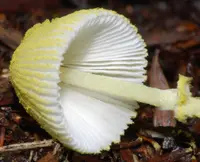
Fragile dapperling, Leucocoprinus fragilissimus, is a small, delicate mushroom rather than a typical leafy houseplant. It produces thin, pale yellow caps with finely lined surfaces and very slender stems, often collapsing within a day.

This fungus usually appears in warm, humid conditions on rich organic matter, lawns, forest litter, or in mulched garden beds, sometimes after rain or in greenhouses. It is short-lived and not suited to regular ornamental cultivation, so attempts to care for Fragile Dapperling are mostly about understanding and managing its temporary appearance.

It tends to favor moist, well-aerated substrates with partial shade and consistent humidity, emerging quickly when conditions are suitable and disappearing just as fast.

Main Plant Requirements

Care Difficulty

Hard Care

Light Preference

Partial Shade

Water Requirements

Keep Soil Moist

Temperature Preference

Tropical / Frost Sensitive

Hardiness Zone

Unknown

Soil Texture

Loamy, Silty, Organic-rich

Soil pH

Acidic (5.5–6.5), Slightly acidic (6.5–7.0)

Soil Drainage

Moist but well-drained

Fertilization

Minimal (feed rarely)

Get Personalized Care Plan

Scan your plant to receive care tips personalized for your specific plant

Available on iOS and Android

How to Care for the Fragile Dapperling

This delicate woodland mushroom prefers soft, filtered light that mimics a shaded forest floor.

  • Provide bright, indirect light or dappled shade, such as under shrubs or trees with shifting canopy cover, for about 2–4 hours of gentle morning sun only.
  • Avoid strong midday or afternoon sun, which can dry and collapse the thin caps of Fragile Dapperling; leaf litter or low vegetation helps diffuse light.
  • In summer, choose a north- or east-facing, lightly shaded spot; in cooler seasons, slightly brighter but still filtered light supports more reliable fruiting.

This fungus thrives in consistently moist, well-drained substrates rich in organic matter.

  • Maintain evenly moist soil or leaf litter, allowing only the top 1–2 cm to begin drying before rewetting; avoid fully drying out the substrate.
  • Use loose, well-draining humus or compost-enriched ground where excess water can pass through, since extended puddling leads to rotting mycelium and fewer fruiting bodies.
  • During hot, dry periods, increase moisture by gentle soaking when the surface looks pale and crumbly; reduce added water in cool, rainy weather to prevent sour or anaerobic smells.

This species favors warm, frost-free conditions similar to a mild, humid forest floor.

  • Aim for an active growth range of 68–82°F (20–28°C), where mycelium spreads well and fruiting bodies develop quickly in moist organic material.
  • Protect from cold; growth slows sharply below about 55°F (13°C) and fruiting usually stops, while brief exposure near 40°F (4°C) can damage tissue.
  • Completely avoid frost and freezing, which kill fruiting bodies and often the underlying mycelium, and shield from extreme heat above 90°F (32°C) with shade and additional moisture.

This delicate saprotrophic mushroom favors moist air but does not require extreme humidity when grown in sheltered conditions.

  • Aim for 50–70% humidity to support consistent fruiting and prevent caps from drying and cracking.
  • Tolerates brief dips to 40% if substrate moisture is stable, but prolonged dry air shrivels caps and shortens lifespan.
  • Increase humidity with a loose clear cover, frequent light misting of the substrate (not caps), or a humidity tray nearby.

This species develops on very loose, organic-rich substrates rather than typical mineral garden soil.

  • Use a light, fibrous mix of leaf litter, well-rotted compost, and fine bark that mimics decomposing woodland debris.
  • Maintain rapid drainage; the substrate should feel moist but never waterlogged or compacted, which reduces oxygen around developing mycelium.
  • A slightly acidic to neutral pH around 5.5–7 supports Leucocoprinus fragilissimus on most compost-based mixes.
  • Improve aeration and drainage by adding shredded bark, coarse leaf mold, or a small portion of perlite, while avoiding dense clay or heavy loam.

This species can be grown in shallow containers or trays when given a loose, consistently moist organic substrate.

  • Select a broad, shallow container to spread substrate thinly, which encourages even mycelium colonization and more uniform fruiting.
  • Use a rigid container that resists flexing so the fragile fruiting bodies are not disturbed when the tray is moved or handled.
  • Prefer opaque or dark-sided containers to reduce light and edge drying in the substrate, helping pins form away from overly dry margins.

This delicate saprotrophic fungus generally does not need fertilizer when growing in natural or compost-rich substrates.

Leucocoprinus fragilissimus does not require pruning because the fruiting bodies are short-lived mushrooms, not persistent plant structures.

In cultivation, Fragile Dapperling is usually linked to its substrate rather than a traditional potting setup, so disturbance should be minimal.

  • Only consider moving colonized substrate if growth is declining and the material is fully decomposed or contaminated.
  • Time any transfer for warm, stable conditions that favor fungal growth, avoiding extreme temperature swings.
  • Move chunks of colonized substrate intact into fresh, similar material to limit damage to the mycelium network.
  • Keep the new container uniformly moist but not waterlogged after transfer to reduce stress and encourage recolonization.

Leucocoprinus fragilissimus is a mushroom-forming fungus, and intentional propagation in homes is uncommon and technically demanding.

This species is not cold hardy and typically fruits in warm, protected, organic-rich environments rather than in exposed winter conditions.

  • Maintain substrate above freezing by growing in indoor or sheltered, climate-controlled spaces during cold months.
  • If in containers outdoors in mild regions, move them indoors or into a greenhouse before temperatures drop near 40°F.
  • Keep the substrate slightly moist but avoid saturation, since cold, waterlogged conditions can suppress mycelial activity.

Care Tips

Use breathable containers

When cultivating this fungus on organic debris or in a terrarium, use shallow, ventilated containers so the delicate caps dry slowly and collapse less quickly after spore release.

Substrate depth control

Keep the organic substrate layer thin (2–4 cm) so the fine stems do not have to stretch excessively, which reduces toppling and makes observing fruiting cycles easier.

Gentle airflow management

Provide very light, indirect airflow using a small fan placed away from the container to prevent stagnant air and mold growth without drying the fragile fruiting bodies too quickly.

Minimal handling practice

Observe and photograph clusters without touching them or moving the container abruptly, since even slight vibrations can snap the hollow stems and shorten display time when caring for Fragile Dapperling.

Staggered substrate refresh

Refresh only part of the decaying leaf litter or compost at a time instead of replacing all at once, which helps maintain a stable fungal network and encourages more continuous fruiting flushes.

Common Pests and Diseases

Fungus gnats

These insects are small, dark flies that are strongly attracted to damp, organic-rich substrates where fragile dapperling often appears in pots or greenhouse benches. Symptoms include tiny flies hovering over containers and slender larvae feeding in the top layer of moist growing media.

Solution

Allow the upper 2–3 cm of substrate to dry slightly between waterings, use well-drained media, and remove decaying plant debris that supports larval development. Sticky traps can reduce adult numbers, and a biological control such as Bacillus thuringiensis israelensis (Bti) drench helps target larvae without disturbing mushrooms nearby.

Trichoderma colonization

This disease involves fast-growing green mold fungi that readily colonize nutrient-rich, moist substrates used for growing Leucocoprinus fragilissimus. Symptoms include white mycelium quickly turning bright or dull green patches that overrun the delicate mushroom mycelium and suppress fruiting.

Solution

Remove and discard heavily colonized substrate and clean containers and tools with a mild bleach solution (about 1:10 bleach:water). Improve airflow, avoid over-wetting, and pasteurize or replace contaminated organic substrates to give the fragile dapperling mycelium a competitive advantage, following general Leucocoprinus fragilissimus care guidelines.

Mite infestation

This pest group includes small, often pale or translucent mites that feed on fungal mycelium and developing mushroom pins. Symptoms include slowed or distorted mushroom development and fine moving specks on the substrate surface or around fruiting bodies.

Solution

Reduce excessive moisture and stagnant air, then inspect and discard severely infested substrate batches. Clean surrounding benches, consider using fine mesh barriers, and, in larger setups, introduce predatory mites that feed on pest mites while leaving the mushrooms largely unaffected.

Interesting Facts

Extremely fragile fruiting bodies

The caps and stems are so thin-walled and delicate that they often collapse or shrivel within a single day, especially after spore release or minor handling.

Translucent striate cap surface

The pale yellow cap shows distinct striations where the gill pattern shines through the almost translucent flesh, a diagnostic feature visible even without magnification.

Distinctive cap coloration pattern

Fresh caps are typically light yellow with a slightly darker central disc and paler margin, creating a subtle two-tone appearance that helps separate it from similar delicate yellow agarics.

Botan icon

Did you know?

Molecular and morphological studies have shown that this species, once placed in the genus Coprinus, is now firmly classified in Leucocoprinus, reflecting a major reorganization of gilled mushroom taxonomy based on DNA evidence.

FAQs about Fragile Dapperling

This species is considered inedible and possibly poisonous. Identification within small, pale gilled mushrooms is difficult, and confusion with seriously toxic species is common. For safety, it should never be eaten or used in cooking.

Grow Healthy Plants with Botan Care

Keep your plants happy and healthy with plant identification, disease detection, and easy care guidance.

Botan plant care app — identify plants on mobile

Explore More Plants