common bird's nest fungus Care (Crucibulum laeve)

common bird's nest fungus

About common bird's nest fungus

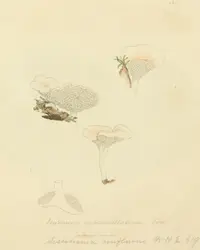
Common bird's nest fungus, Crucibulum laeve, is a small cup-shaped fungus rather than a true plant. It typically appears on decaying wood, mulch, or other organic debris.

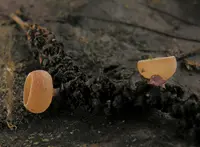
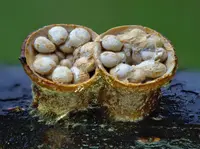
The fruiting bodies look like tiny nests filled with egg-like structures called peridioles, which contain the spores. These structures develop in clusters and spread naturally with rain splash.

Crucibulum laeve occurs widely in temperate regions, often in gardens, landscaped beds, and woodland edges where there is consistent organic matter. It usually establishes itself without help, so gardeners do not often need to care for common bird's nest fungus directly.

This species favors moist, shaded to partially shaded areas with rich, decomposing material and tends to persist where conditions remain stable over time.

Main Plant Requirements

Care Difficulty

Moderate Care

Light Preference

Partial Shade

Water Requirements

Keep Soil Moist

Temperature Preference

Cool Climate

Hardiness Zone

Unknown

Soil Texture

Loamy, Silty, Organic-rich

Soil pH

Slightly acidic (6.5–7.0), Neutral (7.0)

Soil Drainage

Moist but well-drained

Fertilization

Minimal (feed rarely)

Get Personalized Care Plan

Scan your plant to receive care tips personalized for your specific plant

Available on iOS and Android

How to Care for the common bird's nest fungus

Crucibulum laeve, often found on decaying wood or mulch, prefers soft, indirect light similar to a shaded forest floor.

  • Provide 2–4 hours of weak, filtered morning sun or bright open shade; avoid direct midday and afternoon sun that can dry the substrate too quickly.
  • Site in partial to full shade under shrubs, trees, or beside buildings where leaf litter stays slightly moist and light levels remain low.
  • In summer, shield from strong sun and drying winds; in winter, this common bird's nest fungus tolerates short bright periods as long as the substrate does not desiccate.

This saprophytic fungus relies on consistently damp, not saturated, organic material rather than direct watering.

  • Maintain evenly moist mulch, wood chips, or decaying wood, allowing only the top 1–2 cm to start drying before re-moistening with gentle irrigation or rainfall.
  • Ensure excellent drainage so water does not pool; standing water or soggy, anaerobic substrate promotes decay of the supporting wood and collapse of fruiting bodies.
  • Reduce supplemental watering in cool, wet seasons and increase light irrigation during hot, dry spells, watching for shriveling or pale cups as signs of drying stress.

This species prefers cool to mild conditions typical of shaded forest or garden mulch layers.

  • Aim for 50–75°F (10–24°C) for best development; growth often peaks in cool, moist weather of spring and fall.
  • Fruiting may slow above 80°F (27°C); sustained heat over 90°F (32°C) combined with dry air can desiccate the cups and substrate.
  • Avoid hard freezes when possible; brief drops near 28–32°F (-2–0°C) may be survived in sheltered mulch, but repeated freezing and thawing damage the fruiting structures.

This saprophytic fungus forms fruiting bodies best in consistently moist, moderately humid conditions.

  • Target ambient humidity around 60–80%, with the substrate itself kept evenly moist but not waterlogged.
  • It tolerates short dry-air periods if the underlying organic substrate retains moisture and is not allowed to crust hard.
  • Low humidity shows as shriveling or failure of new cups to develop fully on the surface.
  • Increase humidity by lightly misting the substrate surface and enclosing the colonized material in a ventilated tray or box.

Crucibulum laeve develops on decomposing organic matter, so substrate structure and moisture behavior are more important than traditional garden soil.

  • Use a loose, organic-rich mix such as shredded wood mulch, composted bark, or well-rotted wood chips, optionally blended with 20–30% leaf mold.
  • Ensure very free drainage so the substrate stays moist but never stagnant; raised beds or shallow trays with drainage work well.
  • Slightly acidic to neutral conditions around pH 5.5–7 support most saprophytic activity on wood-based substrates.
  • Avoid dense clay, compacted mineral soil, or peat-heavy mixes that stay waterlogged, and periodically fluff the top layer to maintain aeration.

This species can be grown in shallow containers that mimic a moist, decomposing wood or mulch layer.

  • Choose a broad, shallow tray with multiple drainage holes so the organic substrate stays aerated while retaining surface moisture.
  • Pack wood chips or mulch loosely to provide many air gaps, avoiding firm compression that would slow fungal spread through the material.
  • Position the container where rain or irrigation lightly wets the surface without pooling, such as under benches or beneath sparse canopy cover.

Crucibulum laeve, commonly known as common bird's nest fungus, usually grows on decaying organic matter and needs no deliberate fertilization in gardens or containers.

Pruning Crucibulum laeve is generally unnecessary and is done only for tidiness or to limit spread.

  • Remove spent fruiting bodies with gloved hands when they dry and collapse, to reduce spore spread.
  • Lift and discard colonized mulch or woody debris if the patch becomes too dense for aesthetic reasons.
  • Use a small hand trowel or scoop, not cutting tools, since there are no true stems or branches.
  • Discard removed material in the trash rather than compost to avoid reintroducing spores.

Crucibulum laeve is not repotted like a houseplant; management focuses on when to renew or relocate its woody substrate.

  • Transplant or renew substrate if growth declines, fruiting bodies shrink, or the wood or mulch is almost fully decomposed.
  • Best timing is in cool, moist weather during spring or fall to limit desiccation stress on the fungal network.
  • Move portions of colonized wood or mulch onto fresh moist woody material, keeping pieces in close contact.
  • Water lightly after relocating the substrate and keep the new site shaded and evenly moist for several weeks.

Propagation of Crucibulum laeve is usually passive, as spores spread naturally on air currents and water splash.

  • Encourage colonization by leaving small pieces of colonized wood or mulch in contact with fresh woody debris.
  • Provide a cool, shaded site with consistently moist but not waterlogged organic matter to favor spore germination.
  • Avoid fungicides and frequent disturbance of the substrate so the fungal network can establish and expand.
  • Over time, expect new bird's nest structures to appear where moisture, airflow, and decaying wood conditions remain stable.

Crucibulum laeve is naturally cold hardy across most temperate climates and usually needs no special winter care.

Care Tips

Use pasteurized mulch

Prepare the substrate by gently pasteurizing wood chips or mulch at 150–160°F for 30–60 minutes to reduce competing fungi and insects while still leaving some natural microbes that support fruiting.

Control moisture pulses

Instead of keeping the substrate constantly wet, allow the top layer to dry slightly, then re-moisten thoroughly so the fungus experiences alternating moist and drier phases that encourage cup and spore development.

Provide gentle airflow

Set up mild, indirect air movement around the culture area to prevent stagnant, overly humid pockets that can favor molds without drying the fruiting bodies too quickly.

Rotate outdoor trays

If growing in shallow trays outdoors, rotate or shift them slightly every few weeks so new organic debris and splash zones form, which helps maintain a patchwork of fresh colonization sites.

Retain old fruiting cups

Leave spent cups and old substrate in place until they fully dry, since they can continue releasing spores that colonize nearby mulch, which is useful when growing common bird's nest fungus as a long-term groundcover in one bed.

Common Pests and Diseases

Fungus gnat larvae

This pest feeds on decaying organic matter and fine fungal tissues in very damp substrates where bird's nest fungi develop. Symptoms include small black flying gnats around trays, cultures, or potting media and slowed fungal development in heavily infested media.

Solution

Reduce excess moisture, allow the substrate surface to dry slightly between waterings, and improve airflow around cultures. Use yellow sticky traps to capture adults and, if needed, apply a biological control like Bacillus thuringiensis israelensis (BTI) or beneficial nematodes to the substrate to reduce larval numbers.

Mite infestation

These insects are actually tiny arachnids that thrive in warm, humid culture spaces rich in fungal growth and organic debris. Symptoms include pale or damaged fruiting bodies, reduced spore production, and visible tiny moving specks on or around the nests under close inspection.

Solution

Lower humidity slightly, increase ventilation, and remove heavily infested substrate or fruiting bodies. For persistent problems, use predatory mites as a biological control and keep surrounding areas clean, dry, and free of old culture material to limit reinfestation while following general Crucibulum laeve care guidelines.

Green mold contamination

This disease is usually caused by fast-growing Trichoderma species that overrun the substrate, outcompete the bird's nest fungus, and form dense green patches. Symptoms include rapid appearance of bright to dark green, velvet-like growth that prevents normal cup and peridiole formation.

Solution

Discard heavily contaminated cultures or substrate, clean containers and tools with a disinfectant, and reduce excess nutrients and moisture that favor aggressive molds. Prepare fresh, well-pasteurized or sterilized substrate, avoid overcrowding cultures, and improve airflow to make conditions less favorable for Trichoderma.

Blue or black mold

This disease, often caused by Penicillium or Aspergillus species, colonizes damp, stagnant areas of substrate or culture containers and competes strongly with bird's nest fungus. Symptoms include blue-green, gray, or black powdery patches and a musty odor, with poor or absent nest formation nearby.

Solution

Remove and discard contaminated sections promptly and clean surrounding surfaces with alcohol or another suitable disinfectant. Improve hygiene, avoid overwatering, ensure good drainage and ventilation, and, when possible, start new cultures from clean material to prevent recurrent contamination.

Bacterial soft rot

This disease affects very wet, poorly ventilated setups where organic material and fruiting bodies remain saturated, leading to water-soaked, slimy, and foul-smelling patches. Symptoms include collapse and decomposition of nests and surrounding organic matter rather than normal drying and spore dispersal.

Solution

Eliminate standing water, improve drainage, and increase airflow so surfaces do not stay constantly wet. Remove and dispose of rotting material, clean containers and tools thoroughly, and re-establish cultures in a thinner, less compact substrate that can dry slightly between waterings to reduce bacterial growth.

Interesting Facts

Splash dispersal strategy

This fungus relies on raindrops hitting the cup-like fruiting bodies to eject its tiny spore-filled peridioles, which can be thrown several decimeters away. The cup shape and angle are finely tuned so water impacts at an optimal trajectory for dispersal.

Sticky spore packets

Each peridiole is covered by a tough outer coat and is attached to a coiled, sticky funiculus, a cord-like structure that helps it anchor to twigs, leaves, or other surfaces. Once attached, the peridiole can slowly release spores into the surrounding environment.

Saprobe on woody debris

This species is a saprobic fungus, meaning it feeds on dead organic material, particularly small sticks, mulch, and plant litter. By decomposing lignin- and cellulose-rich substrates, it plays a role in nutrient cycling in gardens, woodchip beds, and forest floors.

Botan icon

Did you know?

Genetic and morphological studies place this species in the family Agaricaceae, making it more closely related to familiar gilled mushrooms like Agaricus and Lepiota than to many other cup-shaped or crust-like fungi that it superficially resembles.

FAQs about common bird's nest fungus

This species spreads efficiently by shooting out spore-filled “eggs” that rain and splashes move around. It is not root-invasive, but can appear suddenly across mulch, pots, and beds where organic debris stays moist.

Grow Healthy Plants with Botan Care

Keep your plants happy and healthy with plant identification, disease detection, and easy care guidance.

Botan plant care app — identify plants on mobile

Explore More Plants