


Substrate selection
Provide fallen willow or poplar catkins and young twigs as the main substrate, since this fungus is highly specialized and will not fruit reliably on generic wood chips or compost.

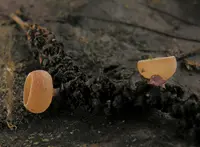
The catkin cup, Ciboria amentacea, is a small cup fungus that appears on fallen catkins of trees such as willow and hazel. It forms tiny, shallow cups in clusters, often in damp leaf litter.
This species is saprophytic, meaning it feeds on dead plant material and helps break it down. It is not a typical ornamental plant and is usually observed by mushroom enthusiasts rather than grown intentionally.
In nature it favors cool, moist woodland floors with plenty of decaying catkins. Because it depends on a very specific substrate, attempts to care for catkin cup in home conditions are usually not practical.

Care Difficulty
Hard Care

Light Preference
Shade

Water Requirements
Keep Soil Moist

Temperature Preference
Cool Climate

Hardiness Zone
Unknown

Soil Texture
Loamy, Silty, Organic-rich

Soil pH
Acidic (5.5–6.5)

Soil Drainage
Waterlogged tolerant

Fertilization
Minimal (feed rarely)
Scan your plant to receive care tips personalized for your specific plant
Available on iOS and Android
This small fungus prefers cool, subdued woodland light rather than direct sun exposure.
This fungus develops on moist, decaying catkins and depends on consistently damp, not saturated, conditions.
This species favors cool to mild conditions typical of late winter and early spring in temperate woodlands.
Humidity is not a major controllable factor for this outdoor, wood-decaying fungus and is dictated mainly by natural weather and substrate moisture.
This fungus develops on fallen catkins and other woody litter rather than in conventional garden soil.
This species is not suitable for typical container growing, as it relies on natural litter and microclimate conditions rather than standard pot culture.
This tiny cup fungus grows on fallen catkins and usually does not need fertilizer when left in natural woodland conditions.
Pruning is not applicable for Ciboria amentacea, as it is a small saprophytic fungus that fruits briefly on decaying catkins and then disappears.
Transplanting attempts for Ciboria amentacea are rarely successful because it depends on very specific host catkins and microhabitat conditions.
Deliberate propagation of Ciboria amentacea is specialized and not practical for typical plant owners, since it is a fungus tied to specific tree catkins.
No special winter care is needed, as this fungus naturally appears and disappears outdoors in response to seasonal moisture and temperature patterns.

Plant Health Check
Not sure what's wrong with your plant? Check your plant's health inside the app.
This fungus almost exclusively fruits on old catkins of willows (Salix species), making it a highly specialized decomposer in riparian and wet woodland habitats.
The fruiting bodies form shallow, stalked cups only a few millimeters across, yet they produce large numbers of microscopic spores that are wind-dispersed from the exposed inner surface.
It commonly appears in late winter to early spring, often when willow catkins have recently fallen, playing a role in quickly breaking down this short-lived plant litter.

Molecular studies place this species in the Sclerotiniaceae, a family better known for plant pathogens such as Sclerotinia, yet Ciboria amentacea is primarily saprobic, living on dead catkins rather than infecting living plants.
This tiny cup fungus develops only outdoors, on fallen willow or poplar catkins in damp, cool conditions. It does not adapt to pot culture or household environments, so true catkin cup indoor care is not practical.
Keep your plants happy and healthy with plant identification, disease detection, and easy care guidance.

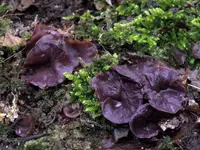
Ascocoryne cylichnium
Ascocoryne cylichnium
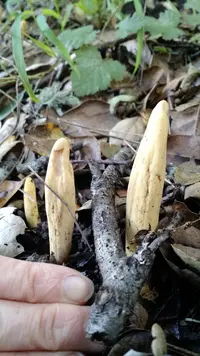
western club coral fungus
Clavariadelphus occidentalis
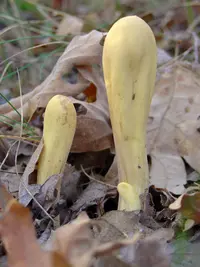
common club coral fungus
Clavariadelphus pistillaris
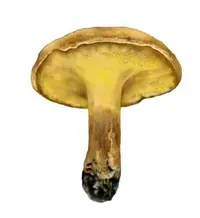
Alder Bolete
Gyrodon lividus
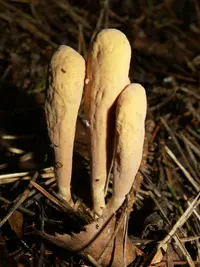
ochre club
Clavariadelphus ligula

Ascodichaena rugosa
Ascodichaena rugosa
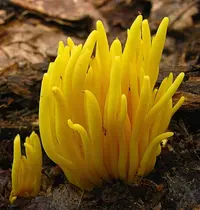
Golden Spindles
Clavulinopsis fusiformis
aromatic earthfan
Sistotrema confluens