


Seasonal substrate renewal
After each fruiting season, gently remove and replace the top 2–3 cm of the woody substrate with fresh, well-colonized material to maintain nutrients and reduce pathogen buildup when growing western club coral fungus.

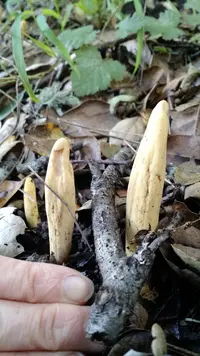
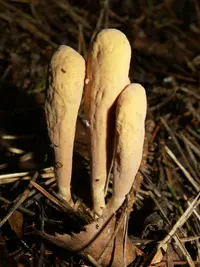
Western club coral fungus (Clavariadelphus occidentalis) is a club-shaped mushroom-forming fungus, not a true plant, but often noticed by foragers and nature enthusiasts. It produces upright, narrow, club-like fruiting bodies with smooth surfaces, usually yellowish to orange-brown.
This species is native to western North America, where it typically appears on forest floors, often among conifers in cool, moist woodland habitats. It forms a symbiotic relationship with trees, which makes it difficult to cultivate at home or in controlled settings.
Those who want to learn how to care for western club coral fungus should understand that it depends heavily on undisturbed forest soil, natural leaf litter, and consistent moisture, rather than typical garden or indoor conditions.

Care Difficulty
Hard Care

Light Preference
Partial Shade

Water Requirements
Keep Soil Moist

Temperature Preference
Cool Climate

Hardiness Zone
Unknown

Soil Texture
Loamy, Sandy, Organic-rich

Soil pH
Acidic (5.5–6.5)

Soil Drainage
Moist but well-drained

Fertilization
Minimal (feed rarely)
Scan your plant to receive care tips personalized for your specific plant
Available on iOS and Android
This forest-dwelling fungus prefers cool, subdued light that mimics a shaded woodland floor.
This mycorrhizal fungus relies on consistently moist, not saturated, forest soil rather than direct, frequent watering.
This species fruits best in cool to mild woodland temperatures with protection from extremes.
This fungus needs consistently moist, cool air close to forest-floor conditions rather than typical indoor room humidity.
Clavariadelphus occidentalis relies on a loose, organic forest-floor substrate rather than standard potting soil.
This species is generally unsuitable for typical containers because it depends on complex soil–forest interactions to fruit reliably.
This fungus is not a conventional garden plant and usually gains all required nutrients from decaying forest litter rather than added fertilizer.
Clavariadelphus occidentalis does not need true pruning, but fruiting bodies can be tidied for hygiene and observation purposes.
This species grows with forest soil fungi and is not suited to typical container culture, so repotting is rarely relevant.
Propagation of this western club coral fungus is complex and generally left to specialists or natural forest processes.
This woodland fungus is naturally cold hardy in its native range and usually needs no dedicated winter care in the ground.

Plant Health Check
Not sure what's wrong with your plant? Check your plant's health inside the app.
This western North American fungus fruits mainly in late summer to fall at higher elevations in conifer forests, especially under fir and spruce where cool, moist conditions persist longer than in lowlands.
It produces a pale yellowish to ochre spore print and smooth, narrowly ellipsoid spores, features used by mycologists to separate it from similar yellow club and coral fungi.
Its club-shaped fruitbodies are often soft and somewhat spongy, starting bright yellow to orange-yellow and then fading or browning with age, especially when exposed to prolonged sunlight and drying winds.
Growth is relatively slow and strongly seasonal. Fruiting bodies usually appear in late summer to autumn and may take several weeks to reach full size, depending on moisture, temperature, and the condition of surrounding forest litter.
Keep your plants happy and healthy with plant identification, disease detection, and easy care guidance.

aromatic earthfan
Sistotrema confluens
Ascodichaena rugosa
Ascodichaena rugosa
grey coral
Clavulina cinerea
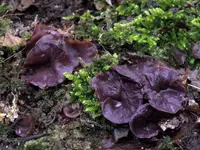
Ascocoryne cylichnium
Ascocoryne cylichnium
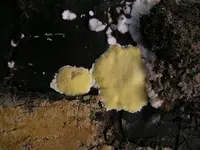
Lemon-colored Antrodiella
Antrodiella citrinella
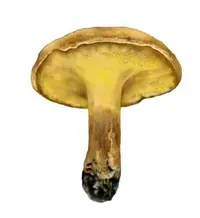
Alder Bolete
Gyrodon lividus
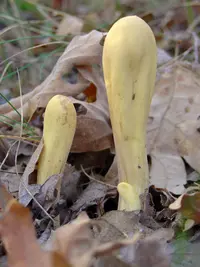
common club coral fungus
Clavariadelphus pistillaris
ochre club
Clavariadelphus ligula