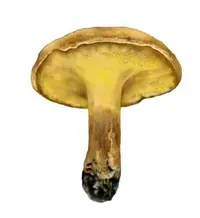
Golden Spindles Care (Clavulinopsis fusiformis)

Also known as: Spindle-shaped Yellow Coral, Spindle-shaped Fairy Club
Golden Spindles

About Golden Spindles

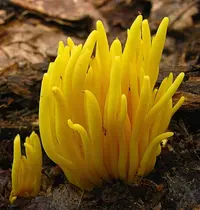
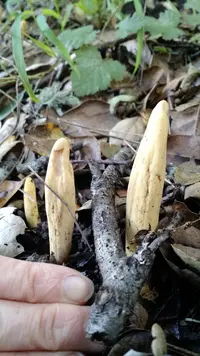
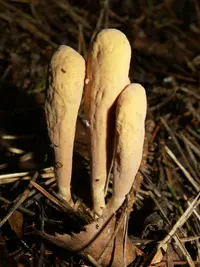
Golden spindles, Clavulinopsis fusiformis, is a small club fungus rather than a leafy houseplant. It forms clusters of bright yellow, pencil-thin spikes that emerge directly from the ground, creating a fine, grass-like effect.

This species occurs mainly in grassy areas, lawns, and mossy or moss-rich soils, often in temperate regions of North America and Europe. It typically appears in late summer to autumn when conditions are moist.

Golden spindles depend on consistently damp, undisturbed soil and are sensitive to drying out and ground disturbance, which makes them less predictable to maintain. Gardeners who want to care for Golden Spindles should focus on stable moisture, gentle lawn management, and avoiding heavy foot traffic over fruiting areas.


Main Plant Requirements

Care Difficulty

Hard Care

Light Preference

Partial Shade

Water Requirements

Keep Soil Moist

Temperature Preference

Cool Climate

Hardiness Zone

Unknown

Soil Texture

Loamy, Silty, Organic-rich

Soil pH

Strongly acidic (4.5–5.5), Acidic (5.5–6.5)

Soil Drainage

Moist but well-drained

Fertilization

Minimal (feed rarely)

Get Personalized Care Plan

Scan your plant to receive care tips personalized for your specific plant

Available on iOS and Android

How to Care for the Golden Spindles

This fungus prefers soft, forest-style light rather than harsh, open exposure.

  • Provide 2–4 hours of gentle morning sun with bright dappled or filtered light for the rest of the day, similar to a light woodland edge.
  • Tolerates partial shade and performs well under deciduous trees where summer canopy softens direct sun; dense, deep shade often reduces fruiting.
  • Avoid strong midday and afternoon sun, which can dry the substrate quickly and bleach Golden Spindles; in hot summers, increase shade or leaf litter cover.

Moist, not waterlogged, soil is essential for stable fruiting of this fungus.

  • Aim for consistently damp soil, letting only the top 1–2 cm start to feel slightly dry before rewetting the area through rainfall or careful irrigation.
  • Use well-drained, humus-rich soil; standing water or heavy, compacted ground encourages rot and reduces oxygen around the mycelium.
  • In dry, hot periods, monitor for shrinking or brittle fruiting bodies as a sign of underwatering; slimy, collapsing clubs suggest excess moisture and poor drainage.

This species thrives in cool to mild conditions typical of temperate forests.

  • Optimal fruiting usually occurs around 50–68°F (10–20°C), often in late summer to autumn when days are mild and nights are cooler.
  • Growth slows below about 41°F (5°C), and hard frost can damage existing fruiting bodies, though the underlying mycelium may survive short cold spells.
  • Prolonged heat above 77–82°F (25–28°C) with dry soil can halt fruiting of Clavulinopsis fusiformis; shade and consistent moisture help buffer brief warm periods.

This fungus prefers consistently moist conditions but does not require tightly controlled air humidity.

  • Thrives where air humidity stays around 60–80% combined with evenly moist, not waterlogged, substrate.
  • Tolerates brief drier air if the substrate remains damp, but prolonged low humidity can dry fruiting bodies prematurely.
  • Watch for shriveling, paling, or brittle clubs as signs of humidity stress and increase ground moisture or use light misting around the patch, not directly on clusters.

This species fruits best in moist, organic-rich, well-aerated soil that never stays waterlogged.

  • Use a loose mix based on leaf mold or compost blended with fine bark and some native garden soil to mimic woodland litter where Clavulinopsis fusiformis typically appears.
  • Aim for slightly acidic to neutral conditions, roughly pH 5.5–7.0, avoiding strongly alkaline or limed ground that can suppress fungal activity.
  • Ensure drainage is steady by avoiding compacted clay; incorporate leaf litter, fine bark, and coarse sand to create pore spaces for air movement.
  • Keep the surface mulched with thin leaf litter rather than plastic or dense mulch, which can trap excess water and reduce oxygen around the mycelium.

This species is generally not suitable for long-term container cultivation because it depends on complex soil and microbial interactions that are difficult to sustain in pots.

Clavulinopsis fusiformis is a woodland fungus that usually grows best without added fertilizer when left in natural soil.

Pruning is not applicable for Clavulinopsis fusiformis, since it is a small, short-lived fungal fruiting body rather than a woody or leafy plant.

Transplanting or repotting is rarely appropriate for this species, which depends on specific soil fungi networks and site conditions.

  • Avoid disturbing existing clusters; relocation often breaks the delicate mycelium that supports the visible fruiting bodies.
  • If cultivated experimentally, use a shallow, well-drained tray of original site soil rather than standard potting mix.
  • Limit moves to cool, moist periods to reduce stress, and keep the substrate evenly damp but not waterlogged afterward.
  • Expect low success rates; growing Golden Spindles is more reliable by maintaining a stable, undisturbed outdoor habitat.

Practical home propagation of Clavulinopsis fusiformis is challenging and not usually recommended for casual growers.

No special winter care is needed because this fungus naturally fruits and disappears with seasonal changes, then persists underground as mycelium.

Care Tips

Use sterile substrate

Prepare a low-nutrient, well-drained substrate such as a mix of rinsed sand and fine bark or leaf litter, and pasteurize it (for example by heating in an oven-safe bag at 180–200°F for 30–45 minutes) to reduce competing fungi and soil pathogens before inoculating with Clavulinopsis fusiformis spores or mycelium.

Maintain turf partners

In outdoor settings, keep a stable, low-mown grass or moss cover and avoid frequent soil disturbance, since this fungus forms long-term associations with ground vegetation and declines if the upper soil layer is regularly turned or heavily compacted.

Gentle harvest technique

When collecting fruiting bodies, pinch or cut them at the base rather than pulling out clumps, and leave a portion of each cluster intact so the underground mycelium is disturbed as little as possible, supporting repeated fruiting in the same patch.

Minimize chemical exposure

Avoid applying fungicides, high-salt lawn fertilizers, or herbicides within the fruiting area, and if lawn feeding is necessary, choose low-dose, slow-release products and apply them outside the main ring where the fungus appears.

Seasonal moisture checks

In late summer and autumn, check the upper 2–3 cm of soil and use short, infrequent, fine-mist watering only when it is drying out, which helps support fruiting without creating waterlogged conditions that favor competing molds when growing Golden Spindles.

Common Pests and Diseases

Fungal gnat larvae

This pest is attracted to persistently wet, organic-rich substrates around the fungal mycelium. Larvae can disturb fine mycelial threads and interfere with normal fruiting of the golden clubs.

Solution

Reduce constant surface moisture by allowing the casing or surrounding moss to become just slightly drier between waterings, and improve airflow over the substrate. Use yellow sticky traps for adult gnats and, if needed, apply a biological control such as Bacillus thuringiensis israelensis (Bti) drench targeted at the larval stage, following label directions carefully.

Mite infestation

These insects are actually tiny arachnids that can colonize moist culture containers or terraria, feeding on spores, mycelium, or decaying tissue. Symptoms include slow or distorted fruiting and fine moving specks on or around the fruiting bodies.

Solution

Lower crowding, remove heavily infested material, and improve hygiene by cleaning tools and containers used around the culture. In closed setups, briefly lowering humidity and using predatory mites sourced for mushroom or greenhouse use can help rebalance the microfauna without harsh chemicals.

Green Trichoderma mold

This disease is caused by Trichoderma species, which appear as white patches that turn bright or dull green on the substrate near the golden clubs. Symptoms include aborted or stunted fruiting bodies and areas of dense green mold that spread quickly in warm, humid conditions.

Solution

Promptly remove and discard contaminated substrate and any affected fruiting bodies, taking care not to shake spores into nearby containers. Reduce excess moisture, increase fresh air exchange, and, for culture work, use clean tools and pasteurized or sterilized substrates to limit future contamination, which are key aspects of Clavulinopsis fusiformis care in controlled environments.

Bacterial blotch

This disease causes localized slimy, translucent, or water-soaked spots on the otherwise firm yellow clubs, often starting where water droplets sit on the tissue. Symptoms include softening and collapse of affected tips or patches, sometimes with a faint sour odor.

Solution

Avoid overhead misting directly onto the fruiting bodies and instead maintain humidity via trays of water or fine, indirect mist. Remove and discard affected clusters, increase fresh air exchange, and keep surfaces and tools very clean to limit bacterial spread in future flushes.

Interesting Facts

Bright warning pigments

The vivid yellow to orange color of its clubs comes from carotenoid pigments, which are thought to act as a visual signal that the fruiting bodies are not good to eat for many animals.

Nutrient-recycling fungus

This species lives as a saprotroph, breaking down dead plant litter in grasslands and woodland edges and helping release locked-up nutrients such as nitrogen and phosphorus back into the soil.

Clustered club shape

Its fruiting bodies typically form tight clusters of slender, unbranched clubs that taper slightly toward the tip, a growth form that helps distinguish it from many other coral and club fungi in the field.

FAQs about Golden Spindles

This fungus is generally regarded as inedible due to its small size, fragile texture, and poor flavor. It is not considered poisonous, but it is not recommended for eating or for regular culinary use.

Grow Healthy Plants with Botan Care

Keep your plants happy and healthy with plant identification, disease detection, and easy care guidance.

Botan plant care app — identify plants on mobile

Explore More Plants