Black Morel Care (Morchella elata)

Black Morel

About Black Morel

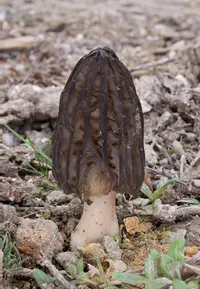
Black morel, Morchella elata, is a distinctive wild mushroom, not a typical houseplant. It produces tall, dark, honeycombed caps on stout pale stems. The fungus grows from soil rather than forming leaves or stems like green plants.

In nature it is found in forests of North America and Europe, especially in cool, moist spring conditions, often near conifers or in recently burned areas. It is considered challenging to cultivate because it depends on complex relationships with soil, microbes, and sometimes tree roots.

Those who want to care for Black Morel should know it prefers well-drained, humus-rich, consistently moist soil and cool temperatures, with dappled light rather than intense direct sun.

Main Plant Requirements

Care Difficulty

Hard Care

Light Preference

Partial Shade

Water Requirements

Keep Soil Moist

Temperature Preference

Cool Climate

Hardiness Zone

4–7

Soil Texture

Loamy, Silty, Organic-rich

Soil pH

Acidic (5.5–6.5), Slightly acidic (6.5–7.0)

Soil Drainage

Moist but well-drained

Fertilization

Minimal (feed rarely)

Get Personalized Care Plan

Scan your plant to receive care tips personalized for your specific plant

Available on iOS and Android

How to Care for the Black Morel

Morchella elata prefers cool, dappled woodland light rather than full, exposed sun.

  • Aim for bright, filtered light with 2–4 hours of gentle morning sun and shade or broken light for the rest of the day, especially under deciduous trees.
  • Provide partial shade (around 60–80% shade) using leaf litter, logs, or shade cloth to prevent drying and sun scorch of the fruiting bodies.
  • In late winter to early spring, allow more light before tree canopy leaf-out, then rely on developing shade to protect Black Morel as temperatures rise.

Morchella elata grows best in evenly moist, cool soil that never fully dries out or stays waterlogged.

  • Maintain soil that feels consistently damp 2–5 cm deep, using leaf litter or mulch to slow evaporation and protect the mycelium network.
  • Increase moisture during late winter and spring by misting or gently soaking when the surface looks dull and dry, avoiding standing water or puddling.
  • Reduce supplemental moisture in hot, dry periods if the site has poor drainage, watching for sour odors or slimy patches as signs of overwatering and mycelium stress.

This species prefers cool to mild conditions and fruits best in a distinct spring temperature window.

  • Target daytime temperatures of 50–60°F (10–16°C) for reliable fruiting, with cool nights that remain above freezing when possible.
  • The mycelium usually survives brief dips to 25–30°F (-4 to -1°C), but repeated hard freezes after thaw can damage developing primordia.
  • Limit exposure to heat above 70–75°F (21–24°C); prolonged warmth and dry wind reduce fruiting, so use shade and mulch to buffer rapid temperature swings.

Morchella elata fruiting requires consistently moist air, with humidity managed as carefully as substrate moisture.

  • Aim for 70–85% humidity during active growth and fruiting, avoiding prolonged drops below 60%.
  • Dry air causes stalled or misshapen caps, pale coloration, and cracked surfaces on developing mushrooms.
  • Increase humidity with a fine-mist spray on enclosure walls, damp towels, or a humidifier placed near but not blowing directly on the bed.

Morchella elata relies on a loose, humus-rich substrate that mimics forest soil structure.

  • Use a mix of 50–60% well-aged compost, 20–30% coarse sand, and 10–20% hardwood chips or shredded bark for structure.
  • Ensure rapid drainage so water settles and disappears within minutes, preventing anaerobic conditions that rot the mycelium.
  • Maintain slightly acidic to neutral pH around 6.0–7.0; avoid strongly alkaline amendments such as large amounts of wood ash or lime.
  • Improve aeration by adding coarse sand or fine gravel rather than peat alone, and never compact the substrate surface.

This species is only moderately suitable for container growing and performs best when containers mimic shallow, forest-floor beds outdoors.

  • Choose a wide, shallow, rigid container that allows a broad colonization surface rather than a deep, narrow volume.
  • Set the container directly on soil or mulch outdoors so temperature and moisture changes are buffered by ground contact.
  • Use side perforations near the base to vent excess CO₂ from mycelium activity without drying the upper substrate layer.

Morchella elata usually relies on natural soil nutrients and needs little or no fertilization in typical outdoor settings.

Morchella elata does not need true pruning, but fruiting areas can be tidied for hygiene and access.

  • Time any clean‑up for late fall or after the main fruiting flush so disturbance does not disrupt developing mushrooms.
  • Remove only dead, moldy, or decomposing mushroom material, leaving the soil and mycelium layer undisturbed.
  • Use clean hands or a small knife to cut spent morels at the base rather than pulling, which can tear underlying mycelium.

Transplanting Morchella elata focuses on relocating colonized substrate rather than handling individual mushrooms.

  • Plan moves for late fall or very early spring when temperatures are cool and the fungus is less active.
  • Transplant if colonized beds decline, become compacted, or are being disturbed by construction or heavy traffic.
  • Lift and move blocks of soil or substrate intact, keeping as much mycelium and moisture as possible to limit stress.
  • Rebuild the bed in the new site with similar soil texture, shade, and leaf litter depth, then water gently.

Propagation of Morchella elata is technically challenging and rarely reliable for home growers.

Morchella elata is naturally cold hardy and usually needs no special winter care in the ground.

  • Allow natural leaf litter or add a 2–5 cm loose mulch layer to buffer freeze–thaw cycles around the mycelium.
  • Avoid deep digging, raking, or soil disturbance over known fruiting patches during winter dormancy.
  • If growing Black Morel in containers, overwinter pots in an unheated but frost‑free or slightly sheltered spot to reduce extreme freezing.

Care Tips

Use host trees

Establish beds near suitable host trees such as ash, elm, or apple, and lightly incorporate well-aged hardwood chips or sawdust into the top 5–8 cm of soil to encourage the fungus to colonize fine roots and decaying organic matter.

Simulate spring thaw

To trigger fruiting, give colonized outdoor beds a thorough soak after a cool period, then let temperatures rise gradually, mimicking a natural spring warm-up rather than keeping conditions constantly wet.

Control weed layer

Keep the bed almost free of dense weeds and grasses by hand-pulling or shallow scraping so that light and air reach the soil surface, which supports reliable spore release and easier harvest.

Manage leaf litter

Maintain a thin, patchy layer of deciduous leaf litter over the bed and refresh it each autumn, avoiding heavy, matted layers that hold excessive moisture and can favor competing fungi.

Rotate harvest spots

When harvesting, cut or gently twist mushrooms at the base instead of pulling out clumps of soil and mycelium, and vary harvest spots each season to reduce disturbance and support long-term growing Black Morel productivity.

Common Pests and Diseases

False morel confusion

Symptoms include misidentification of toxic false morels such as Gyromitra and Verpa species growing in the same habitat as true morels. This issue leads to accidental harvest of poisonous look-alike fungi rather than a problem in the health of Morchella elata itself.

Solution

Carefully study cap shape, attachment to the stem, and internal structure; true morels like M. elata are hollow from cap tip to stem base, while many false morels are chambered or cottony inside. Use multiple field guides or a local mycology club for identification, and discard any specimen that does not clearly match trusted Morchella elata care instructions.

Slug and snail feeding

This pest commonly grazes on developing morel caps and stems, leaving ragged holes and slime trails on or around fruiting bodies. Damage can reduce yield and make mushrooms more prone to secondary decay.

Solution

Hand-pick slugs and snails during cool, damp periods and reduce nearby hiding spots such as boards, dense groundcover, and debris. Use iron phosphate slug pellets labeled for edible crops around, not on, the beds, and avoid overwatering to keep the surface slightly less attractive to these mollusks.

Bacterial soft rot

This disease causes water-soaked, slimy, and quickly collapsing morel fruiting bodies, often with an unpleasant odor under very wet or warm conditions. Symptoms include rapid breakdown of caps after heavy rain, overhead irrigation, or physical damage.

Solution

Avoid overhead watering and maintain moderate, not saturated, moisture in the substrate, especially as mushrooms approach harvestable size. Remove and discard affected morels promptly, harvest gently to reduce bruising, and improve air movement around beds using spacing and low, diffuse airflow if grown under cover.

Mold contamination

This disease appears as white, gray, or green fuzzy growth on the surface of the substrate or on aborting morel primordia, especially in overly wet or stagnant air conditions. Symptoms include poor or stopped fruiting and patches of non-morel fungal growth overtaking the bed.

Solution

Reduce moisture by allowing the top layer of the substrate to drain between mistings and avoid standing water. Increase ventilation around the growing area, remove visibly contaminated substrate or fruiting bodies, and pasteurize or thoroughly age new organic materials before adding them to beds to limit competing fungi.

Fungus gnat infestation

These insects lay eggs in moist, organic-rich substrates, and their larvae feed on fine fungal mycelium and young primordia, leading to weak, deformed, or aborted morels. Adults are small black flies often seen hovering above the growing area.

Solution

Allow the top layer of the substrate to become slightly drier between waterings while still maintaining internal moisture, and cover beds with fine mesh to reduce adult access. Use yellow sticky traps to monitor and reduce adult populations, and, in controlled setups, apply a biological control such as Bacillus thuringiensis israelensis (Bti) according to label directions for fungus gnat larvae in mushroom production.

Interesting Facts

Fire-associated fruiting

This species often fruits abundantly in spring after forest fires, especially in conifer forests, where heat and ash alter soil conditions in its favor.

Conifer specialist fungus

Morchella elata is closely associated with coniferous trees such as spruce and fir, forming complex root-fungus relationships that help it access nutrients in cold, nutrient-poor soils.

Distinctive dark morphology

It has a narrow, elongated cap with dark ridges and lighter pits, and the cap is completely hollow and fused to the stem, a combination used by mycologists to distinguish it from similar morel species.

Botan icon

Did you know?

Molecular studies have shown that fungi once grouped under Morchella elata in the field often represent several closely related but genetically distinct species, which led to major taxonomic revisions in the so-called black morel group.

FAQs about Black Morel

Yes, this fungus is edible but only when thoroughly cooked. Raw or undercooked morels can cause digestive upset. Always confirm accurate identification, avoid old or decaying specimens, and cook in a clean, well-ventilated kitchen.

Grow Healthy Plants with Botan Care

Keep your plants happy and healthy with plant identification, disease detection, and easy care guidance.

Botan plant care app — identify plants on mobile

Explore More Plants