Shelter From Wind
Site plants where tall shrubs, fences, or buildings break strong, drying winds, since young Chilean hazel foliage and branches are easily stressed or snapped by constant exposure.

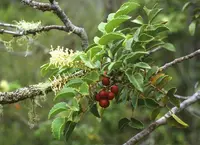
Chilean hazel, Gevuina avellana, is an evergreen shrub or small tree grown for its glossy foliage, clusters of white flowers, and decorative, nut-like fruits. It usually has a narrow, upright habit, making it suitable for smaller gardens and sheltered sites.
This species is native to the cool, moist forests of Chile and Argentina, so it prefers mild temperatures, consistent moisture, and freely draining, humus-rich soil. It is moderately challenging to grow in hotter or very cold climates, mainly due to its need for even moisture and protection from extreme heat or frost. Gardeners looking to learn how to care for Chilean Hazel should focus on providing sheltered light shade and avoiding waterlogged or very dry conditions.

Care Difficulty
Moderate Care

Light Preference
Partial Shade

Water Requirements
Regular Water

Temperature Preference
Cool Climate

Hardiness Zone
8–10

Soil Texture
Loamy, Peaty, Organic-rich

Soil pH
Acidic (5.5–6.5), Slightly acidic (6.5–7.0)

Soil Drainage
Moist but well-drained

Fertilization
Minimal (feed rarely)
Scan your plant to receive care tips personalized for your specific plant
Available on iOS and Android
This small evergreen tree prefers bright, gentle light that mimics its native forest edge conditions.
This species prefers steadily moist but not waterlogged soil, supported by good drainage.
This cool-temperate tree performs best in mild, frost-protected climates.
This species prefers moderately moist air but usually tolerates typical home humidity.
This species prefers cool, moist, well-drained, humus-rich soil with a slightly acidic reaction.
This tree can be grown in containers for several years, especially in cooler regions or where garden space is limited.
Nutrient needs for Gevuina avellana are moderate, especially in reasonably fertile soil.
Pruning Gevuina avellana is mainly about light shaping and maintaining plant health.
Chilean Hazel is most often grown in the ground, with transplanting more relevant than long-term container culture.
Propagation of Gevuina avellana is usually done by seed, with cuttings used less often and requiring controlled conditions.
In mild coastal or temperate regions, Gevuina avellana is relatively hardy but benefits from some winter attention in colder sites.

Plant Health Check
Not sure what's wrong with your plant? Check your plant's health inside the app.
This species is the only member of the Proteaceae family that produces an edible nut similar in flavor and use to the northern hazelnuts (Corylus spp.), which led to its common name Chilean hazel.
In its native range of south‑central Chile and adjacent Argentina, this tree naturally grows as an understory species in Valdivian temperate rainforests, tolerating cool, damp, and relatively low‑light conditions compared with many other nut‑bearing trees.
This species belongs to the Proteaceae, a family with origins in the ancient supercontinent Gondwana, so its closest relatives today are scattered across the Southern Hemisphere in regions such as Australia and South Africa rather than among other nut trees in the Northern Hemisphere.

The seeds of this species have a high oil content and have been studied as a potential source of specialty edible oil with a fatty acid profile somewhat similar to that of macadamia, attracting interest for niche horticulture and food production in cool, mild coastal climates.
Growth is moderate rather than rapid. Young plants may add about 20–40 cm per year in suitable conditions, slowing as they mature. Cooler summers, poor soil, or root disturbance can noticeably reduce the annual growth rate.
Keep your plants happy and healthy with plant identification, disease detection, and easy care guidance.