
Horned maple Care (Acer diabolicum)

Also known as: Devil maple
Horned maple

About Horned maple

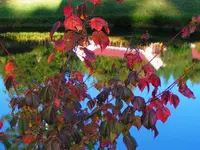
Horned maple, Acer diabolicum, is a deciduous tree valued for its bold foliage and unusual horn-like structures on the fruit. It forms a medium-sized, upright canopy with strong branching and attractive seasonal interest.

This species is native to mountain forests of Japan, where it grows in cool, moist woodland conditions. Its tolerance of partial shade and moderate cold can make it manageable in suitable climates, though it is not a beginner tree.

Growth is steady rather than fast, and it prefers fertile, well-drained soil with consistent moisture. Understanding how to care for Horned maple starts with providing a stable site that avoids extreme heat, wind, and drought stress.

Main Plant Requirements

Care Difficulty

Moderate Care

Light Preference

Partial Shade

Water Requirements

Moderate Water

Temperature Preference

Cold Hardy

Hardiness Zone

5–7

Soil Texture

Loamy, Silty, Organic-rich

Soil pH

Acidic (5.5–6.5), Slightly acidic (6.5–7.0)

Soil Drainage

Moist but well-drained

Fertilization

Minimal (feed rarely)

Get Personalized Care Plan

Scan your plant to receive care tips personalized for your specific plant

Available on iOS and Android

How to Care for the Horned maple

This species prefers bright, gentle light with some protection from intense midday sun.

  • Provide 4–6 hours of morning sun with light afternoon shade; dappled light beneath taller trees suits Horned maple well.
  • In hotter regions, avoid strong sun from 11 a.m. to 4 p.m. to reduce leaf scorch, especially on young or newly planted trees.
  • In cooler climates, allow more direct sun in spring and fall to support color and growth, while still sheltering from harsh summer exposure.

This tree prefers evenly moist, cool soil that is never waterlogged.

  • Water when the top 3–5 cm of soil feels dry, applying a slow, deep soak to hydrate the full root zone rather than frequent shallow splashes.
  • Increase watering during hot, dry spells and reduce in cool, wet weather; established Acer diabolicum tolerate short dry periods once rooted.
  • Watch for yellowing, limp leaves as a sign of overwatering and crisp, browning leaf edges as a sign of drought stress, and adjust watering accordingly.

This maple is a cool-temperate species with good winter hardiness but limited heat tolerance.

  • Ideal growing temperatures are 60–75°F (16–24°C) during the active season, with cooler nights promoting strong growth and leaf color.
  • Dormant trees tolerate lows near 0°F (−18°C) once established, but young plants benefit from protection from severe wind chill and sudden cold snaps.
  • Extended heat above 86°F (30°C) can stress foliage; provide extra shade and soil moisture in summer and avoid planting in heat-trapping spots.

This maple prefers moderate outdoor humidity but tolerates typical garden air if soil moisture is consistent.

  • Aim for 40–60% ambient humidity in protected sites, especially in hotter, drier regions.
  • In very dry air, leaf tips may brown and edges may curl even when soil is moist.
  • Increase local humidity by underplanting with low shrubs or groundcovers that shade soil and reduce moisture loss.

This species performs best in deep, evenly moist, well-drained mineral soil.

  • Use a loamy structure with a mix of garden loam, leaf mold or compost, and a smaller portion of sharp sand for drainage.
  • Target a slightly acidic to neutral pH around 6.0–7.0 for Acer diabolicum, avoiding strongly alkaline, chalky sites.
  • Improve drainage and aeration in heavier clay by incorporating 30–40% coarse sand or fine gravel plus stable organic matter such as leaf mold.
  • Avoid compacted, waterlogged, or very shallow soils, which promote root stress, poor growth, and increased disease risk.

This maple can be grown in containers for a limited period, mainly when young or as a patio specimen.

  • Choose a wide, heavy container to reduce tipping as the canopy becomes broad and wind-exposed.
  • Select a thick-walled material like ceramic or wood to buffer rapid moisture and temperature swings around the roots.
  • Use a deeper pot profile than typical shrubs to accommodate the developing root system and maintain stable anchorage.

Acer diabolicum benefits from modest feeding but often grows acceptably in average garden soil without extra fertilizer.

  • Apply a balanced slow-release fertilizer (around 10-10-10) once in early spring, just before new growth begins.
  • Use compost or leaf mold as a light top-dressing over the root zone to improve soil structure and nutrition.
  • In containers, feed every 6–8 weeks during the growing season at half-strength, keeping soil evenly moist.
  • Stop fertilizing in late summer and avoid feeding during winter dormancy to prevent soft, frost-prone growth in Horned maple.

Acer diabolicum benefits from light, thoughtful pruning to maintain a healthy framework and natural shape.

  • Carry out main pruning in late winter to very early spring, before buds break and sap flow increases.
  • Remove dead, diseased, crossing, or inward-growing branches to improve airflow and reduce disease risk.
  • Thin crowded interior shoots rather than shortening all tips, preserving the tree’s natural outline and branch tiers.
  • Use clean, sharp bypass pruners or a pruning saw, making smooth cuts just outside the branch collar.

This maple is usually grown in the ground, so focus on careful transplanting rather than frequent repotting.

  • Transplant young Acer diabolicum trees in late fall or very early spring, while dormant and soil is workable.
  • Look for signs like circling roots, water running off quickly, or slow growth in containers to indicate the need for a larger pot.
  • Move up only 1–2 pot sizes, teasing apart circling roots gently and setting the root flare at soil level.
  • Water deeply after planting, apply a 5–8 cm mulch ring, and shade the canopy temporarily to limit transplant shock.

Propagation of Acer diabolicum is possible but usually handled by specialists due to seed and grafting requirements.

  • Use fresh seed collected in fall; provide 2–3 months of cold, moist stratification at about 35–40°F for better germination.
  • Sow seeds in a free-draining, slightly acidic medium and keep evenly moist in a cool, bright, sheltered spot.
  • Softwood or semi-ripe cuttings in early summer root slowly and need high humidity and bottom heat for several weeks.
  • Nurseries often graft desirable forms onto hardy rootstocks to improve vigor and uniform growth.

Acer diabolicum is generally cold hardy in suitable climates and needs limited winter care once established.

  • Apply a 5–8 cm mulch layer over the root zone in late fall, keeping it a few cm away from the trunk.
  • Young or newly planted trees benefit from burlap windbreaks in exposed sites to reduce desiccation of twigs.
  • Container-grown plants should be moved into an unheated garage or against a sheltered wall to avoid root freezing.

Care Tips

Structural crown training

In the first 3–5 years, select 3–5 well-spaced primary branches and remove steep, crossing, or rubbing shoots in late winter to build a strong framework that resists wind and snow damage later in life.

Summer heat protection

In regions with hot summers, lay a 5–8 cm organic mulch ring and use temporary shade cloth during extreme heat waves to reduce leaf scorch and root stress on this cool-climate species.

Graft union monitoring

If the tree is grafted, check the graft union annually for suckers or swelling and remove any vigorous shoots emerging from below the graft to preserve the desired cultivar traits and canopy shape.

Targeted pest scouting

From spring to mid-summer, inspect the undersides of leaves and young shoots every 1–2 weeks for aphids, scale, and caterpillars, and treat early with a directed water spray or horticultural oil according to label instructions.

Soil compaction management

Keep heavy foot traffic, vehicles, and repeated mowing passes away from the root zone, and if the soil becomes compacted, use a garden fork or air spade to gently aerate the top 15–20 cm without cutting major roots, which supports long-term success when growing Horned maple.

Common Pests and Diseases

Maple aphids

This pest feeds on young shoots and leaf undersides, causing leaf curling, distortion, and sticky honeydew that can lead to sooty mold on Acer diabolicum foliage.

Solution

Prune and discard heavily infested shoot tips, then wash remaining foliage with a strong but gentle stream of water; for persistent colonies, use insecticidal soap or a horticultural oil spray directed to leaf undersides, applied in cool, dry weather.

Leaf spot fungi

This disease causes scattered brown to purplish spots on leaves, sometimes with pale centers and a thin dark border, leading to premature leaf drop in humid conditions.

Solution

Collect and remove fallen leaves, thin nearby vegetation to improve airflow, avoid overhead watering, and, if defoliation becomes significant for several seasons, apply a labeled copper or chlorothalonil fungicide at leaf-out and repeat according to label directions during wet periods.

Verticillium wilt

This disease blocks the water-conducting tissue inside stems, leading to sudden wilting, branch dieback, and one-sided crown decline, often with olive-brown streaks visible in cut wood.

Solution

Prune out affected branches well into healthy wood, sterilizing tools between cuts, maintain even soil moisture and a thick organic mulch layer, and avoid root disturbance; severely affected trees are usually best removed and not replaced with other susceptible maples in the same spot.

Japanese maple scale

This pest appears as tiny white to gray, shell-like bumps on bark and twigs, causing twig dieback, reduced vigor, and sometimes a dull, grayish cast to branches.

Solution

In winter or early spring, gently scrub accessible branches with a soft brush to remove scales, prune heavily infested twigs, and time a horticultural oil spray to the crawler stage based on local extension guidance, repeating as needed for complete coverage.

Powdery mildew

This disease produces a white to gray, powdery coating on upper leaf surfaces, sometimes causing slight leaf distortion and reduced growth in shaded, humid sites.

Solution

Increase sun exposure where possible, improve airflow by selective pruning, avoid excess nitrogen fertilization, and, if needed, apply a labeled sulfur or potassium bicarbonate fungicide at the first sign of mildew, repeating according to label directions during conducive weather to support healthy growing Acer diabolicum.

Interesting Facts

Devil-like samaras

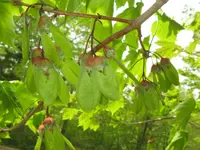
The winged fruits of this species curve and twist in a way that reminded early botanists of horns, which inspired the epithet diabolicum, meaning devilish. These distinctive samaras aid wind dispersal and make the tree easy to recognize in fruiting season.

Restricted Japanese range

This maple is naturally native only to parts of central and western Honshu in Japan, where it occurs in montane mixed forests. Its relatively narrow distribution contributes to its scarcity in cultivation compared with other Japanese maples.

Early spring flowering

The tree produces dense clusters of yellow-green to reddish flowers in early spring, often before or as the leaves fully expand. These early blossoms provide an important nectar and pollen source for emerging insects in its native forests.

Botan icon

Did you know?

Genetic and morphological studies place this species in a small, distinct group of horned-fruited maples within Acer section Diabolica, making it part of an evolutionarily specialized lineage that is rarely seen in horticulture.

FAQs about Horned maple

This species has a slow to moderate growth rate, usually adding 20–30 cm in height per year under good conditions. Young trees establish slowly, then gradually develop a rounded crown and sturdy framework over many years.

Grow Healthy Plants with Botan Care

Keep your plants happy and healthy with plant identification, disease detection, and easy care guidance.

Botan plant care app — identify plants on mobile

Explore More Plants