Bigcone Pine Care (Pinus coulteri)

Also known as: Coulter Pine, pitch pine
Bigcone Pine

About Bigcone Pine

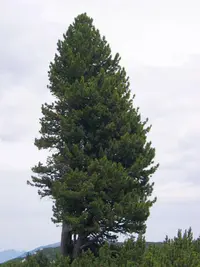
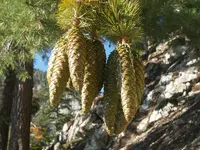
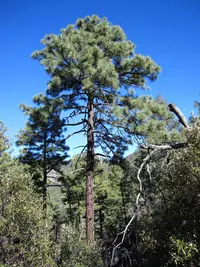
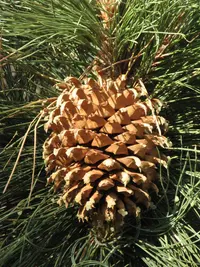
Bigcone pine (Pinus coulteri) is a large, long-lived conifer known for its massive cones and rugged, open branching structure. It develops a strong central trunk and a broad, irregular crown with stiff gray-green needles.

This species is native to the coastal and inland mountains of southern California and northern Baja California, where it grows on dry, rocky slopes. It is adapted to heat, drought, and poor soils, which makes it relatively low-maintenance once established.

Gardeners who care for Bigcone Pine should consider its eventual size, need for full sun, and preference for well-drained, slightly acidic soils with minimal summer water once mature.

Main Plant Requirements

Care Difficulty

Moderate Care

Light Preference

Full Sun

Water Requirements

Low Water

Temperature Preference

Cold Hardy

Hardiness Zone

8–9

Soil Texture

Sandy, Loamy, Rocky

Soil pH

Acidic (5.5–6.5), Slightly acidic (6.5–7.0)

Soil Drainage

Well-drained

Fertilization

Minimal (feed rarely)

Get Personalized Care Plan

Scan your plant to receive care tips personalized for your specific plant

Available on iOS and Android

How to Care for the Bigcone Pine

This species is a sun-loving conifer that develops best with strong, direct light outdoors.

  • Provide full sun for 6–8 hours daily; Bigcone Pine forms denser crowns and sturdier wood in open, unshaded sites.
  • Tolerates light partial shade, especially in late afternoon, but prolonged shade leads to sparse, elongated growth and weaker branches.
  • In hot inland summers, young trees benefit from slight afternoon shade; ensure southern exposure in winter to maximize low-angle sun.

This drought-tolerant pine prefers deep, infrequent watering once established.

  • For in-ground Pinus coulteri, water deeply, then allow the top 5–8 cm of soil to dry before the next irrigation during the first 2–3 years.
  • Use sharply drained, gritty soil on slopes or mounds; standing water, sour smell, and yellowing needles indicate overwatering and poor drainage.
  • In summer heat, watch for drooping, dull needles as a sign to water; in cool or rainy seasons, reduce or skip watering if soil stays slightly moist.

This pine is adapted to warm, dry summers and cool winters with significant cold tolerance.

  • Active growth occurs around 55–80°F (13–27°C); sustained heat above 95°F (35°C) is tolerated if roots are mulched and soil is not waterlogged.
  • Mature trees typically withstand lows near 10–15°F (-12 to -9°C); brief dips lower are possible if the tree is well established and soil drains freely.
  • Young plants are more sensitive to sudden hard frosts and hot, reflected heat; use mulch in winter and avoid planting against sun-baked walls in summer.

This species is adapted to dry, low-humidity climates and usually does not require humidity adjustment.

Pinus coulteri prefers dry, coarse, sharply drained soil that mimics rocky slopes.

  • Use mineral-based, sandy or gravelly soil with minimal organic matter to prevent excess moisture retention.
  • Aim for slightly acidic to neutral pH, around 6.0–7.0, avoiding strongly alkaline or saline conditions.
  • Blend coarse sand, small gravel, and a small amount of pine bark fines to improve drainage and root aeration.
  • Avoid compacted, clay-heavy, or waterlogged sites, which promote root rot and poor growth.

This species can be grown in containers only as a temporary, young specimen due to its eventual large size.

  • Choose a deep, heavy container to counter the top-heavy crown and reduce tipping in strong wind.
  • Use a coarse, fast-draining mix and raise the pot on feet so water clears quickly from the drainage holes.
  • Position the container where it receives full sun but the pot itself is shaded or insulated to limit root overheating.

This dryland conifer usually grows well in poor soils, so fertilization for Bigcone Pine should be light and infrequent.

  • Use a slow-release, low- to medium-strength balanced NPK or well-aged compost if growth is weak or soil is very poor.
  • Apply once in early spring during the main growing season, keeping granules off the trunk and needles.
  • Use 1/2-strength compared with lawn or shrub rates to avoid excessive, weak growth.
  • Skip feeding in late fall and winter, when the tree is largely dormant.

Pruning Pinus coulteri is minimal and mainly focused on safety and structure rather than frequent shaping.

  • Carry out pruning in late winter to early spring before new growth starts.
  • Remove only dead, diseased, storm-damaged, or clearly crossing branches to maintain a stable crown.
  • Use clean, sharp bypass pruners or a pruning saw, making smooth cuts just outside the branch collar.
  • Limit green-needle removal to avoid stressing the tree and causing sparse or unbalanced growth.

This pine is usually grown as a landscape tree, so transplanting young plants into the ground is more common than repotting long term.

  • Transplant in late winter to early spring while the tree is dormant and soil is workable.
  • Look for roots circling the container, slow or stunted growth, or the pot drying out very quickly as signs it has outgrown its container.
  • Move up only 1 pot size, loosen circling roots gently, and keep the root ball intact to limit transplant shock.
  • Water deeply after planting, shade briefly from intense sun, and maintain even moisture until new growth shows recovery.

Propagation of Pinus coulteri is typically done from seed and is considered slow and specialized rather than routine home practice.

  • Collect mature cones, then extract seeds once cones open and dry.
  • Provide cold stratification at about 34–41°F for 6–10 weeks to break seed dormancy.
  • Sow seeds in late winter to early spring in a deep, well-drained, sandy mix with good light and cool air.
  • Keep the medium just moist, not wet, and expect slow, uneven germination with low early growth rates.

Mature Pinus coulteri is cold hardy in suitable climates and usually needs little specific winter care once established.

  • In regions near its native range, normal outdoor winter conditions are acceptable for established trees.
  • Apply a 5–8 cm layer of mulch over the root zone in late fall, keeping it a few cm away from the trunk.
  • For container-grown plants in colder areas, move pots to a sheltered, unheated but frost-moderated spot to protect roots.

Care Tips

Early root training

In the first 1–3 years, lightly prune circling roots when transplanting and use a tall, deep container or slit trench to encourage a strong taproot that will anchor the tree against wind as it matures.

Wind exposure management

Site young trees where they receive some wind but are not fully exposed to prevailing strong gusts, then gradually reduce wind protection over 2–4 years so the trunk and roots strengthen without excessive rocking.

Cone and branch safety

On trees near paths, parking, or play areas, remove or shorten lower branches that carry heavy developing cones to reduce the risk of falling cones causing damage or injury.

Low-branch retention

Leave some lower branches on young trees for several years to shade the trunk and promote diameter growth, only lifting the canopy gradually once the trunk is sturdy and the tree is well established.

Fire and debris management

Regularly clear fallen needles and old cones from around the dripline, especially in dry climates, to reduce fire risk and discourage rodents that may chew roots or bark when caring for Bigcone Pine.

Common Pests and Diseases

pine pitch canker

This disease causes branch dieback, resin-soaked cankers on stems, and thinning crowns, especially in stressed trees. Symptoms include drooping, yellowing needles and heavy pitch exudation around infected areas.

Solution

Prune and destroy infected branches during dry weather, cutting 20–30 cm below visible cankers, and disinfect pruning tools between cuts. Reduce stress by avoiding soil compaction and overwatering, space trees for good airflow, and consult a local arborist about regional fungicide or sanitation recommendations for Pinus coulteri care instructions in high-risk areas.

western pine beetle

This pest bores into the trunk and major branches, creating winding galleries under the bark and causing rapid crown fade from green to yellow to reddish brown. This pest mainly attacks weakened or drought-stressed trees.

Solution

Maintain tree vigor through appropriate watering during extended drought and avoid mechanical trunk damage. Remove and destroy heavily infested trees or branches before beetles emerge, and in high-risk regions consider consulting a professional about preventive trunk-applied insecticides for nearby high-value trees.

mountain pine beetle

These insects tunnel beneath the bark, introducing blue-stain fungi and disrupting water transport, which leads to whole-crown browning over one or two seasons. Symptoms include boring dust at the base of the tree and small resin pitch tubes on the bark surface.

Solution

Monitor trees regularly during beetle flight periods and promptly remove and dispose of severely infested material away from the site. Support remaining trees by reducing crowding, avoiding excess water stress, and, where regionally recommended, using professionally applied preventive bark treatments on uninfested high-value specimens.

pine needle scale

This pest appears as small white, oval or elongated bumps on needles, causing yellowing and premature needle drop when populations are high. This pest is more problematic on stressed or crowded trees with limited air movement.

Solution

For light infestations, prune and discard affected small branches and gently wash needles with a strong water spray to dislodge crawlers. For heavier infestations, use horticultural oil in late winter or at crawler emergence, thoroughly coating needles while following label directions and avoiding application during high heat.

dwarf mistletoe

This disease is caused by a parasitic flowering plant that embeds in branches, forming swollen areas, witches’ brooms, and gradual decline of tree vigor. Symptoms include distorted branch growth and small, leafless shoots emerging from infected branches or trunks.

Solution

Prune out infected branches 30–50 cm below visible swellings and remove severely infested trees to reduce the local seed source. Manage stand density to improve light and airflow, and when planting new trees, maintain distance from heavily infested pines to limit spread over time.

Interesting Facts

Heaviest pine cones

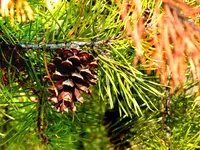
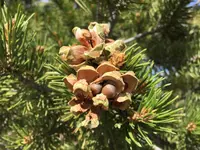
This species produces some of the heaviest cones of any pine, often weighing several pounds and armed with large, hooked scales that can cause serious injury if they fall from height.

Drought-adapted native range

It is native to dry, coastal and inland mountains of Southern California and northern Baja California, where it tolerates long summer drought on rocky, nutrient-poor slopes.

Fire-sensitive strategy

Unlike many Western North American pines, it does not have serotinous cones that open after fire, so populations often depend on unburned refuges and less intense fire regimes for regeneration.

Botan icon

Did you know?

Some of the earliest formal botanical descriptions of this species were based on material collected in the 19th century by the Scottish botanist Thomas Coulter in Mexico and California, and the specific epithet coulteri honors his contributions to early North American conifer botany.

FAQs about Bigcone Pine

This tree has a slow to moderate growth rate, typically adding about 20–30 cm per year once established. Growth is quicker in deep, well-drained soils and sunny, open sites, and slower on dry, exposed ridges.

Grow Healthy Plants with Botan Care

Keep your plants happy and healthy with plant identification, disease detection, and easy care guidance.

Botan plant care app — identify plants on mobile

Explore More Plants