Wind-hardening seedlings
Expose young plants to increasing wind over several weeks, or use a small oscillating fan in sheltered nurseries, to build strong stems and reduce breakage once planted in open, exposed sites.

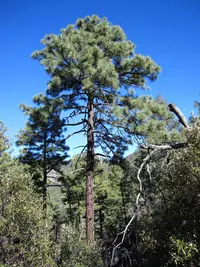
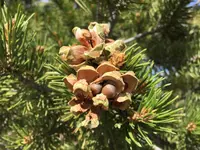
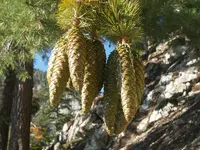
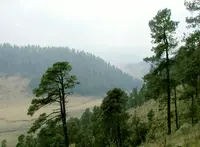
Apache pine, Pinus engelmannii, is a long-needled coniferous tree native to the mountains of northern Mexico and the southwestern United States. It forms a tall, upright canopy with open, irregular branching and soft, flexible needles in clusters that give it a relaxed, somewhat airy look.
In nature it grows on dry, rocky slopes and ridges, tolerating high light, temperature swings, and relatively poor soils. These traits make it hardy but better suited to spacious gardens and specialty collections than to small containers. Understanding how to care for Apache Pine starts with providing strong sun, well-drained soil, and modest, not constant, moisture.

Care Difficulty
Moderate Care

Light Preference
Full Sun

Water Requirements
Low Water

Temperature Preference
Warm Climate

Hardiness Zone
8–10

Soil Texture
Sandy, Loamy, Rocky

Soil pH
Slightly acidic (6.5–7.0), Neutral (7.0)

Soil Drainage
Well-drained

Fertilization
Minimal (feed rarely)
Scan your plant to receive care tips personalized for your specific plant
Available on iOS and Android
Pinus engelmannii is a sun-loving pine that performs best in open, bright sites.
This pine prefers deep, infrequent watering and very well-drained soil.
This species is adapted to warm, dry climates with mild to moderate winter cold.
This pine tolerates dry air well and rarely needs special humidity management in typical outdoor conditions.
Pinus engelmannii prefers sharply drained, mineral soils that mimic its native rocky slopes.
This species can be grown in containers only for short-term or juvenile stages, as it becomes large and deep-rooted.
This pine is adapted to poor soils and usually needs minimal feeding in landscapes.
Pinus engelmannii requires only light structural pruning to stay healthy and safe.
This species is usually grown in the ground; focus on careful transplanting of young trees.
Pinus engelmannii is mainly propagated from seed and is not typically multiplied by home growers.
Mature plants are cold hardy in suitable climates and usually need little deliberate winter care.

Plant Health Check
Not sure what's wrong with your plant? Check your plant's health inside the app.
This species has unusually long and thin needles, typically in bundles of 3, which give the crown a very open, feathery appearance compared with many other North American pines.
It is naturally restricted to high-elevation, semi-arid mountains in northwestern Mexico, especially the northern Sierra Madre Occidental, where it forms scattered open forests on rocky slopes.
The tree shows strong adaptation to dry, seasonal climates, with a deep root system and relatively sparse foliage that help limit water loss in its native habitats.

In suitable mountain conditions this species can reach heights of around 30 m and live for several centuries, making mature trees important long-term structural elements in northern Mexican pine-oak forests.
This species is moderately fast-growing, often adding 30–60 cm of height per year when young in suitable climates. Growth slows as it matures, and poor soil, drought, or heat stress can reduce this rate significantly.
Keep your plants happy and healthy with plant identification, disease detection, and easy care guidance.