Deep root establishment
During the first 2–3 years, water more deeply but less often to encourage a strong taproot, then gradually extend the interval between irrigations so the tree adapts to drier, mature conditions.

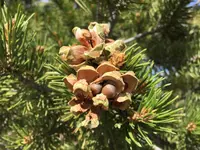
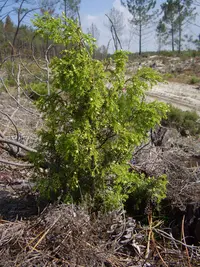
Twoneedle pinyon (Pinus edulis) is a slow-growing, long-lived conifer native to the dry woodlands of the southwestern United States. It forms a small, rounded tree with dense, gray-green needles in pairs and a rugged, irregular branching habit.
In nature it grows on rocky slopes and high desert plateaus, where conditions are sunny, dry, and often windy. This species is valued for its edible seeds, commonly called pinyon nuts, and its strong drought tolerance.
Its natural adaptations make it relatively easy to grow in well-drained, low-fertility soil, provided it receives full sun and is not overwatered. Gardeners who learn how to care for twoneedle pinyon often appreciate its resilience and compact stature in dry landscapes.

Care Difficulty
Moderate Care

Light Preference
Full Sun

Water Requirements
Low Water

Temperature Preference
Cold Hardy

Hardiness Zone
5–8

Soil Texture
Sandy, Loamy, Rocky

Soil pH
Slightly acidic (6.5–7.0), Neutral (7.0)

Soil Drainage
Well-drained

Fertilization
Minimal (feed rarely)
Scan your plant to receive care tips personalized for your specific plant
Available on iOS and Android
This high-desert pine prefers long hours of strong sun but adapts to some seasonal shade.
This species is drought-adapted and needs infrequent but deep watering once established.
This pine is adapted to continental climates with cold winters and warm, dry summers.
Humidity is rarely limiting for Pinus edulis, which is adapted to dry air.
Pinus edulis prefers mineral, sharply drained soils that mimic its native rocky slopes.
This species can be grown long term in containers, but it stays healthier in large, very free-draining setups.
This desert-adapted conifer needs minimal feeding, so fertilization for twoneedle pinyon should stay light and infrequent.
Pinus edulis requires only light, corrective pruning rather than structural reshaping.
Long-lived and slow-growing, this pinyon is usually grown in the ground, and transplanting must be done carefully to preserve its taproot.
Pinus edulis is almost always propagated from seeds, as cuttings root poorly and are rarely used in practice.
This species is naturally cold hardy in much of its range and usually needs little special winter care once established.

Plant Health Check
Not sure what's wrong with your plant? Check your plant's health inside the app.
This species is the main wild source of edible piñon nuts in the southwestern United States, with large seeds that are higher in food value than those of most other North American pines.
Pinyon jays and other corvids cache its large seeds in the soil and forget some of them, creating a strong mutualism where the birds gain food and the tree gains effective seed dispersal and planting.
This tree shows strong adaptation to arid, high-elevation environments, with thick needles, conservative water use, and the ability to survive on shallow, rocky soils with low rainfall.

Archaeological evidence from sites across the American Southwest shows that Indigenous peoples have relied on its seeds for thousands of years as a staple wild food, shaping settlement patterns, seasonal migrations, and traditional land management practices around productive pinyon groves.
Container culture is possible while the tree is young, using a deep, very well-drained, gritty mix. Choose a large pot, avoid waterlogging, and expect to up-pot or plant out once roots fill the container.
Keep your plants happy and healthy with plant identification, disease detection, and easy care guidance.