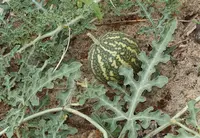
watermelon Care (Citrullus lanatus)

Also known as: bitter wooly melon, desert watermelon, Citron Melon, Makataan, Tsamma, Karkoer, Bitterboela, Sweet Watermelon, Sweet Melon, White Watermelon
watermelon

About watermelon

Watermelon, Citrullus lanatus, is a fast-growing annual vine in the cucurbit family, related to cucumbers and pumpkins. It is grown mainly for its large, juicy fruits. The plant has long, trailing stems, deeply lobed leaves, and yellow flowers that develop into smooth, green-skinned melons with sweet, usually red or pink flesh. It likely originates from arid regions of Africa and is now widely cultivated in warm climates worldwide. Watermelon is considered moderately easy to grow if it receives full sun, warmth, and space to spread. Understanding how to care for watermelon starts with providing well-drained soil and avoiding cold, waterlogged conditions.


Main Plant Requirements

Care Difficulty

Moderate Care

Light Preference

Full Sun

Water Requirements

Regular Water

Temperature Preference

Tropical / Frost Sensitive

Hardiness Zone

4–11

Soil Texture

Sandy, Loamy, Organic-rich

Soil pH

Acidic (5.5–6.5), Slightly acidic (6.5–7.0)

Soil Drainage

Well-drained

Fertilization

Moderate (every 2–4 weeks)

Get Personalized Care Plan

Scan your plant to receive care tips personalized for your specific plant

Available on iOS and Android

How to Care for the watermelon

This species needs strong sun exposure to produce sweet, full-sized fruit.

  • Provide 6–8 hours of direct sun daily, with at least 4 hours of morning sun to drive vigorous vine growth and flowering.
  • Allow light afternoon shade in very hot climates to limit leaf scorch and sunburn on developing watermelon fruit surfaces.
  • Avoid sites shaded by buildings or trees; plants grown in less than 5–6 hours of direct sun tend to produce fewer, smaller fruits and more vine than flowers.

Citrullus lanatus prefers evenly moist but never waterlogged soil for healthy vines and fruit set.

  • Irrigate when the top 3–5 cm of soil feels dry, applying a deep soak at the root zone rather than frequent light sprinkling.
  • Use well-drained, sandy or loamy soil; standing water, sour smell, or yellowing, limp leaves suggest overwatering and poor aeration.
  • Reduce watering slightly 7–10 days before harvest to concentrate sweetness, but do not let vines wilt for long periods, which can stunt fruit.

This warm-season crop needs consistently high temperatures to germinate, grow, and ripen fruit well.

  • Aim for 70–90°F (21–32°C) during active growth; germination and early vine development slow noticeably below 65°F (18°C).
  • Protect plants from temperatures below 50°F (10°C); light frost at 32°F (0°C) can kill foliage and young vines outright.
  • Watermelon tolerates brief heat up to about 100°F (38°C) if soil moisture is steady, but extreme, prolonged heat can reduce fruit set and cause sunscald.

Humidity plays a minor role for Citrullus lanatus, which adapts well to typical outdoor ranges around 30–60%.

  • Plants tolerate dry air, provided soil moisture is consistent and roots do not dry out completely during hot, windy weather.
  • Low humidity stress appears as leaf edge browning and rapid wilting during heat, even when soil still feels slightly moist.
  • Increase local humidity during extreme heat by using mulch over the root zone and grouping plants to reduce air movement around foliage.

Citrullus lanatus prefers warm, loose, well‑aerated ground that drains quickly but holds moderate moisture.

  • Use a deep, sandy or loamy soil enriched with 20–30% compost to provide nutrients and improve structure for spreading roots.
  • Aim for slightly acidic to neutral pH, roughly 6.0–7.0, as this range supports nutrient availability and healthy growth.
  • In heavy clay, mix in coarse sand and compost to improve drainage and aeration, forming wide raised beds to keep roots from sitting wet.
  • Avoid compacted, waterlogged, or very shallow soils, which restrict root penetration and promote root rot and poor fruit development in caring for watermelon.

This species can be grown in large containers outdoors, but only with careful attention to space, support, and moisture management.

  • Choose a very large, wide container at least 40–50 cm deep to allow extensive root spread and support vigorous vine growth.
  • Select a sturdy, heavy material such as thick plastic or terracotta to reduce tipping as vines and fruits develop weight on one side.
  • Use an extra-fast-draining potting mix and elevate the container slightly so drainage holes stay clear and excess water exits immediately after watering.

Citrullus lanatus benefits from moderate feeding during its fast summer growth to support vines and fruit set.

  • Use a balanced soluble fertilizer (for example 10-10-10) at 1/2 strength or well-rotted compost worked into the soil.
  • Feed every 2–3 weeks from early vine growth until fruits are sizing up, then reduce nitrogen to avoid excess foliage.
  • Stop feeding 2–3 weeks before harvest to encourage sweeter watermelon and firmer rinds.
  • Do not fertilize in winter or outside the active growing season, as plants are not actively using nutrients.

Pruning in Citrullus lanatus is optional but can help manage vine spread and fruit quality in small spaces.

  • Best timing is early to mid-season once vines have several true leaves and are actively running.
  • Remove dead, diseased, or damaged vines first using clean, sharp hand pruners or scissors.
  • Tip-prune overly vigorous runners to encourage branching and focus energy on a limited number of fruits.
  • Thin excess young fruits so only 1–2 melons develop per main vine for better size and ripening.

Watermelon is usually started in small containers or modules, then transplanted outdoors once conditions warm.

  • Transplant when seedlings have 2–3 true leaves and roots just hold the plug together without circling tightly.
  • Typical timing is late spring after frost risk has passed and soil reaches about 65°F for good root activity.
  • Handle seedlings by the root ball or leaves, not the stem, and keep the original soil level even with the garden soil.
  • Water thoroughly after planting and shade for 2–3 days if sun is intense to reduce transplant shock and wilting.

Citrullus lanatus is propagated almost exclusively from seed for consistent, vigorous plants.

  • Sow seeds in late spring once soil is at least 65°F, either indoors in cells or directly outdoors.
  • Provide warm, evenly moist but not waterlogged soil; ideal germination occurs around 70–85°F.
  • Plant seeds 1.5–2.5 cm deep in loose, well-drained soil with good organic matter content.
  • Space seedlings adequately so each vine has room to spread, reducing competition and disease pressure.

Watermelon is a warm-season annual, so plants naturally die after frost and do not need complex winter care.

  • In cold regions, remove and compost spent vines after the first hard frost to reduce disease carryover.
  • Mulch the empty bed with compost or organic mulch to protect and improve soil for next year.
  • For container-grown plants, end the crop after fruiting; there is no benefit in attempting overwintering.

Care Tips

Efficient Vine Training

Train vines along a single direction on the ground or trellis and gently reposition young shoots every few days so that fruit are spaced 30–45 cm apart, which improves airflow and light penetration and makes harvesting easier.

Fruit Cradle Support

When fruit develop on trellised plants, place each melon in a wide fabric sling or netting securely tied to the structure so the weight is fully supported and stems are not stressed or broken as the fruit enlarges.

Strategic Fruit Thinning

After fruit set, remove the smallest or misshapen melons so that each strong vine carries only 2–4 fruits, which directs the plant’s resources into producing fewer but larger and better-flavored watermelons.

Ground Contact Management

Set each young melon on a piece of clean board, tile, or thick straw layer to keep it off wet soil, which reduces rot and helps produce a cleaner underside at harvest.

Targeted Pollination Checks

During flowering, observe for bee activity in the morning and, if visitation seems low, hand-pollinate by gently transferring pollen from male to female flowers with a small brush to secure reliable fruit set when growing watermelon in small gardens.

Common Pests and Diseases

Striped cucumber beetle

This pest feeds on leaves, flowers, and rinds and also spreads bacterial and viral diseases in watermelon plantings. Symptoms include shot-holes in leaves, damaged blossoms, and scarring on young fruit.

Solution

Use floating row covers to protect young plants, then remove covers at flowering to allow pollination. Handpick beetles where practical, reduce nearby cucurbit weeds, and apply targeted insecticides such as pyrethroids or neonicotinoids only according to local extension guidance when beetle numbers are high.

Watermelon mosaic virus

This disease causes mottled, blistered, or distorted leaves and often leads to stunted vines and misshapen, low-quality fruit. Symptoms include light and dark green mosaic patterns and narrowing of leaves.

Solution

Remove and destroy infected plants promptly to limit virus sources and control aphid populations that spread the virus by using reflective mulches and insecticidal soaps when needed. Avoid planting next to older cucurbit crops, use resistant or tolerant cultivars when available, and keep the growing area free of volunteer cucurbits and weedy hosts.

Anthracnose

This disease produces small, water-soaked spots on leaves that enlarge, turn tan to dark brown, and may cause leaf blighting; fruits develop sunken, dark lesions that can crack. Symptoms include rapid leaf damage in warm, wet weather and fruit spots that may ooze salmon-colored spores.

Solution

Remove and discard infected leaves and fruit, avoid overhead watering, and water early in the day so foliage dries quickly. Rotate cucurbit crops on a 3–4 year cycle, plant certified disease-free seed or treated seed, and apply preventive fungicides labeled for anthracnose when rainy or humid conditions persist.

Gummy stem blight

This disease causes tan to dark brown lesions on stems and leaves and may produce gummy, amber-colored exudate on vines and at the base of the plant. Symptoms include vine cankers, leaf spots with dark borders, and eventual vine collapse in severe cases.

Solution

Prune out and remove infected tissue, avoid working among vines when foliage is wet, and improve spacing for better airflow. Practice 3–4 year crop rotation, remove plant debris at season’s end, use certified clean seed or resistant cultivars when available, and apply appropriate fungicides preventively in regions with a history of the disease.

Spider mites

These insects suck sap from the undersides of leaves, especially in hot, dry conditions, leading to pale stippling, bronzing, and eventual leaf drop. Symptoms include fine webbing on leaves and reduced plant vigor, which can lower fruit yield and quality.

Solution

Spray the undersides of leaves with a strong stream of water to dislodge mites and raise local humidity, which slows their buildup. Introduce or conserve natural enemies such as predatory mites, avoid broad-spectrum insecticides that kill beneficials, and use horticultural oils or insecticidal soaps directed at leaf undersides when infestations persist.

Interesting Facts

High water content

The fruit flesh of Citrullus lanatus is composed of roughly 90% water, which is why it is so hydrating and refreshing when eaten fresh.

Domestication from Africa

Cultivated watermelon is thought to have been domesticated in Africa thousands of years ago, with archaeological evidence of its use in the Nile Valley and later spread through the Mediterranean and Asia.

Lycopene-rich flesh

Red-fleshed cultivars are naturally rich in lycopene, a red carotenoid pigment also found in tomatoes, which gives the fruit its characteristic color and has been widely studied in nutritional science.

Botan icon

Did you know?

The current world record for the heaviest watermelon comes from cultivated Citrullus lanatus and exceeds 350 lb, illustrating how selective breeding can dramatically increase fruit size compared with its smaller wild ancestors.

FAQs about watermelon

Yellowing leaves often result from nitrogen deficiency, waterlogged soil, root damage, or natural aging of older foliage. Check drainage, avoid standing water, feed with a balanced fertilizer, and inspect roots and stems for pests or disease.

Grow Healthy Plants with Botan Care

Keep your plants happy and healthy with plant identification, disease detection, and easy care guidance.

Botan plant care app — identify plants on mobile

Explore More Plants