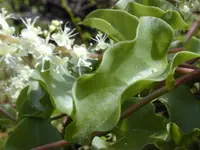
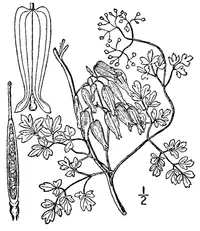
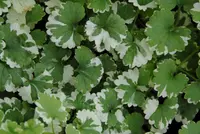
mile-a-minute weed Care (Persicaria perfoliata)

Also known as: perfoliate knotweed, spiny knotweed
mile-a-minute weed

About mile-a-minute weed

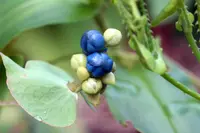
Mile-a-minute weed (Persicaria perfoliata) is a fast-growing annual vine known for its thin, barbed stems and triangular leaves that form dense, tangled mats. Small, metallic blue berries follow insignificant flowers and help the plant spread quickly through bird dispersal.

Native to parts of Asia, it has become an invasive species in many temperate regions, especially in the eastern United States. It thrives in disturbed sites, forest edges, and open, moist ground.

Because it grows aggressively and self-seeds heavily, it is generally not recommended for ornamental use, and how to care for mile-a-minute weed is mainly discussed in the context of control. It prefers full sun to partial shade, moist soils, and good drainage, which all encourage its rapid growth.

Main Plant Requirements

Care Difficulty

Easy Care

Light Preference

Full Sun

Water Requirements

Regular Water

Temperature Preference

Cold Hardy

Hardiness Zone

4–8

Soil Texture

Loamy, Silty, Organic-rich

Soil pH

Acidic (5.5–6.5), Slightly acidic (6.5–7.0)

Soil Drainage

Moist but well-drained

Fertilization

Minimal (feed rarely)

Get Personalized Care Plan

Scan your plant to receive care tips personalized for your specific plant

Available on iOS and Android

How to Care for the mile-a-minute weed

Persicaria perfoliata grows fastest in open, bright conditions with long daily light exposure.

  • Provide 6–10 hours of direct sun per day; full sun promotes dense, vigorous mile-a-minute weed growth, especially in open fields and along forest edges.
  • Plant tolerates partial shade, but in sites with under 4–5 hours of sun daily, stems elongate, foliage thins, and fruiting is reduced.
  • In hot summers, exposure to intense late-afternoon sun on dry sites can cause leaf scorch; prioritize morning sun with some afternoon shade in such locations.

Persicaria perfoliata thrives in consistently moist, not stagnant, soil conditions.

  • Aim for soil that stays evenly moist, letting only the top 2–4 cm start to dry before the next rainfall or irrigation in drought periods.
  • Favor loamy or silty soils with good drainage; standing water for several days leads to root rot, wilting despite wet soil, and foul odor.
  • In hot, dry weather, watch for limp, dull leaves and quick soil drying as signs of underwatering, while yellowing lower leaves and soft stems suggest excess moisture.

This species prefers warm growing seasons and tolerates a fairly wide outdoor temperature range.

  • Optimal growth occurs around 70–85°F (21–29°C), when stems elongate rapidly and fruit set is highest.
  • Plants tolerate brief drops to about 28–30°F (-2 to -1°C); harder or repeated frosts kill above-ground growth but seeds survive winter.
  • Heat tolerance is good up to about 95°F (35°C) if soil moisture remains high; prolonged hotter, dry spells cause leaf scorch and reduced vigor.

This species tolerates a wide humidity range and rarely needs special humidity management.

Persicaria perfoliata thrives in moist, loose mineral soil that mimics stream-bank conditions.

  • Use a loamy or sandy-loam soil with moderate organic matter so roots can spread easily without compaction.
  • Maintain consistently moist but not waterlogged conditions; include coarse sand or fine grit to keep water moving through the profile.
  • A slightly acidic to neutral pH around 6.0–7.0 suits this species; avoid strongly alkaline or saline soils.
  • Improve aeration and drainage by mixing in 20–30% compost plus 10–20% coarse material such as grit or fine bark, avoiding heavy clay that stays soggy.

This fast-growing vine is suitable for containers mainly where spread must be restricted or monitored.

  • Choose a wide, stable container at least 30–40 cm across to accommodate rapid lateral growth and limit tipping as stems climb or sprawl.
  • Anchor a trellis or support directly into the pot so new stems are directed upward and do not overbalance the container edge.
  • Use a heavier pot material such as ceramic or thick plastic when placing containers in windy, exposed sites to prevent top-heavy plants from shifting.

Persicaria perfoliata generally thrives in average to poor soils and needs little supplemental feeding.

Pruning is mainly used to contain Persicaria perfoliata and limit its invasive, scrambling growth.

  • Cut back long, sprawling stems in late spring to mid-summer before seed set to restrict spread.
  • Remove dead, damaged, or congested vines with clean bypass pruners for safer handling and cleaner cuts.
  • Shorten or thin dense tangles to reduce shading of nearby plants and to keep growth accessible for monitoring.

This species is seldom grown as a container ornamental, so management focuses on careful transplanting or removal.

  • Handle plants in early spring or early fall when temperatures are mild and soil is workable.
  • Lift plants with a trowel or spade, keeping as much root and surrounding soil intact as practical.
  • Avoid frequent moving; repeated disturbance stresses roots and may encourage unwanted spread from dislodged fragments.
  • Water the new site lightly after transplanting to settle soil around roots, then keep just evenly moist until established.

Persicaria perfoliata spreads most commonly and aggressively by seed, so intentional propagation is rarely recommended.

  • Seeds germinate best in spring in moist, well-drained soil with consistent light and temperatures around 60–75°F.
  • If seed collection is necessary for study, bag mature seed clusters and sow in contained trays or pots only.
  • Keep seed trays slightly moist, not waterlogged, to limit damping-off, a fungal disease that kills seedlings at soil level.

This annual is cold-sensitive and usually dies back after hard frost, so winter care focuses on limiting reseeding rather than protection.

  • Allow frost to kill top growth, then remove vines and seed heads to reduce spring volunteer seedlings.
  • Bag and dispose of plant debris in trash rather than composting to prevent seed survival and spread.
  • For any remaining container specimens, move under cover before hard frost if short-term study or observation is required.

Care Tips

Install sturdy trellis

Provide a strong trellis, fence, or wire netting early in the season so vines can climb vertically, which keeps stems off the ground and makes inspection and removal of unwanted spread much easier.

Use root barriers

In open soil, install physical root and rhizome barriers 20–30 cm deep around the planting area to limit lateral spread and make future lifting or containment of the plant more manageable.

Timed tip pinching

Regularly pinch out soft shoot tips at the beginning of the growing season to reduce excessive length, encourage branching where you want coverage, and keep stems within reach for monitoring.

Manage seed production

As soon as berries start to color, remove and dispose of fruit clusters in sealed bags to prevent seed drop and self-sowing, which is a key step in responsible Persicaria perfoliata plant care.

Glove and clothing hygiene

Wear sturdy gloves and long sleeves when handling the plant, and brush off or launder clothing afterward so barbed stems and any stray fruits are not carried to new areas unintentionally when growing mile-a-minute weed.

Common Pests and Diseases

Mile-a-minute weevil

This pest is a specialist beetle whose larvae bore into the stems and feed internally, causing wilting, stunting, and dieback of shoots. Symptoms include drooping stems, hollowed stems, and reduced vigor, especially on young growth.

Solution

Monitor regularly for wilting or collapsed stems and cut back and destroy heavily damaged sections to reduce larval numbers. In areas where the weevil is used as a biological control agent, avoid broad-spectrum insecticides on or near the plant so the weevil population can continue to suppress growth over time.

Mile-a-minute stem borer

This pest is a lepidopteran larva that tunnels inside stems, causing swelling, breakage, and localized dieback. Symptoms include rough or swollen stem sections, frass (sawdust-like material), and sudden stem collapse above the feeding site.

Solution

Prune out and destroy infested stems as soon as tunneling or breakage is noticed to interrupt the life cycle. Maintain dense competing vegetation around infestations where appropriate, as this can reduce the plant’s ability to recover from stem borer damage while also limiting spread.

Foliar leaf spots

This disease typically shows as small brown to dark lesions on leaves that may coalesce, leading to premature yellowing and leaf drop. Symptoms include scattered spotting, reduced photosynthetic area, and a generally thinner canopy on heavily affected patches.

Solution

Remove and dispose of heavily spotted leaves and collected debris to reduce inoculum, and avoid overhead irrigation to keep foliage drier. Where infestations are managed in the landscape, maintain good air circulation around patches and encourage competitive native vegetation, which can tolerate minor spotting while helping suppress overall vine density.

Powdery mildew

This disease appears as white, powdery patches on leaf surfaces, often starting on shaded or crowded growth and leading to reduced vigor if severe. Symptoms include distorted new leaves, dull foliage, and reduced growth on affected vines.

Solution

Thin dense tangles of vines where possible to increase light penetration and airflow, which suppresses mildew development. Remove and dispose of the most heavily infected shoots and avoid unnecessary overhead watering; if chemical control is warranted in larger management programs, use a targeted fungicide labeled for powdery mildew and follow all label directions carefully.

Interesting Facts

Barbed climbing stems

This species uses small, recurved barbs on its stems and leaf veins to hook onto surrounding vegetation, allowing it to rapidly climb and form dense, tangled mats over other plants.

Unique cup-like leaves

The round, shield-shaped leaves are perforated by the stem so that the stem appears to pass through the leaf blade, forming a shallow cup that can intercept water and light at different angles.

Explosive seed dispersal

Its small, metallic-blue fruits contain seeds that are catapulted short distances when the dry fruiting structures are disturbed, and birds further spread the seeds over long distances.

Botan icon

Did you know?

This plant is native to East and South Asia, but in parts of the eastern United States it is classified as a high-priority invasive species because it can overtop forest seedlings and tree saplings, altering natural regeneration patterns and local plant community structure.

FAQs about mile-a-minute weed

Yes. This species spreads extremely fast by seed and by scrambling over other vegetation, forming dense, smothering mats. Birds disperse the seeds widely. Regular monitoring and early removal are essential to prevent rapid colonization of new areas.

Grow Healthy Plants with Botan Care

Keep your plants happy and healthy with plant identification, disease detection, and easy care guidance.

Botan plant care app — identify plants on mobile

Explore More Plants