


Install Strong Supports
Use heavy-duty trellis, wires, or stock fencing fixed firmly into the ground before the plant starts rapid growth so the vigorous stems can be tied in and directed where they will not smother nearby plants or structures.

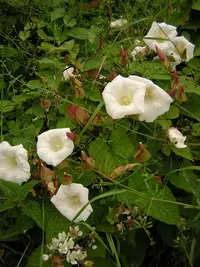
Large bindweed (Calystegia silvatica) is a vigorous, twining perennial vine known for its rapid growth and large white trumpet-shaped flowers. It climbs by wrapping around nearby plants, fences, and structures, often forming dense curtains of foliage.
This species is native to parts of Europe and western Asia but is now naturalized in many temperate regions, including parts of North America. It thrives in disturbed soils, hedgerows, and along roadsides, which shows how adaptable and persistent it can be.
Because of its strong growth and spreading root system, it is considered challenging to control in gardens. Anyone who wants to care for Large Bindweed should understand its invasive habit and give it clear boundaries or supports.

Care Difficulty
Easy Care

Light Preference
Full Sun

Water Requirements
Moderate Water

Temperature Preference
Cold Hardy

Hardiness Zone
5–9

Soil Texture
Sandy, Loamy, Clay

Soil pH
Slightly acidic (6.5–7.0), Neutral (7.0)

Soil Drainage
Well-drained

Fertilization
Minimal (feed rarely)
Scan your plant to receive care tips personalized for your specific plant
Available on iOS and Android
This vigorous climber thrives in open, bright conditions but adapts to varying light outdoors.
This fast-growing vine prefers consistently moist but not waterlogged soil in the ground.
This hardy perennial vine copes with a wide range of outdoor temperatures in temperate climates.
Humidity is rarely critical for Calystegia silvatica in outdoor conditions.
Calystegia silvatica prefers moist, fertile, well-aerated ground that does not stay waterlogged.
This vigorous climber is technically suitable for container growing but needs careful control.
Calystegia silvatica grows vigorously in average soil and usually needs only light feeding.
Pruning Calystegia silvatica is mainly about controlling spread and keeping growth manageable.
This vigorous vine is usually grown in the ground, so focus on careful transplanting rather than frequent repotting.
Calystegia silvatica is commonly propagated and can spread strongly if not controlled.
This hardy perennial usually needs minimal winter care in most temperate climates.

Plant Health Check
Not sure what's wrong with your plant? Check your plant's health inside the app.
This species can extend its twining stems by more than 10 cm per day in favorable summer conditions, allowing it to quickly cover shrubs, fences, and small trees.
It forms deep, thick, white rhizomes and fleshy roots that store large carbohydrate reserves, so the plant can resprout repeatedly even after several top-growth removals.
In parts of Europe, it naturally hybridizes with Calystegia sepium, producing intermediate forms that can complicate field identification for botanists.

In several regions, especially in western Europe and parts of North America, this species is listed as an invasive or noxious weed because its vigorous growth can smother native vegetation and young crops, altering light availability and local plant community structure.
This species spreads vigorously through both creeping roots and abundant seed, often forming dense tangles over nearby plants, fences, and structures. Regular root removal and preventing seed set are essential if you want to limit its spread in gardens.
Keep your plants happy and healthy with plant identification, disease detection, and easy care guidance.

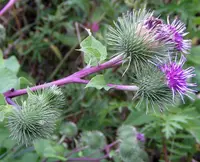
greater burdock
Arctium lappa
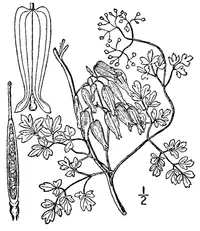
allegheny vine
Adlumia fungosa
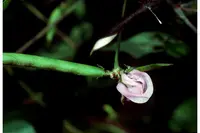
amberique-bean
Strophostyles helvola
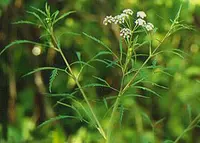
bulblet-bearing water hemlock
Cicuta bulbifera
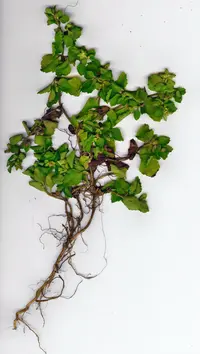
Paraguayan starbur
Acanthospermum australe
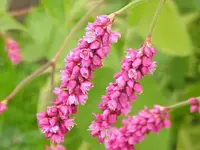
kiss-me-over-the-garden-gate
Persicaria orientalis
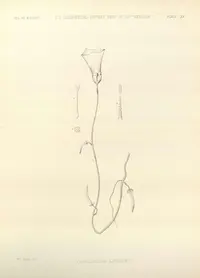
Paiute false bindweed
Calystegia longipes
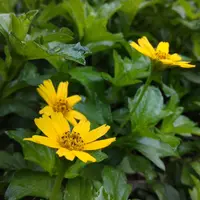
Bay Biscayne creeping-oxeye
Sphagneticola trilobata