Bay Biscayne creeping-oxeye Care (Sphagneticola trilobata)

Also known as: trailing daisy, Creeping Ox-eye, Wedelia, Singapore Daisy, Creeping wild daisy
Bay Biscayne creeping-oxeye

About Bay Biscayne creeping-oxeye

Bay Biscayne creeping-oxeye, Sphagneticola trilobata, is a fast-growing, mat-forming groundcover from tropical regions of the Americas and the Caribbean. It is often used in warm climates to quickly cover bare soil and slopes.

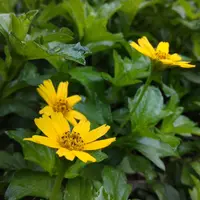
The plant has small, bright yellow daisy-like flowers above glossy, trilobed leaves that create a dense, uniform carpet. It spreads aggressively by rooting stems, which makes it very effective for erosion control but potentially invasive outdoors.

This species prefers warmth, consistent moisture, and well-drained soil, and it tolerates salt and coastal conditions. In suitable climates it is generally easy to manage in controlled spaces, and understanding how to care for Bay Biscayne creeping-oxeye helps prevent unwanted spreading.

Main Plant Requirements

Care Difficulty

Easy Care

Light Preference

Full Sun

Water Requirements

Regular Water

Temperature Preference

Tropical / Frost Sensitive

Hardiness Zone

9–12

Soil Texture

Sandy, Loamy, Organic-rich

Soil pH

Acidic (5.5–6.5), Slightly acidic (6.5–7.0)

Soil Drainage

Moist but well-drained

Fertilization

Minimal (feed rarely)

Get Personalized Care Plan

Scan your plant to receive care tips personalized for your specific plant

Available on iOS and Android

How to Care for the Bay Biscayne creeping-oxeye

This vigorous groundcover needs bright outdoor light to flower and stay dense.

  • Provide 6–8 hours of sun daily, ideally with morning sun and light afternoon shade to protect foliage from scorching.
  • Tolerates partial shade (around 3–4 hours of direct sun), but Bay Biscayne creeping-oxeye may grow looser and flower less in low light.
  • In hot summers, use filtered light or dappled shade during the strongest midday sun; in winter, ensure the site is as open and unshaded as possible.

This plant prefers evenly moist but not saturated soil once established outdoors.

  • Water when the top 2–4 cm of soil feels dry, using deeper, less frequent soakings rather than light sprinkling to encourage strong roots.
  • In hot, dry periods, expect to water more often, watching for limp, dull leaves as a sign of thirst; in cooler or rainy seasons, reduce watering to avoid soggy soil.
  • Ensure soil drains freely; yellowing, soft stems or a sour soil smell suggest overwatering, while crisp, browning leaf edges indicate underwatering.

This tropical groundcover thrives in warm, frost-free conditions year-round.

  • Optimal growth occurs around 70–90°F (21–32°C), where stems spread rapidly and flowering is most consistent.
  • Tolerates brief dips to about 40°F (4°C) but suffers damage near 32°F (0°C) and is typically killed by hard frost, so avoid planting in exposed freeze-prone sites.
  • Handles heat up to 95–100°F (35–38°C) if soil moisture is maintained; during heat waves, reduce stress with mulch and avoid disturbing roots.

This species grows best in moderately humid air but usually tolerates typical household levels.

  • Aim for 40–60% humidity; Bay Biscayne creeping-oxeye handles brief dips lower if the soil moisture is stable.
  • Dry indoor air can cause crispy leaf edges and slower spreading, especially near heating or cooling vents.
  • Increase humidity by grouping plants, placing trays of water and pebbles nearby, or using a small humidifier in very dry rooms.

This plant prefers slightly moist, well-aerated soil that drains quickly yet retains some organic moisture.

  • Use a loose, sandy or loamy mix with 30–50% compost or leaf mold for steady nutrients and water retention.
  • Ensure sharp drainage by adding coarse sand or fine gravel and avoiding heavy clay that compacts and stays wet.
  • A slightly acidic to neutral pH around 6.0–7.0 suits Sphagneticola trilobata and supports healthy root and leaf growth.
  • Improve aeration by mixing in perlite or pine bark chips and avoid spots where water pools after rain or irrigation.

This species is suitable for containers, especially for hanging baskets or wide, shallow pots.

  • Choose a broad, stable container to accommodate its spreading habit and prevent it from tipping as stems trail over the edges.
  • Use a potting mix that stays slightly moist but drains fast so the bottom layer does not stay waterlogged in deeper pots.
  • Select lighter plastic pots for hanging growth or heavier ceramic pots on the ground to balance moisture retention and stability.

This fast-growing groundcover responds well to light feeding but does not need heavy fertilization for healthy growth.

  • Apply a balanced liquid fertilizer (such as 10-10-10) at 1/4–1/2 strength every 4–6 weeks in spring and summer.
  • Use a thin layer of compost or a mild slow-release granular product around the root zone, keeping it off stems.
  • Reduce or stop feeding in fall and winter, when growth of Bay Biscayne creeping-oxeye naturally slows.
  • Always water before and after applying fertilizer to limit root burn and improve nutrient uptake.

Sphagneticola trilobata benefits from light, frequent trimming to maintain a dense, flowering mat.

  • Best time for shaping is during active growth in spring and summer, after flushes of new stems.
  • Remove dead, damaged, or yellowing shoots with clean scissors or hand pruners to lower disease risk.
  • Shear or pinch back long, sprawling runners to encourage branching and a thicker groundcover.
  • Lightly trim after main flowering waves to stimulate new growth and additional blooms.

This species is usually grown as a groundcover and is moved more often by transplanting than by repotting.

  • Transplant in spring or early summer when soil is warm and plants are actively growing.
  • Look for signs such as crowded mats, bare patches, or container roots circling drainage holes before moving plants.
  • Lift clumps with a trowel, keep root balls intact, and replant at the same depth in well-drained soil.
  • Water thoroughly after transplanting and shade for a few days to reduce transplant shock and root stress.

This plant spreads aggressively, and propagation is commonly done to expand groundcover or fill gaps.

  • Take 7–10 cm soft stem cuttings in spring or summer, removing lower leaves to expose nodes.
  • Lay or pin runners onto moist soil so nodes touch the surface, allowing natural layering and rooting.
  • Keep cuttings or layered stems in bright shade with evenly moist, well-drained substrate until roots form.
  • For quick coverage, divide rooted sections of the mat and replant immediately at the same soil level.

In warm climates this tropical groundcover stays evergreen, but it is sensitive to hard frost and freezing.

  • In mild coastal or southern regions, little winter care is needed beyond maintaining drainage.
  • In areas with light frost, add a 3–5 cm mulch layer around roots to buffer short cold spells.
  • Move container-grown plants indoors or into a frost-free, bright location when temperatures approach 40°F.

Care Tips

Edge Containment

Install a shallow plastic or metal edging 10–15 cm deep around beds to stop the stolons from rooting into lawns or adjacent planting areas and to keep the groundcover in a defined zone.

Layering For Fill-in

Pin down vigorous runners with biodegradable landscape pins and lightly cover the nodes with soil to encourage faster rooting in bare patches when growing Bay Biscayne creeping-oxeye.

Slope Stabilization

Plant it on gentle slopes or embankments and allow a continuous mat to form, as the dense network of stems and roots helps reduce surface erosion and soil splash during heavy rain.

Traffic Management

Direct foot traffic along stepping stones or defined paths through the planting, since repeated trampling can break stems and open gaps that invite weeds.

Weed-Smart Establishment

During the first season, hand-weed regularly and mulch only the open soil between young plants, then gradually remove mulch as the mat closes so the stems can root freely into the surface.

Common Pests and Diseases

Spider mites

This pest often appears on stressed plants in hot, dry spots and causes fine stippling on leaves followed by bronzing and webbing between stems. Symptoms include slow growth and a dull, dusty look to the foliage.

Solution

Rinse foliage thoroughly with a strong but gentle stream of water, including the leaf undersides, then repeat every few days until no mites are seen. In ornamental beds, use an insecticidal soap or horticultural oil labeled for mites and improve humidity and airflow by avoiding water stress and overcrowding.

Leaf spot

This disease commonly shows as small brown to dark purple spots on leaves, sometimes with yellow halos, especially in warm, humid, shaded conditions. Symptoms include premature leaf drop and thinning of what is usually a dense groundcover mat.

Solution

Remove and dispose of affected leaves to reduce the source of infection, then avoid overhead watering so foliage dries quickly. Thin or edge the planting to improve air movement, and if spotting is severe, apply a copper-based fungicide according to label directions during extended wet periods as part of broader Sphagneticola trilobata plant care.

Aphids

These insects cluster on young shoots and the undersides of leaves, sucking sap and causing curling or distortion of new growth. This pest also leaves sticky honeydew that can lead to sooty mold on the foliage.

Solution

Spray plants with a firm stream of water to dislodge aphids, repeating as needed, and prune off the most heavily infested shoot tips. If populations remain high, treat with insecticidal soap or a light horticultural oil, ensuring thorough coverage of new growth and leaf undersides.

Nematode damage

This disease-like problem is caused by microscopic worms in the soil that attack the roots, leading to stunted patches, yellowing, and poor spread of the groundcover in affected areas. Symptoms include irregular weak spots in otherwise vigorous plantings, especially in sandy, warm soils.

Solution

Remove and discard severely affected plants and avoid replanting the same area with creeping-oxeye immediately; instead, rotate with less-susceptible species or use container plantings. Improve soil organic matter with compost to support beneficial organisms, and in high-value sites consider using clean, certified nursery stock and raised beds with fresh soil to limit reinfestation.

Interesting Facts

Highly invasive behavior

This species is listed as a serious invasive weed in many tropical and subtropical regions, where its dense mats outcompete native ground flora and alter habitat structure.

Vegetative spread specialist

It spreads mainly through creeping stems that root at the nodes, so even small stem fragments left in the soil or water can establish new colonies and make control difficult.

Salt and heat tolerant

The plant tolerates high temperatures and coastal conditions, including moderate salt spray, which helps explain its success as a groundcover in warm, seaside landscapes.

Botan icon

Did you know?

Molecular and morphological studies have shown that this ornamental groundcover, long traded under the name Wedelia trilobata, was reclassified into the genus Sphagneticola to reflect its true evolutionary relationships within the sunflower family (Asteraceae).

FAQs about Bay Biscayne creeping-oxeye

This species spreads rapidly by trailing stems that root at the nodes, forming dense mats. In warm climates it can overrun nearby plantings and natural areas, so use physical edging and regular trimming to keep it contained.

Grow Healthy Plants with Botan Care

Keep your plants happy and healthy with plant identification, disease detection, and easy care guidance.

Botan plant care app — identify plants on mobile

Explore More Plants