Use sturdy staking
Install a strong stake or short wire cage at planting time to support the branching stems and heavy, spiny fruit, which reduces wind damage and makes later handling safer.

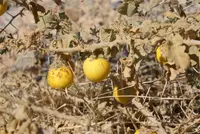
Thorn-apple, Solanum incanum, is a spiny shrub or subshrub from arid and semi-arid regions of Africa and parts of the Middle East. It belongs to the nightshade family and is related to many cultivated Solanum species.
Plants typically have tough, branching stems with sharp spines, grey-green lobed leaves, and round berries that turn yellow when mature. It is adapted to poor, dry soils and strong sun, which makes it resilient but also quite vigorous where conditions suit it.
For gardeners, care for thorn-apple is usually low-maintenance if it receives plenty of light, well-drained soil, and moderate watering, but the spines and toxic parts require cautious handling.

Care Difficulty
Moderate Care

Light Preference
Full Sun

Water Requirements
Low Water

Temperature Preference
Warm Climate

Hardiness Zone
9–11

Soil Texture
Sandy, Loamy, Rocky

Soil pH
Slightly acidic (6.5–7.0), Slightly alkaline (7.0–7.5)

Soil Drainage
Well-drained

Fertilization
Minimal (feed rarely)
Scan your plant to receive care tips personalized for your specific plant
Available on iOS and Android
Solanum incanum thrives in strong light but benefits from some protection during the harshest sun.
This drought-tolerant species prefers infrequent, deep watering and well-drained soil.
This plant is adapted to warm, arid climates and dislikes prolonged cold or frost.
Solanum incanum handles low humidity well and rarely needs special humidity management.
Solanum incanum prefers lean, fast-draining soil that mimics dry, rocky habitats.
This species can be grown in containers if the pot is set up to stay dry and stable.
Solanum incanum is a tough plant that benefits from modest feeding in poor soils but often manages without in naturally rich ground.
Pruning Solanum incanum is mainly done to maintain structure and remove damaged growth rather than to shape it tightly.
This species is more often grown in-ground, so care focuses on transplanting young Solanum incanum plants rather than frequent container repotting.
Solanum incanum is most commonly propagated from seed, with vegetative methods used less often.
Solanum incanum has some drought and heat tolerance but is sensitive to hard frost, so winter care matters in cold regions.

Plant Health Check
Not sure what's wrong with your plant? Check your plant's health inside the app.
This species is a wild African nightshade with dense, sharp prickles on stems, leaves, and even midribs, making it a strongly armed shrub that deters most large herbivores.
Genetic and morphological studies indicate that Solanum incanum is one of the wild relatives from which the cultivated eggplant (Solanum melongena) was domesticated, contributing traits such as drought tolerance and resistance to some pests.
The plant contains bitter steroidal alkaloids, particularly solanine-type compounds, which act as a chemical defense against many insects and vertebrate herbivores, in addition to its mechanical protection by spines.

In parts of eastern Africa, fruits of Solanum incanum are traditionally used as a natural coagulant during cheesemaking, where their proteolytic enzymes help curdle milk in a similar way to animal rennet.
All parts of this species contain toxic alkaloids that affect the nervous system. Ingestion can cause dry mouth, confusion, rapid heartbeat, dilated pupils, and potentially serious poisoning in pets, children, and adults. Avoid ingestion and contact with plant sap.
Keep your plants happy and healthy with plant identification, disease detection, and easy care guidance.