Controlled self-seeding
If you want a small patch next year without it spreading aggressively, allow only a few healthy seed heads to mature and drop in a defined area, then remove the rest before they spring away.

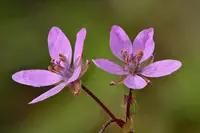
Common stork's-bill, Erodium cicutarium, is a small annual or short-lived perennial herb in the geranium family. It often appears as a low rosette with finely divided, fernlike leaves. Slender stems carry small pink to purple flowers that mature into beaked seed pods, which give the plant its stork's-bill name. It is native to parts of Europe and western Asia but is now widespread in North America, especially in dry, open, and disturbed sites. This species grows quickly, self-seeds easily, and tolerates poor, sandy, or gravelly soils, which makes it simple to naturalize. Those who want to care for Common Stork's-bill should provide plenty of sun and moderately dry conditions.

Care Difficulty
Easy Care

Light Preference
Full Sun

Water Requirements
Low Water

Temperature Preference
Cold Hardy

Hardiness Zone
3–9

Soil Texture
Sandy, Loamy, Rocky

Soil pH
Slightly acidic (6.5–7.0), Neutral (7.0)

Soil Drainage
Well-drained

Fertilization
Minimal (feed rarely)
Scan your plant to receive care tips personalized for your specific plant
Available on iOS and Android
This species prefers full sun for compact, floriferous growth in most outdoor settings.
This annual prefers moderately dry conditions and is sensitive to prolonged soil saturation.
This species is adapted to temperate, often dry habitats and tolerates a broad temperature range outdoors.
This species prefers dry to moderately dry air and rarely needs humidity adjustment indoors.
Erodium cicutarium grows best in lean, well-drained, mineral soils.
This species is suitable for containers if given a fast-draining setup that stays on the dry side.
Erodium cicutarium is a low-nutrient wild species that usually needs only light feeding in containers or poor soils.
Pruning Erodium cicutarium is minimal and mainly supports tidy growth and extended flowering.
This species is usually grown in the ground or as a temporary container annual, so transplanting is simple and infrequent.
Erodium cicutarium is most often propagated from seed, which establishes quickly in suitable conditions.
In many regions this species behaves as a hardy annual or short-lived perennial and usually needs little specific winter care.

Plant Health Check
Not sure what's wrong with your plant? Check your plant's health inside the app.
Its fruits form long, twisted awns that coil and uncoil with humidity changes, driving the seed tip into soil like a tiny drill. This movement relies on hygroscopic tissues that expand and contract differently as they absorb or lose water.
In many temperate regions it behaves as a winter annual, germinating in fall, overwintering as a low rosette, then flowering early in spring before taller plants shade it. This life cycle allows it to exploit cooler, moist conditions that limit some competitors.
It often colonizes disturbed, nutrient-poor ground and produces relatively nitrogen-rich foliage compared to many dryland herbs. This makes it an important early-season forage source for some wildlife and grazing animals in semi-arid landscapes.

The small seeds bear a tuft of hairs near the base that can act like a parachute, helping short-distance wind dispersal and also improving anchorage on rough soil surfaces before the coiling awn mechanism screws the seed into the ground.
Young leaves and shoots are edible raw or cooked and have a mild, slightly tangy flavor. They are sometimes used in salads or as trail food. Always harvest from clean, uncontaminated sites away from roadsides or spray areas.
Keep your plants happy and healthy with plant identification, disease detection, and easy care guidance.