Control Spreading Rhizomes
Install a 20–30 cm deep root barrier or sink bottomless pots into the ground to keep underground rhizomes from invading nearby beds while still allowing vigorous growth inside the contained area.

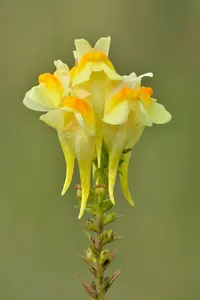
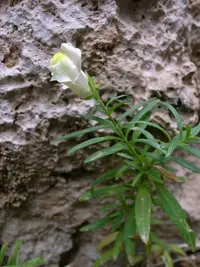
Common toadflax, Linaria vulgaris, is a herbaceous perennial often found in meadows, roadsides, and disturbed ground. It is native to Europe but is now widespread in North America. The plant forms upright clumps with narrow, gray-green leaves and dense spikes of yellow, snapdragon-like flowers with orange centers. It tends to spread by seed and creeping roots, which makes it persistent once established and sometimes invasive outdoors. Common toadflax prefers open, sunny sites and well-drained, relatively dry soils. Gardeners who care for Common Toadflax should understand its spreading habit before introducing it into a planting area.

Care Difficulty
Easy Care

Light Preference
Full Sun

Water Requirements
Low Water

Temperature Preference
Cold Hardy

Hardiness Zone
3–8

Soil Texture
Sandy, Loamy, Rocky

Soil pH
Slightly acidic (6.5–7.0), Slightly alkaline (7.0–7.5)

Soil Drainage
Well-drained

Fertilization
Minimal (feed rarely)
Scan your plant to receive care tips personalized for your specific plant
Available on iOS and Android
This sun-loving wildflower thrives in open, bright sites typical of meadows and roadsides.
This species prefers relatively dry conditions and is more tolerant of drought than of excess moisture.
This hardy perennial is adapted to cool and temperate climates with cold winters.
Humidity is not a major factor for Linaria vulgaris, which adapts well to typical outdoor air conditions.
Linaria vulgaris prefers lean, well-drained soils and often thrives in poorer ground.
This species can be grown in containers but performs best when the setup mimics its dry, free-draining natural sites.
Linaria vulgaris grows well in lean soils and usually needs only light feeding in gardens or wildflower plantings.
Linaria vulgaris benefits from simple, seasonal pruning to manage spread and encourage flowering.
This species is usually grown in the ground; focus on careful transplanting rather than frequent repotting.
Linaria vulgaris spreads readily, and propagation is most often done by seeds or division of established clumps.
Linaria vulgaris is cold hardy in most temperate climates and generally requires no special winter care.

Plant Health Check
Not sure what's wrong with your plant? Check your plant's health inside the app.
The snapdragon-like flowers have a closed mouth that most insects cannot open, so in its native range it is mainly pollinated by strong bumblebees that can pry the corolla open to reach the nectar.
This species spreads not only by seed but also through deep, creeping rhizomes, which allows a single plant to form dense, long-lived colonies that are hard to remove from pastures and roadsides.
Introduced to North America from Europe in the 1800s, it has become a listed noxious weed in several US states and Canadian provinces because it displaces native plants and is avoided by many grazing animals.

The seeds of Linaria vulgaris remain viable in the soil for many years and are readily transported along roads and disturbed ground, which helps explain its rapid spread along railways and highways across temperate regions.
This species spreads strongly by both seed and creeping roots. In suitable conditions it can form dense patches and behave aggressively. Regular deadheading, removing unwanted seedlings, and trimming or digging out runners helps keep it contained.
Keep your plants happy and healthy with plant identification, disease detection, and easy care guidance.