Manage self-seeding
Mark the patch edges before flowering, then deadhead or cut seed heads on plants near paths or beds where you want to limit spread while letting interior plants set seed to maintain the colony.

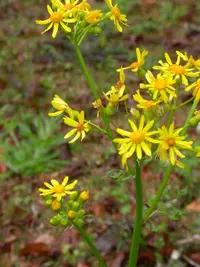
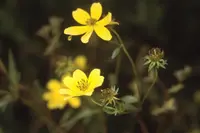
Butterweed, Packera glabella, is a short-lived native wildflower in the aster family. It often grows as an annual or biennial, forming upright, hollow stems topped with bright yellow flower clusters. Leaves are soft and somewhat fleshy, giving young plants a lush, almost succulent look. In suitable sites it can self-seed freely and form dense patches. This species naturally occurs in moist fields, floodplains, ditches, and other seasonally wet open areas across parts of North America. It favors full sun to light shade, consistently moist soil, and disturbed ground. Because it reseeds easily and grows fast, care for butterweed mainly involves deciding where it is allowed to spread.

Care Difficulty
Easy Care

Light Preference
Partial Sun

Water Requirements
Regular Water

Temperature Preference
Cold Hardy

Hardiness Zone
5–9

Soil Texture
Loamy, Clay, Organic-rich

Soil pH
Acidic (5.5–6.5), Slightly acidic (6.5–7.0)

Soil Drainage
Moist but well-drained

Fertilization
Minimal (feed rarely)
Scan your plant to receive care tips personalized for your specific plant
Available on iOS and Android
Packera glabella grows best in moist, open sites with moderate sun exposure.
This species prefers consistently moist soil but not prolonged standing water.
This plant is a cold-hardy native adapted to temperate outdoor climates.
This species tolerates a wide humidity range and rarely needs special humidity control outdoors.
Packera glabella prefers consistently moist, fine-textured soil that still allows air to reach the roots.
This plant can be grown in containers but performs best when the pot mimics its naturally moist, shallow-rooting habitat.
Packera glabella is a native wildflower that usually needs little feeding in average garden soil, so keep nutrient inputs light when caring for butterweed.
Packera glabella benefits from modest pruning to maintain tidiness and manage self-seeding.
This species is usually grown in the ground, so focus on careful transplanting rather than frequent repotting.
Packera glabella is commonly propagated by division and by seed in garden settings.
Packera glabella is cold hardy in much of its range and usually needs minimal winter care in the ground.

Plant Health Check
Not sure what's wrong with your plant? Check your plant's health inside the app.
This species commonly behaves as a winter annual in the central and southern US, germinating in fall, forming a low rosette through winter, then bolting and flowering quickly in early spring before many competitors leaf out.
Packera glabella is adapted to seasonally wet, silty or clay floodplain soils and low swales, tolerating short-term inundation and saturated conditions that stress many upland meadow species.
The plant can produce abundant wind-dispersed seeds from its numerous small flower heads, which helps it colonize disturbed, open, and moist habitats efficiently and sometimes form dense, short-lived populations.

Genetic and morphological evidence shows that this species, once placed in the large genus Senecio, belongs to a distinct North American lineage now treated as Packera, reflecting a major taxonomic revision in the aster family based on evolutionary relationships rather than superficial similarity.
This species self-seeds heavily and can form dense patches, especially in moist, disturbed soils. Deadhead before seeds mature, or limit it to contained areas, if you do not want it spreading into lawns, beds, or natural areas.
Keep your plants happy and healthy with plant identification, disease detection, and easy care guidance.