Staggered Succession Sowing
Sow small batches every 2–3 weeks during warm weather so young, tender leaves are always available and older plants can be removed before they become too fibrous or start heavy self-seeding.

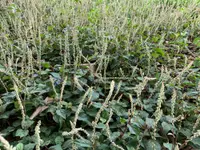
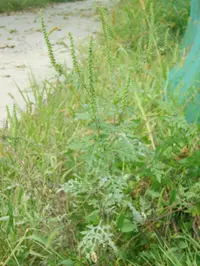
Slender amaranth (Amaranthus viridis) is a fast-growing annual herb often seen as a leafy green or volunteer weed in warm regions. It has upright, branching stems, soft green leaves, and small clustered flowers that form along the upper stems. It is native to tropical and subtropical areas but now grows widely in fields, gardens, and disturbed soils around the world. In many places it is harvested as an edible green, which encourages gardeners to care for slender amaranth rather than remove it. This plant grows easily in full sun, warm temperatures, and well-drained soil with regular moisture, so it often thrives with minimal attention once established.

Care Difficulty
Easy Care

Light Preference
Full Sun

Water Requirements
Regular Water

Temperature Preference
Tropical / Frost Sensitive

Hardiness Zone
9–11

Soil Texture
Sandy, Loamy, Organic-rich

Soil pH
Slightly acidic (6.5–7.0), Neutral (7.0)

Soil Drainage
Moist but well-drained

Fertilization
Light (every 4–6 weeks)
Scan your plant to receive care tips personalized for your specific plant
Available on iOS and Android
Amaranthus viridis grows best in bright, direct sun in warm seasons.
Amaranthus viridis needs consistently moist but not waterlogged soil for steady growth.
This species thrives in warm conditions and declines quickly in cold or frost.
This species tolerates a wide humidity range and usually does not need special humidity management in home or outdoor conditions.
Amaranthus viridis prefers loose, well-drained, moderately fertile soil that does not stay waterlogged.
This species is suitable for container growing, including balcony or patio setups.
Amaranthus viridis is a fast-growing annual that benefits from light, consistent nutrition during its warm-season growth.
Pruning Amaranthus viridis is mainly done to manage size, encourage bushier growth, and remove unhealthy tissue.
This species is usually grown as a direct-sown annual, but young seedlings transplant well when handled carefully.
Amaranthus viridis is most commonly propagated from seed, which germinates quickly in warm conditions.
Amaranthus viridis is a tender annual that dies with hard frost and does not overwinter outdoors in cold climates.

Plant Health Check
Not sure what's wrong with your plant? Check your plant's health inside the app.
Amaranthus viridis uses C4 photosynthesis, a pathway that allows it to photosynthesize efficiently at high temperatures and strong light, which helps explain its success in tropical and subtropical regions.
The leaves are naturally high in nitrogen-containing compounds such as proteins and certain amino acids, which is why in many regions it is valued as a nutritious leafy green rather than just a weed.
Each plant can form dense clusters of tiny greenish flowers that mature into many small seeds, contributing to its rapid spread and persistence in disturbed soils and crop fields.

Genetic and agronomic studies have shown that Amaranthus viridis can hybridize with some closely related Amaranthus species, a trait that contributes to its genetic diversity and adaptability in changing agricultural environments.
Leaves and young stems are widely eaten cooked, similar to spinach, and are rich in vitamins A and C, iron, and calcium. Older leaves become fibrous and slightly bitter, so harvest tender growth for best texture and flavor.
Keep your plants happy and healthy with plant identification, disease detection, and easy care guidance.