Bishop's Weed Care (Aegopodium podagraria 'Variegatum')

Also known as: Goutweed, Snow on the Mountain, Bishop's Goutweed, Pot Ash, Variegated Ground Elder, White Ash, Dwarf Elder, Ground Elder, Ground Ash
Bishop's Weed

About Bishop's Weed

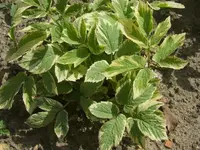
Aegopodium podagraria 'Variegatum', commonly called bishop's weed or snow-on-the-mountain, is a fast-spreading perennial groundcover in the carrot family. It forms dense, low mounds of divided green leaves edged with creamy white.

This plant is native to Europe and western Asia but is widely grown in North America, especially in shady gardens where grass or fussier perennials struggle. It spreads by underground stems called rhizomes, which makes it very persistent and sometimes invasive.

Gardeners who care for Bishop's Weed value its toughness, shade tolerance, and ability to cover problem areas with minimal attention. It generally prefers partial shade, evenly moist but well-drained soil, and benefits from some containment to control its spread.

Main Plant Requirements

Care Difficulty

Easy Care

Light Preference

Partial Shade

Water Requirements

Moderate Water

Temperature Preference

Cold Hardy

Hardiness Zone

3–9

Soil Texture

Loamy, Clay, Organic-rich

Soil pH

Acidic (5.5–6.5), Slightly acidic (6.5–7.0)

Soil Drainage

Moist but well-drained

Fertilization

Minimal (feed rarely)

Get Personalized Care Plan

Scan your plant to receive care tips personalized for your specific plant

Available on iOS and Android

How to Care for the Bishop's Weed

Aegopodium podagraria 'Variegatum' grows best in bright but softened outdoor light conditions.

  • Aim for 3–5 hours of gentle morning sun with dappled or bright shade the rest of the day, especially in warmer regions.
  • Plant in partial shade where it receives filtered light under trees or on the north or east side of buildings to prevent leaf scorch.
  • Protect from strong midday and afternoon sun, which can bleach or burn variegated leaves, and note that deep shade reduces vigor and variegation, especially in winter and early spring.

This groundcover prefers evenly moist but not saturated soil, adjusting watering to weather and soil type.

  • Water when the top 3–5 cm of soil feel dry, allowing moisture to penetrate 10–15 cm deep, then drain fully.
  • Increase watering in hot, dry periods and on sandy soils, but reduce it in cool, rainy seasons or on heavy clay to prevent root rot.
  • Watch for wilting, crisp leaf edges, and slow spread as signs of underwatering, and yellowing, weak stems, or a sour soil smell as signs of excess moisture in Aegopodium podagraria 'Variegatum'.

This hardy perennial tolerates a wide temperature range but grows most vigorously in moderate climates.

  • Optimal growth occurs around 60–75°F (16–24°C), with strong spreading and good variegation under these conditions in spring and early summer.
  • The plant survives winter down to about -20°F (-29°C) in the ground, dying back above soil level and resprouting when temperatures warm.
  • In summer, it tolerates short periods near 85–90°F (29–32°C) if soil stays moist and roots are mulched, but prolonged heat and drought can cause leaf scorch and dormancy.

This species grows well in typical outdoor humidity and rarely needs special humidity management.

  • Tolerates a wide humidity range from about 30–70% without noticeable stress in most temperate gardens.
  • Dry air alone seldom harms Bishop's Weed, but prolonged heat with low humidity can crisp leaf edges and increase wilting.
  • Improving soil moisture consistency and providing light shade during hot, dry spells is more effective than misting for preventing humidity-related stress.

This plant prefers evenly moist, fertile, well-aerated soil that does not stay waterlogged.

  • Use a loamy, organic-rich soil structure that combines garden loam with 30–40% compost for sustained moisture and nutrients.
  • Ensure moderate drainage; the soil should drain within a few minutes while still retaining slight surface dampness afterward.
  • Aim for slightly acidic to neutral pH around 6.0–7.0, which supports nutrient availability for Aegopodium podagraria 'Variegatum'.
  • Improve aeration and reduce compaction by working in coarse sand or fine pine bark, and avoid heavy clay that holds standing water.

This species is well suited to container growing and often benefits from the containment of its spreading roots.

  • Choose a wide, stable pot to limit outward rhizome spread while still offering lateral space for its creeping root system.
  • Select a heavier container material, such as ceramic or concrete, to prevent tipping as the plant forms a dense, uneven canopy.
  • Use a potting mix that drains freely but does not dry out fast, and elevate the container slightly so drainage holes never sit in pooled water.

This vigorous groundcover needs only modest feeding, as Bishop's Weed thrives in average garden soil.

  • Use a light application of balanced slow-release fertilizer (for example 10-10-10) or a thin layer of compost in early spring.
  • Feed once at the start of the main growing season; additional fertilizer is usually unnecessary.
  • If using liquid fertilizer, dilute to 1/2 strength and apply to moist soil to avoid root burn.
  • Do not fertilize in late fall or winter, when growth is dormant.

Pruning helps keep Aegopodium podagraria 'Variegatum' dense, tidy, and within bounds.

  • Cut back old or winter-damaged foliage in early spring using clean hand pruners or shears.
  • Trim back spreading edges through the season to maintain the desired shape and contain rhizomes.
  • Remove yellowing, diseased, or torn leaves promptly to improve appearance and air flow.
  • Mow or shear large patches low after flowering if foliage looks tired, then water to encourage fresh growth.

This plant is usually grown in the ground, so transplanting and site control are more important than repotting.

  • Transplant in early spring or early fall, when temperatures are mild and soil is workable.
  • Move clumps if growth becomes too dense, patchy, or invades unwanted areas, typically every few years.
  • Lift sections with a spade, keeping roots and some soil intact to reduce stress and water loss.
  • Replant divisions at the same depth, water thoroughly, and shade lightly for a few days until reestablished.

Division is the primary and most reliable method for increasing plantings of this variegated groundcover.

  • Divide established clumps in early spring or early fall, when soil is cool and moist.
  • Use a spade or sharp knife to separate sections with several shoots and healthy roots.
  • Replant divisions promptly at the same depth in loose, well-drained soil, and water well.
  • Avoid seed propagation, as seedlings may lose variegation and spread more aggressively than desired.

This hardy perennial usually needs minimal winter care in most temperate climates.

  • Plants tolerate freezing temperatures and survive reliably in-ground without special covering.
  • Apply a light 2–5 cm mulch after the ground cools to moderate soil temperature and reduce heaving.
  • In cold regions, move container-grown clumps into a sheltered, frost-free but cool spot to protect roots.

Care Tips

Rhizome Barrier Setup

Install a 20–30 cm deep plastic or metal rhizome barrier around beds or paths to keep this plant from spreading into lawns and neighboring plantings.

Selective Groundcover Use

Use this plant only in contained areas such as between paving stones, under mature shrubs, or in walled beds, where its fast spread helps outcompete weeds without overrunning the entire garden.

Regular Edge Trenching

Once or twice a year, cut a narrow spade trench along the planting edge and slice off creeping rhizomes, then remove and discard them to maintain a clean boundary line.

Renovation Mow-Back

If foliage becomes scorched, patchy, or heavily spotted by disease, set a mower or string trimmer high and cut the patch back, then rake off debris to encourage an even flush of fresh variegated growth.

Quarantine And Cleaning

Before planting divisions in a new area, grow them in a nursery pot for 4–6 weeks and remove any escaping rhizomes that appear through drainage holes to reduce the risk of unwanted spread when growing Bishop's Weed.

Common Pests and Diseases

Powdery mildew

This disease causes a white, powdery coating on leaves, often in shaded or crowded plantings. Symptoms include distorted growth and gradual loss of vigor if conditions stay humid and airless.

Solution

Thin overcrowded patches, improve air movement, and avoid overhead watering to keep foliage dry. Remove and discard the most affected leaves, then apply a sulfur or potassium bicarbonate fungicide labeled for powdery mildew if the problem persists.

Leaf spot

This disease produces small brown, tan, or purplish spots on leaves that may enlarge and cause premature yellowing. Symptoms include patchy dieback in dense groundcover beds during prolonged wet weather.

Solution

Remove and dispose of spotted leaves to reduce inoculum, and water at soil level rather than over the foliage. If needed, apply a copper-based or chlorothalonil fungicide according to label directions, and reduce irrigation frequency to keep the canopy drier.

Slugs and snails

These pests feed on tender foliage, leaving irregular holes and slime trails, especially in shady, moist sites. This pest can skeletonize young leaves and weaken new plantings.

Solution

Hand-pick at night, use iron phosphate slug baits, and reduce hiding spots by clearing debris and dense ground litter. Copper tape or barriers around prized patches can also limit damage in small areas.

Aphids

These insects cluster on soft stems and undersides of leaves, sucking sap and causing curling or distortion of new growth. This pest also excretes sticky honeydew that can lead to sooty mold on foliage.

Solution

Spray colonies off with a strong stream of water and prune heavily infested shoots. If needed, apply insecticidal soap or a light horticultural oil, ensuring thorough coverage of the undersides of leaves.

Crown and stem rot

This disease appears in poorly drained or waterlogged sites, causing blackened, mushy crowns and collapsing stems. Symptoms include sudden wilting and dieback of patches despite moist soil.

Solution

Improve drainage, avoid overwatering, and thin overcrowded plantings so crowns can dry between irrigations. Remove and discard affected clumps and replant only in well-drained soil, considering slightly raised beds in heavy clay areas for better Aegopodium podagraria 'Variegatum' plant care.

Interesting Facts

Natural shade groundcover

This variegated form of goutweed is widely used in temperate gardens as a fast-spreading groundcover, particularly valued for its ability to tolerate dense shade where many ornamentals struggle to grow.

Stable leaf variegation

Its cream-edged leaves are the result of a stable variegation, meaning that most shoots reliably keep the patterned foliage, although occasional all-green reversions can appear and outgrow the variegated parts if not removed.

Clonal spread by rhizomes

The plant expands mainly through underground rhizomes, forming genetically identical colonies that can quickly cover large areas and are difficult to eradicate once established.

Botan icon

Did you know?

The variegated form was selected from the wild green species and introduced into European horticulture centuries ago, and in several regions today it is regulated or discouraged because of its documented invasive behavior in natural woodlands and riparian habitats.

FAQs about Bishop's Weed

This species spreads very aggressively by underground rhizomes. It can quickly form dense colonies and overwhelm nearby plants. Use root barriers, deep edging, or containers, and remove unwanted shoots promptly to keep it under control when growing Bishop's Weed.

Grow Healthy Plants with Botan Care

Keep your plants happy and healthy with plant identification, disease detection, and easy care guidance.

Botan plant care app — identify plants on mobile

Explore More Plants