Moroccan eryngo Care (Eryngium variifolium)

Moroccan eryngo

About Moroccan eryngo

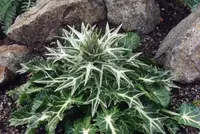
Eryngium variifolium, often called Moroccan sea holly, is a perennial herb in the carrot family known for its spiny, thistle-like look and metallic blue tones. It forms sturdy clumps with upright stems, toothed leaves, and cone-shaped flower heads surrounded by sharp bracts.

This species is native to North Africa, where it grows in dry, sunny habitats with poor, well-drained soils. Its toughness, drought tolerance, and dislike of heavy, wet ground are the main traits that influence how easy it is to grow.

Gardeners who understand how to care for Eryngium variifolium usually succeed when they provide full sun, lean soil, and minimal watering once established.

Main Plant Requirements

Care Difficulty

Easy Care

Light Preference

Full Sun

Water Requirements

Low Water

Temperature Preference

Cold Hardy

Hardiness Zone

5–9

Soil Texture

Sandy, Loamy, Rocky

Soil pH

Slightly acidic (6.5–7.0), Slightly alkaline (7.0–7.5)

Soil Drainage

Well-drained

Fertilization

Minimal (feed rarely)

Get Personalized Care Plan

Scan your plant to receive care tips personalized for your specific plant

Available on iOS and Android

How to Care for the Moroccan eryngo

This sun-loving perennial thrives in open, exposed sites with strong light.

  • Provide 6–8 hours of direct sun daily; Eryngium variifolium develops strongest color and compact growth in full sun.
  • Tolerates light partial shade, especially with morning sun and light afternoon shade in very hot climates, but flowering may be reduced.
  • Avoid dense shade, which causes weak, floppy stems; in hot summers, protect from reflected heat from walls or pavement to prevent leaf scorch.

This species prefers dry to moderately moist conditions and is sensitive to prolonged wetness.

  • Allow the top 3–5 cm of soil to dry between waterings; in most garden soils, this means waiting until the soil feels dry and loose rather than cool and sticky.
  • Use sharply drained soil or raised beds so water does not pool around the crown; persistent soggy soil leads to root and crown rot in Eryngium variifolium.
  • In the first growing season, water deeply when lower leaves begin to droop slightly; once established, reduce frequency and only water during extended drought.

This hardy perennial tolerates a wide temperature range but performs best in moderate conditions.

  • Optimal growth occurs around 60–75°F (16–24°C), with strong stems and good flowering under these conditions in the main growing season.
  • Mature plants tolerate winter lows down to about 0°F (−18°C) with good drainage, but repeated freeze–thaw in wet soil can damage the crown.
  • In summer, plants handle heat up to about 90°F (32°C) if soil is not waterlogged; in extreme heat, flowering may shorten, but foliage usually remains intact.

This species is adapted to dry, open habitats and does not have demanding humidity requirements.

This perennial prefers lean, mineral soils that dry quickly and never stay waterlogged.

  • Use a gritty, sandy or gravelly loam with low to moderate organic matter to mimic its native rocky habitats.
  • Ensure very sharp drainage by blending roughly 50–60% coarse sand or grit with 40–50% loam-based mix.
  • Aim for slightly alkaline to neutral pH, around 7.0–8.0, avoiding strongly acidic substrates.
  • Avoid heavy clay, peat-heavy, or compacted mixes that stay wet, since these promote root rot and shorten plant lifespan.

This species can be grown in containers if the pot is managed to stay very free-draining and sun-exposed.

  • Choose a deep, heavy container that resists tipping in wind and anchors the tall, wiry stems.
  • Fill the pot with a gritty, low-organic mix so water moves through rapidly and roots stay aerated.
  • Elevate the container on pot feet or bricks so drainage holes stay clear and runoff escapes quickly.

This drought-tolerant perennial needs only modest feeding, as excessive nutrients reduce its compact habit and flowering.

  • Apply a light dressing of compost or well-rotted manure around the base in early spring, keeping material away from the crown.
  • If growth is poor, use a balanced NPK granular or slow-release fertilizer at half strength once in spring.
  • Avoid feeding during winter dormancy; additional nutrients at this stage encourage weak, frost-prone growth.
  • On very lean soils, a second light application in midsummer can support flowering without making stems floppy.

Pruning Eryngium variifolium focuses on tidiness and sustaining flower production rather than reshaping the plant.

  • In late winter or early spring, cut back old, dead flower stems and dried foliage to just above basal growth.
  • During the blooming season, deadhead spent flower heads if self-seeding is not desired, using clean, sharp snips.
  • Remove damaged or crowded stems at the base to improve airflow and reduce the risk of fungal issues.
  • Leave a few seed heads for wildlife interest or self-sowing if a naturalistic look in the border is acceptable.

This species is usually grown in open ground; transplanting established plants is best done sparingly to avoid root disturbance.

  • Plan any transplanting for early spring or early autumn so roots can re-establish in mild temperatures and consistent moisture.
  • Move only when necessary, such as poor drainage or overcrowding, as taprooted plants dislike frequent lifting.
  • Dig a wide, deep root ball, disturbing the taproot as little as possible, and replant at the same depth in sharply drained soil.
  • Water thoroughly after transplanting, then keep soil just slightly moist, avoiding waterlogging, until new growth shows recovery.

Propagation of this sea holly relies mainly on seeds, since mature clumps resent disturbance and division.

  • Sow fresh seeds in late summer or autumn in pots or trays with gritty, free-draining mix for better germination.
  • Provide a cold period (natural winter chilling outdoors or cold frame) to break seed dormancy and enhance sprouting.
  • Transplant seedlings to individual pots once large enough to handle, keeping root disturbance minimal for robust establishment.
  • If attempting division in early spring, split only young plants, taking large sections and replanting immediately into well-drained soil.

This hardy perennial usually needs minimal winter care in most temperate gardens if planted in well-drained soil.

  • Eryngium variifolium tolerates frost, but prolonged winter wet around the crown is more damaging than cold itself.
  • In colder or wetter regions, apply a light gravel or coarse sand mulch to keep the crown dry and improve drainage.
  • Container-grown plants are more vulnerable; move them to a sheltered, unheated spot and avoid waterlogged compost over winter.

Care Tips

Provide gritty collar

When planting, add a 2–3 cm band of coarse grit or small gravel around the crown at soil level to keep the neck dry and reduce crown rot in wet spells.

Use reflective mulch

In cooler or short-summer regions, mulch with pale gravel around the plant to reflect light and heat onto the rosette, which helps stems harden and flower heads color more strongly.

Stake discreetly early

Install low, subtle supports or a small wire hoop when new stems reach 10–15 cm, so tall flowering stems stay upright in wind without needing tight ties later.

Deadhead for tidiness

If self-seeding is not desired, cut back spent flower heads just as they start to brown, leaving a portion of the stem to maintain structure while preventing unwanted seedlings.

Plan for sharp foliage

Position plants slightly back from paths and work areas, and use gloves and long sleeves when dividing or cutting stems, since the spiny leaves can cause skin irritation during caring for Eryngium variifolium.

Common Pests and Diseases

Aphids

These insects cluster on young stems and flower stalks, sucking sap and causing distortion and sticky honeydew on eryngo foliage and bracts.

Solution

Spray the plant with a strong stream of water to dislodge colonies, then treat remaining insects with insecticidal soap or a light horticultural oil, covering stems and leaf undersides; encourage predators such as lady beetles by avoiding broad-spectrum insecticides nearby.

Leaf spot

This disease causes small brown to gray spots on leaves that may enlarge and merge, leading to premature yellowing and leaf drop in humid or overcrowded plantings.

Solution

Remove and discard affected leaves, avoid overhead watering, and increase airflow by spacing and light pruning; in persistent cases, apply a copper-based fungicide according to label directions at the first sign of new spotting.

Powdery mildew

This disease appears as white to gray powdery patches on leaves and stems, which can lead to reduced vigor and distorted growth during warm, dry days combined with cool, humid nights.

Solution

Improve air circulation, keep the plant in full sun, and water at the base rather than on foliage; if needed, use a sulfur or potassium bicarbonate fungicide early in the infection period as part of broader Eryngium variifolium care instructions.

Interesting Facts

Atlas Mountains specialist

This species is naturally restricted to the Atlas Mountains of Morocco and Algeria, where it grows on open, rocky slopes and limestone screes at higher elevations.

Distinct marbled foliage

Its basal leaves are unusually striking, with a pale, marbled network of veins on dark green blades, a pattern that helps distinguish it from closely related Eryngium species.

Pollinator magnet umbels

The stiff, branched stems carry spiny, steel-blue flower heads that produce abundant nectar and pollen, making the plant highly attractive to bees, hoverflies, and other beneficial insects in its native range and in cultivation.

Botan icon

Did you know?

Eryngium variifolium is considered rare in the wild and has been listed in regional Red Data Books for North Africa, reflecting habitat loss and restricted distribution in its native Atlas Mountain ecosystems.

FAQs about Moroccan eryngo

Flowering typically occurs in mid to late summer, often from June to August, depending on climate. Individual flower heads last several weeks and also dry well, so the overall display can extend across much of the warm season.

Grow Healthy Plants with Botan Care

Keep your plants happy and healthy with plant identification, disease detection, and easy care guidance.

Botan plant care app — identify plants on mobile

Explore More Plants