Control Self-Seeding
Deadhead spent flower heads before seeds ripen if you want to limit spread, and collect a few dry seed heads into a paper bag if you plan to re-sow in a controlled area.

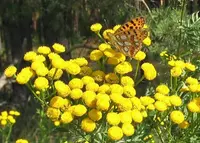
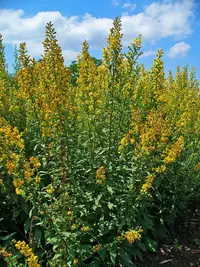
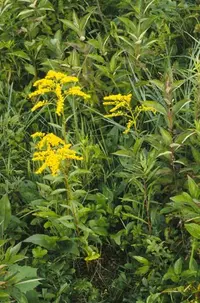
Common tansy, Tanacetum vulgare, is a hardy, clump-forming perennial herb in the daisy family. It has fern-like, aromatic leaves and flat-topped clusters of button-shaped yellow flower heads.
The plant often grows along roadsides, riverbanks, and disturbed ground across Europe, Asia, and many parts of North America where it has naturalized. It spreads readily by rhizomes and seed, which makes it vigorous but sometimes invasive in garden settings.
This species prefers full sun, well-drained soil, and moderate moisture, and it tolerates poor soils and drought once established. These traits make basic how to care for common tansy relatively straightforward for most gardeners.

Care Difficulty
Easy Care

Light Preference
Full Sun

Water Requirements
Low Water

Temperature Preference
Cold Hardy

Hardiness Zone
3–8

Soil Texture
Sandy, Loamy, Clay

Soil pH
Slightly acidic (6.5–7.0), Slightly alkaline (7.0–7.5)

Soil Drainage
Well-drained

Fertilization
Minimal (feed rarely)
Scan your plant to receive care tips personalized for your specific plant
Available on iOS and Android
This hardy perennial thrives in open, bright conditions and forms dense stands when light is sufficient.
This species prefers relatively dry, free-draining conditions and is more tolerant of drought than excess moisture.
This cold-hardy perennial adapts to a wide range of outdoor temperatures once established.
Humidity is rarely a limiting factor for Tanacetum vulgare in typical home or outdoor conditions.
Tanacetum vulgare prefers relatively lean, well-drained soil that does not stay wet for long.
This species can be grown in containers if the pot is set up to prevent waterlogging and tipping.
Tanacetum vulgare usually needs minimal feeding in average or slightly poor soil.
Pruning supports tidy growth and flowering in Tanacetum vulgare.
Tanacetum vulgare is more often transplanted in the garden than repotted in containers.
Tanacetum vulgare propagates well by seed, division, and softwood cuttings.
This hardy perennial usually needs little winter care in most temperate climates.

Plant Health Check
Not sure what's wrong with your plant? Check your plant's health inside the app.
The foliage contains aromatic compounds such as thujone and camphor that give common tansy a strong scent, which can deter some herbivorous insects in its immediate surroundings.
Common tansy spreads both by seed and by creeping rhizomes (underground stems), which allows it to form dense colonies and makes it a persistent species once established.
Its leaves are relatively nitrogen rich, so when they decompose, they can modestly increase soil nitrogen levels and influence which other plant species are able to grow nearby.

In several regions of North America and parts of Europe, common tansy is classified as an invasive or noxious weed, because its dense stands can outcompete native vegetation and alter plant community composition along roadsides, riverbanks, and disturbed habitats.
This species spreads readily by both seed and underground rhizomes, forming dense clumps that can crowd out other plants. Regular deadheading, root barrier edging, and yearly division help keep it contained and easier to manage.
Keep your plants happy and healthy with plant identification, disease detection, and easy care guidance.